Pages

Monday, 16 July 2018

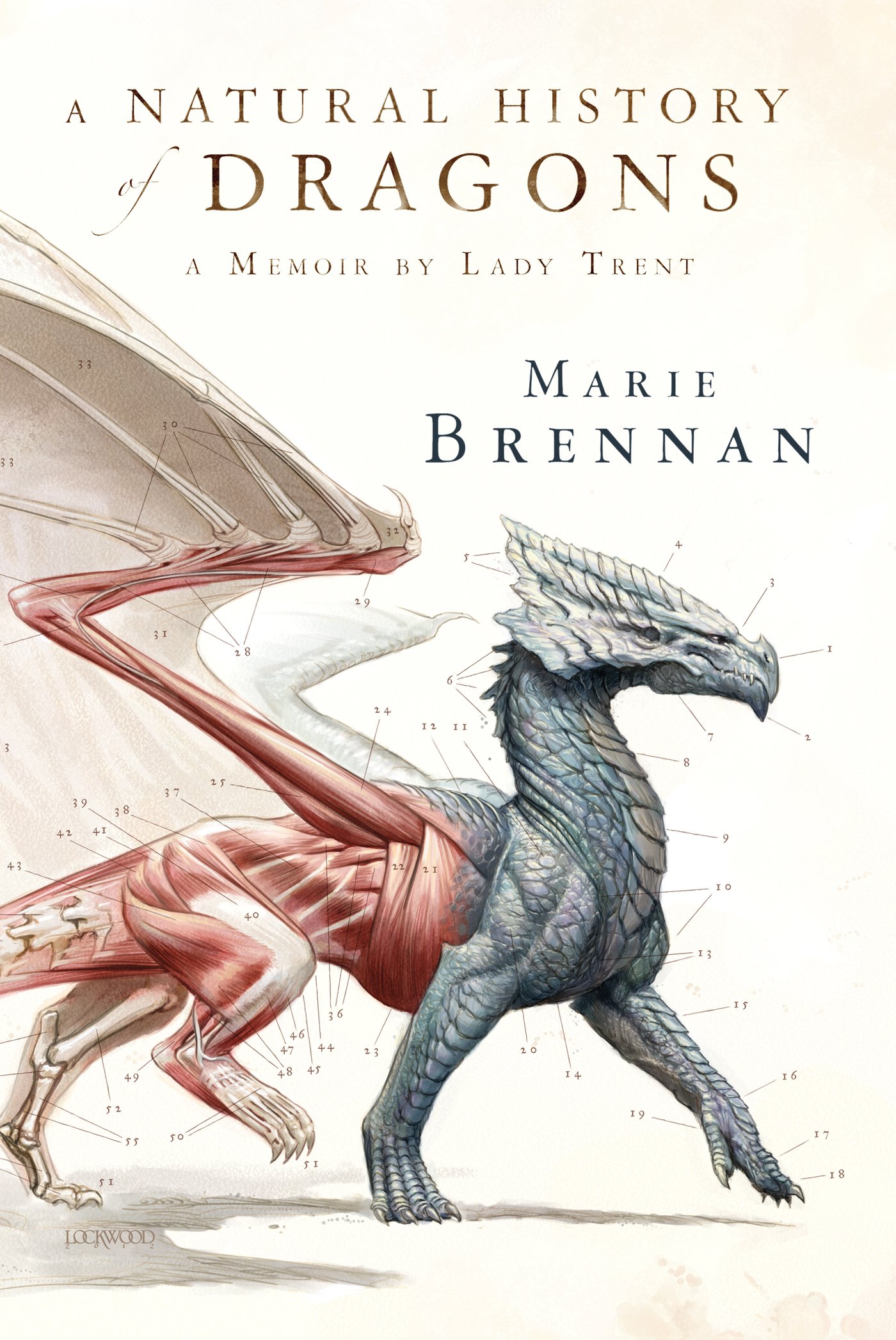
A Natural History of Dragons by Marie Brennan

Since there is absolutely no way I'm going to get through every book in every series nominated for a Best Series Hugo (as much as I'd like to!), I decided that if I could read at least one book in each series, I'd be happy - and if I end up having more time than I expect in the next month, I'd read more. So, I started the Lady Trent Memoirs series with, cleverly, the first book, avoiding the problem I've had in other categories where I'm starting several books in.

Set in a fantasy version that feels relatively close to our own, but is not, our world, Lady Trent is a Victorian lady in the mold of the lady adventurers who were well-off and went off with or without their husbands to explore distant parts of the world. This world, though, has dragons, and they are the object of Lady Trent's obsession.

She is interested in dragons from a young age, much to her mother's despair, although this obsession accidentally ensnares her a sympathetic husband, when she waxes inappropriately poetic over the captured dragons brought to the throne in front of a young member of the peerage who is similarly smitten with the creatures.

Once married, she eventually convinces her husband, Jacob, to go on an expedition to investigate dragons in what feels like this world's equivalent of Eastern Europe, or maybe Russia. And then convinces him to bring her along as well, as an organizer and artist to draw whatever dragons they may find.

They find that the boyar they were planning to meet is absent, and reluctantly settled into a small village on the edge of mountains. They discover that there have been dragon attacks recently, in a way that is uncharacteristic for the area. The reasons for this are opaque for most of the book, but the solution makes sense when it is revealed.

Lady Trent learns how to cope in less than ideal conditions, with little complaining, since she wants to be here and wants to be brought along on any future endeavours that might come up. She has a frosty relationship with the woman hired to help her out, Dagmira, although Dagmira comes to trust her, if never to like her.

The conceit of these books (or this one, anyway), is that they're being written by a very old Lady Trent, looking back on her life with rather more candour and wisdom than she had as a young women, when, presumably, she released expurgated and less-thought-through travelogues that netted her some notoriety and acclaim.

On the way, Lady Trent helps discover some central and hitherto unknown features of dragons, including that they mourn their own kind, and that there is a way to keep their bones disintegrating after death, which has long stymied scholars. There are dragon attacks, but the people in the mountains may be the more dangerous, as she falls afoul of smugglers, townspeople, and a few others who are not immediately apparent.

The style of this nicely blends travel writing with dragons, and feels very cohesive as a work. I quite enjoyed this book, even if I didn't find it particularly deep. I look forward to reading more of this series.

Friday, 13 July 2018

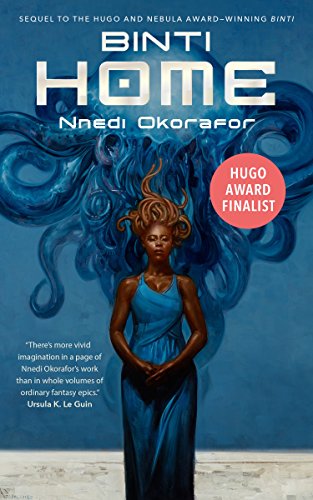
Binti: Home by Nnedi Okorafor

This is another book that I think suffers because I read the second book in the series first, due to time constraints and wanting to get all the Hugo books and novellas, etc., read. I was initially hoping to have time to go back and read the first book before starting this one, but with the deadline fast approaching, I had to just go ahead and read Binti: Home on its own.

This was a bit difficult because by itself, Binti: Home doesn't feel like a well-rounded story. It's interesting, absolutely, and I want to know more. But it feels like a way station between whatever happened to make Binti into the human/Meduse mix she now is, and whatever happens next. It's a story of homecoming, as the title suggests, but I don't know enough about what home was to know why Binti was so eager to return, particularly since it seemed like she hadn't been away that long, and people at home were more than happy to make her glad she'd stayed away.

We start with Binti finishing what is, I think, her first semester away at an off-world university, after having suffered an attack and unexpected survival on her way to Oomza U. (I'm gleaning this, but as I said, I haven't read the first book.)  She feels a sharp pull home, and brings with her a Meduse, her friend, but also one of the race who attacked and killed everyone else on the ship she was on on the way to university. She's now part Meduse, with hair that seems to move on its own. I'm not sure of the full implications of these changes, but didn't need to be to get most of the story. I think.

She returns home to go on pilgrimage, but is met with humans who are suspicious of the Meduse, both her own people and another tribe that were traditionally at war with the Meduse. (I presume this is explained more in the first book, and I feel bad that I keep having to say that, but it was true to the experience of reading this. Which is my own damn fault for reading the second book first, but sometimes that's what you have to do.)

She's also met with variations between distance and outright hostility from her family, with her sister telling her (at a party, no less, in front of everyone) how selfish she is and how she's killing their father and that she should come home, while simultaneously telling her she's a freak and doesn't belong. It feels like the very definition of toxic family dynamics, particularly the appealing to a mob in the midst of tearing one's sister down.

There's a lot here about places in a family and family dynamics, but there's so much hostility aimed at Binti, even from those who do seem to truly love her, that the command that she should stay does not have a lot of emotional weight, or maybe just not with me. I could see how it could, if we knew more about this family and the dynamics that led to this place.

Then what was the most interesting part came, near the end. Binti went out into the desert with her father's people, the people he'd been at pains to conceal most of his life, and who Binti's mother looked down on as savages. Binti had imbibed some of these attitudes, but who they are and what their society was, was fascinating, particularly the explanations for some physical habits and their history. Binti becomes something different yet again, further distancing herself from her home even as she wants to return to it.

I really hope I get a chance to read the first novella - I think there's a very good chance I'll be reading the third come Hugo season next year.

Thursday, 12 July 2018

Raven Stratagem by Yoon Ha Lee

This was a case where I really wished I'd had the time to read the first book in the series before delving into the second - but since this is my first year trying to read all the Hugo nominees *before* the voting deadline, I was trapped. I'd missed Ninefox Gambit when it was nominated last year (I'll read it eventually, I promise!) and had to jump right into Raven Stratagem if I were going to finish everything I needed to by the end of July.

In this book, I was thrown into a world without a lot of context. I was able to glean a lot of it, but it was more in the sense of broad meanings than specifics, and I suspect that if the specifics have been explained, it was in the prior book, and would have been redundant to re-explain. It did mean that I was struggling to catch up a bit, which is partly why this book is not in my top few rankings for this category.

That is not to say that it is bad - the one thing I have been so delighted by is how strong entire Hugo categories are. It's not just one or two good books and then filler, it tends to be six solid books that tie me up in knots trying to figure out my voting rankings.

Still, this is one where I felt most at sea. I was able to get the larger sense of what Lee was going for, but the specifics escaped me. I think I got the outside edges of calendrical issues, but I'm more than a little bewildered as to what that means, precisely, what calendrical heresies are, and why they would give rise to, for lack of a better term, the different magics different sectors of this interstellar Empire have at their disposal. I was able to get past that by just labelling it all magic in my mind, and that worked fine, but I was always curious to find out what it meant in this universe, or to this author.

We are in a universe where the people are dispersed over many planets, and it seems like some or most of the people (I wasn't sure if picking a faction was mandatory or only for a few) join one of the factions and gain the powers thereof. (There are the military, the spies, the inquisitors, and a few more I'm a little vague on.)

Within this, a body is taken over/shares consciousness with a Shuos (the spies, as near as I can tell) who was disembodied and held incorporeal for centuries after he caused a massacre. He comes onto a Kel (military) ship in a, to use the language of the book, womanform, and takes advantage of Kel hierarchical instinct to take over just as they're engaging an enemy force. He's brilliant, and the captain he usurped first tries to assassinate him, and then puts her life on the line to follow him.

But there is more going on here, and it's all fascinating, but it wasn't the deepest characterization I've found in this batch of books. Honestly, the interactions between the leader of the Shuos and his brother/stand-in were probably the most complex and interesting of anything that was on the table here, and I could have read a whole book about them alone. This book tries to find a middle path between being about the plot (but doesn't let me all the way in to understand it) and about the characters (but doesn't give us a ton of time with characterization.)

It's all leading somewhere, and it was interesting along the way, but because there were things I didn't understand about the underlying world, or really, about the characters, it didn't land as strongly as it could have. That's the problem with coming in on the second book of a series, and makes this, for me, not as strong a contender for the Hugo as some of the other books. Yet, I liked it, and might have liked it a whole lot more if I'd read the first book first.

Tuesday, 10 July 2018

River of Teeth by Sarah Gailey

A little while ago, I was putting together a list for my SF/F book club about heists. My first pass ended up being all male authors, so I frowned and tried to do better. I ended up adding two books I'd never read, and this was one of them, when it was described to me as "Leverage, if the crew were told to steal a lake."  I was in at pretty much that moment.

Then, when it was nominated for a Hugo for novella, I had even more reason to read it. And it was pretty much exactly as advertised - a thoroughly enjoyable alt-U.S. romp, in a world where a crazy plan to import hippos for meat worked, but led to a lake infested with feral hippos that can kill a man in seconds - and do, regularly, which is used by the mustache-twirling bad guy when people cheat on his casino steamship.

The main character used to have own hippo ranch before he lost it and almost all his hippos to a fire, and when he decides to take this job for the U.S. government, to get the hippos out of that lake and disperse them down river, he thinks he'll be able to get revenge on the person who caused the fire.

Of course, we start off with a traditional "getting the crew together" montage, where Winslow Houndstooth, our protagonist, finds the people he's going to need to pull this particular heist off - Archie, a large woman who is a master thief; Hero, a nonbinary person who can blow up anything; Cal, Winslow's former ranch hand who knows the territory, and Adelia, a pregnant hired killer who has more going on than anyone realizes.

These are all delightful characters, and that's another important aspect of a good heist story - you need to care whether or not these people manage to rob the bank or hoodwink the rich, or...blow up a dam and unleash a flood of hippos on the river below the lake. Because that is the plan, with each member of the crew providing a valuable service as they set out to unleash a flood of feral hippos without getting eaten by them.

Which is a bit of a trick - described are many eaten-by-hippos moments, and it sounds like a fairly terrifying way to go. Each of our heroes also has their own hippo (or hop, I think the term is), to which they are greatly attached - one is an albino, all are fiercely loyal to their owners, and seem to be hardy steeds - as long as you are relatively close to water so they don't dry out.

Not everyone on the team is working for the same person, which I'm sure surprises you all tremendously!  There are betrayals, the beginnings (and ends) of love affairs. There are twists and turns. People are eaten by hippos.

I don't have a lot else to say about the book, but I really did enjoy it tremendously. I don't think it's going to top my Hugo ballot, but it was rollicking fun, and I look forward to discussing it in my book club when it rolls around. I'm ahead of the game for once!

Friday, 6 July 2018

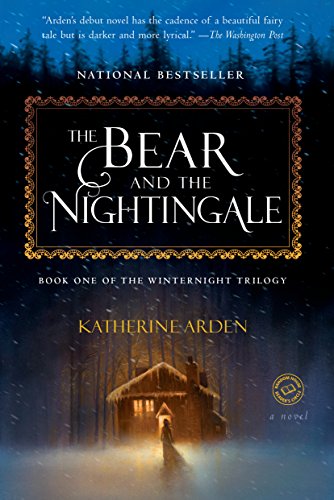
The Bear and the Nightingale by Katherine Arden

It is not a small order to make a really good entry into the genre of Russian-folktale-inspired fantasy. I can think of at least one if not two other books that are astoundingly good off the top of my head, so when you're entering an arena that already includes Catherynne Valente's amazing Deathless, you'd better have a damned good story to tell.  There's room here, but it's going to be hard not to be overshadowed. (I'm also sort of counting Naomi Novik's Uprooted, although there's probably a good argument for it being considered Eastern Europe-inspired rather than specifically Russian.)

So, how did we do? Particularly, how did we do when this is also a debut novel? Well, not bad. It's not as good as either of the books listed above, and there are ways in which it deals with a few issues that I think show a more surface reading of fairy tales than a deep-down, stories-that-sing-in-your-blood understanding, but for all that...this is pretty good. I enjoyed it quite a lot, and even teared up at one point. Saying it's not as good as Deathless is saying it's not a masterpiece. It's merely a really freaking good debut effort.

It is the story of Vasya, a Russian girl whose mother dies shortly after she is born, and has about her an air of the uncanny, an inheritance, perhaps, from her maternal grandmother, whom she never met. She grows up not realizing that other people can't see the domovoi or other house and stable spirits that are part of keeping her small village safe from the slumbering force outside.

The book jacket and some of the reviews refer to her incredibly devout stepmother who tries to rein Vasya in, but that's not quite accurate. I'm sure she does believe in Christianity in the form it took in Russia, but she is more motivated by the fact that she is more like Vasya than she wants to be - she also sees the household spirits, and instead of seeing them as fellow dwellers and protectors, she sees them as demons, and wanted to escape them by joining a convent before she was wed to Vasya's father.

When a fervent young priest is sent to Vasya's village as well, to get him out of the power plays in the capitol, the two focus their attentions on Vasya, as a young woman who is obviously different and perhaps dangerous. They try to get her to conform, but other members of her family are content to have her as she is. As she grows, she learns to ride from the horses whose patron creature she helps feed, even as others neglect their care, convinced by the priest that the old ways are evil and must be feared.

Outside the boundaries of the village, the sleeper stirs, and the manifestation of Death may be all that stands between Vasya's village and the fear that is fostered and the desecration after. Vasya's loved ones try to shield her from the Winter King (Death), but if anyone is to survive the battle between he and his brother, Vasya must intervene, no matter the cost.

This is all beautifully woven together, but there are ways in which this is a fairy tale, not a story about how fairy tales can permeate a life. It's at times a little too surface.  Here's an example: there was a moment in the woods, where Vasya almost freezes to death, where the Winter King tells her after she pushes herself to survive, that only cowards die in the snow. The brave survive.

Which is...kind of horseshit. You can be brave as hell, in any circumstances, and no matter how brave you are, you can too fucking die. This is something that I think Valente understands that perhaps Arden does not, or does not yet, or it was a sloppy bit that got left in. I personally bridle and will always do so when books insinuate that only those who choose to die do so. Fuck everyone who believes that.

So this got under my skin, and I could almost see the book beyond the book, the way Deathless might have recognized that sometimes death happens, sometimes it is the kinder path, sometimes intentions don't matter to the story you're in. The Bear and the Nightingale still seems to think stories are all within our control. They're not.

So yeah, this is good. It's very good. But it's not as good as the best there is in this particular little genre. And that bit hurt me. It's a sensitive spot, but trust me, neither of my parents chose to die, so I'm allowed to be hurt when people have philosophies that suggest they must have, since they are dead.

Still, that bit aside...there's a lot to like here.

Wednesday, 4 July 2018

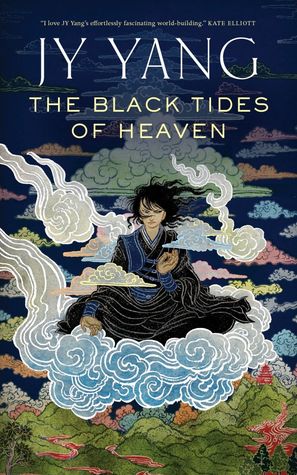
The Black Tides of Heaven by JY Yang

After I finished Seanan McGuire's Down Among the Sticks and Bones, I really thought that that would be my top choice on the Hugo ballot for novellas. (I still have one to go, so this is all tentative.) And I still do love it a whole lot, for all the reasons I went into in the review. But then, after I'd read The Black Tides of Heaven by JY Yang, I had to sit for quite a long time with my Hugo voting document, trying to decide. In the end, I put this highest, although I'm not entirely sure I won't change my mind later. The two are that close in my mind, and both are novellas I really love.

The prose in The Black Tides of Heaven is really quite wonderful, pulling you along in the story inexorably without being in any way overwritten. This is the story of a promise made to the head of a monastery by the Protector that the next of her children could go to the monastery, and the ways in which giving birth to twins throws that promise into disarray.

Mokoya and Akeha are sent to the monastery, where they grow up. In this fantasy universe, it appears that children are considered non-binary until they declare for themselves what their gender will be, and at that point, the wielders of the magic in this world, which seems to be a relative few, will confirm that gender. Some declare early, some late, but it appears to be part of a transition to adulthood. (Or maybe I'm just conflating that part with Ann Leckie's Provenance, in which that is definitely the case.)

While there, the twins start to discover that Mokoya has prophetic dreams, dreams that cannot be altered, as they try to do just that and get into further trouble. Akeha does not seem to have any powers, but they are bold and always by Mokoya's side, the unexpected complication in the mix.

As they grow, they become more aware of the tension between the Protectorate and the monastery, and eventually, between the Protectorate and those that, in theory, it is supposed to protect. Their mother has held power for a very long time, and does not intend to ever let it go, bolstered by the magic of the Tensors, who seem to be able to manipulate the fabric of the world in various ways. (I was never really clear on the system, but didn't feel like I needed to be.)

As the two grow to adulthood, Mokoya assumes womanhood seamlessly, while it takes Akeha longer to decide/figure out that male suits him better. (I don't believe we see any characters who delay choosing indefinitely or refuse to choose.)  Their mother folds them back into her sphere, against the wishes of her children or the monks.

In the background, a rebellion arises, that of the Machinists, who promote the development and use of machines so that everyone isn't dependent on the Tensorate - when magic can be made by anyone with an engine, or at least, you can get the same effects, how do you hold power? The Protector is determined to protect herself, while her children chafe under her power and ally in different ways with opposing forces. As much as they can.

While this happens, Akeha and Mokoya fall apart, as their differences and importance to their mother splinter what used to be a strong partnership. (Huh. Both my favourite novellas are about twins who pull apart.) These two find their way back together, though, and when this happens, I was nearly in tears. It's strong, a strong addition to a great story. I highly recommend this one.

Monday, 2 July 2018

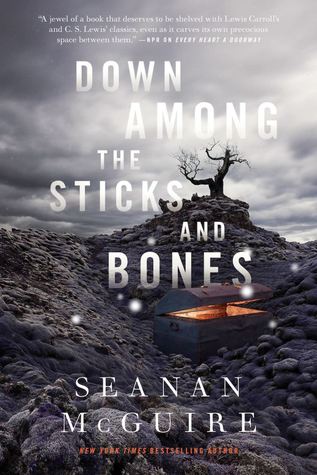
Down Among the Sticks and Bones by Seanan McGuire

Down Among the Sticks and Bones takes place before Every Heart a Doorway, but they really should be read in publication order. If you read them chronologically, a great deal of the central mystery of Every Heart would no longer be one, as such. Here, we jump back in time to see what happened when Jack & Jill went through their door and what came tumbling after.

It's also a story about the kind of parenting that deforms, the kind that sets expectations and does not let children deviate from those expectations, let alone be fully complex little humans with personalities that do not line up neatly into the handy psychological boxes we like to use as shorthand.

The way this is written sounds like a fairytale, with fairytale patterns and moments in the midst of two entirely different stories. So Jack (short for Jacqueline, a nickname she acquires after she and her twin sister Jill stumble onto The Moors) is brought up to be the pink and girlish twin, to satisfy her mother, while Jill is supposed to be the tomboy of her father's dreams. But neither fits those slots precisely, and being told you can't like certain things that are your sister's only leads to wanting them more.

When they find a set of stairs leading out of their grandmother's abandoned trunk, they go down them together, barely sure they have a sisterhood anymore. At the bottom, they have to choose a direction, and they choose The Moors. And from there, it's the story of twins if one twin was taken in by Dracula and the other was adopted by Dr. Frankenstein. Jill jumps at the chance to wear pretty dresses and be the favourite, even at the cost of her own opinions, whereas Jack watches more carefully and decides that the hard work Dr. Frankenstein is offering is more palatable than being looked at as though she were lunch.

As they grow up, Jill becomes obsessed with becoming a vampire, even though The Master she serves refuses to turn her until she reaches 18. She's impatient, leading her to act out. Meanwhile, Jack has become more obsessed with cleanliness, but also finds ways to reconcile that with her work for the Doctor, and enjoys the tasks he sets her. She falls in love with a local girl, although occasional interactions with her sister make her aware of how wary the villagers should be of any connection with either of them.

There's a lot here as well, about paying attention or doing what you've been told you want, deciding that the path laid out before you is the only one, and to be pursued at any cost. It's all wrapped up in prose that skips menacingly through, sounding like a fairy tale, but even darker than the already dark ones out there. It grasps precisely the inevitability that attends these types of stories. This book and the one before it are Seanan McGuire at her poetic best, and I love all her genres I've read so far.

I've said before that I'm a sucker for fairy tales, but that also means I'm critical when people don't get it right. This gets it right, and throws in a little Dracula and Frankenstein for good measure.