Pages

Thursday, 17 January 2019

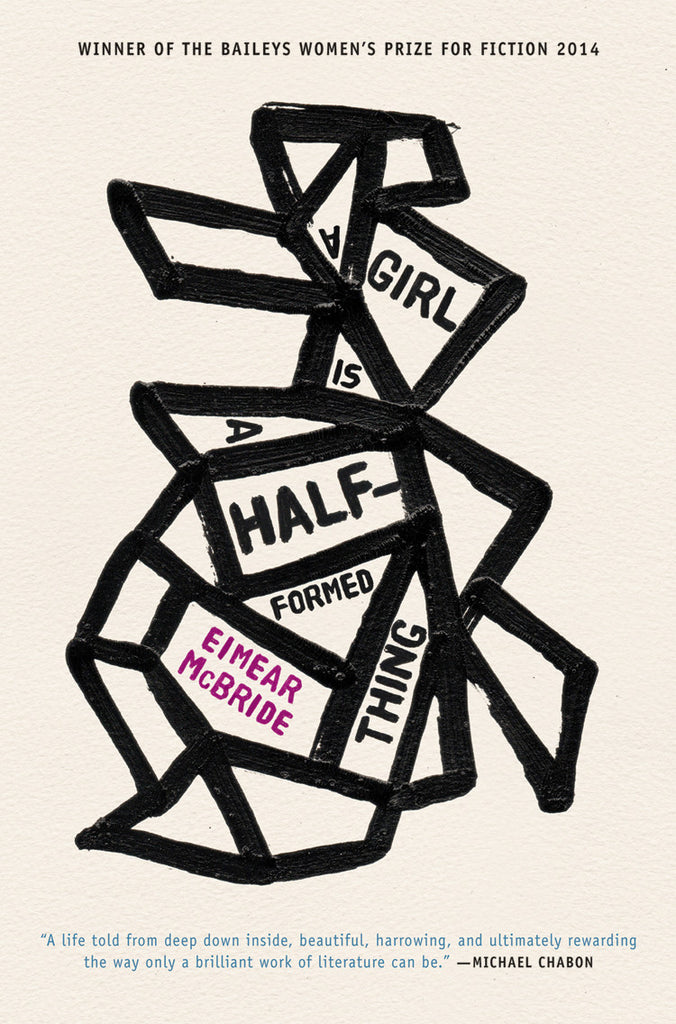
A Girl Is A Half-Formed Thing by Eimear McBride

*Some Spoilers Below*
*CW: Rape, Child Abuse* 

I struggled with this book. Oh, how I struggled with this book. You see, this is one of those self-consciously "literary" books that, when you're just not enjoying reading, seem to carry with them a sneer of "well, you just didn't understand." It was a big book a few years ago. It's trying to be Joyce and Beckett, and the writing is stream-of-consciousness jagged and not coherent. It's also a slog, ugly, mean, and as one review I read put it, it felt like the book wanted to punish the reader for having the temerity to continue.

And yet, there are the accolades. People praising it to the sky as the next big thing, a stark look at reality, and I end up wondering if I'm just too squeamish for "realism." If I want a prettier world and push away the difficult. But then, that's bullshit. I like difficult books, even books where difficult things happen - but not when it's just there to be misery porn. If this were a genre book, I'd call it the grimiest of grimdark. Grimdark has been rightly called out for pretending that horrible = real, whereas anything with hope or love or friendship is somehow fluffy and unrealistic. That is not generally the way the world works. There are difficulties. There are kindnesses too.

Let's take this in two parts - what happens in this book, and how it is expressed. For the first part, there are some things that I can absolutely see happening - turning to physical vices to cope with the pain of the terminal illness of a family member. Yup, no problem. It gets dwelt on a lot, and we get a lot of detail, and for good measure, the ongoing sexual relationship between the main character and her uncle. I am not, oh I am not, denying that such things happen in real life, nor am I saying that they can't be written about. But I am very picky in how such things are written about, and this is just one more horrible brick in a load of horrible bricks that make a horrible wall, and there's nothing more to it. There's nothing I'm seeing McBride say here that goes beyond the litany of misery.

I mean, when you have the main character raped twice (once by a stranger, once by a family member) on the day of her brother's funeral, I think we can safely say we've gone beyond realism. And if it's not trying to be realism, what is it trying to be? It's not a faithful reconstruction of the world as it is. It's not a literary evocation of the universality of women's experiences. I'm just not sure what it is.

So let's talk about how it is expressed. Most of the writing about this books talks about how it's a new version of James Joyce. (One perplexing blurb said that this was Joyce with an Irish lilt, which would be...Joyce?) And yeah, maybe. I mean I haven't read Finnegan's Wake, but I have read Ulysses, and I suppose you could make some comparison to the stream of consciousness thing, but Joyce flows differently. This is so very choppy. Then I read an article that talked about McBride being blown away by Beckett, and it clicked. Yes, this is very, very much like the Beckett I read and didn't like: How It Is. They're similar both in writing style, and in content.

Writing that review was very much like writing this one - struggling with feeling incompetent because I didn't like the book (am I missing it entirely or is this legitimately an Emperor's New Clothes situation?) and feeling put off by the sheer cynicism and pessimism of what's going on. The writing style is similar, and Beckett is trying less to capture something about life than he is about misery and it's not realistic, and it all clicked. This is so close to Beckett it's less an homage and more borrowing a voice.

So, yeah. If you've read and loved some of Beckett's more obscure work, the stuff that's really out there, then yes, you might enjoy A Girl Is A Half-Formed Thing. But I didn't like either one, and this is definitely a style or its own little genre that is not for me.

Tuesday, 15 January 2019

Two Serpents Rise by Max Gladstone

Look, I really liked Three Parts Dead, the first Craft novel published. I liked it a lot. But I loved Two Serpents Rise. In this book, Max Gladstone takes world-building I enjoyed a hell of a lot in the first book, and applies it to a plot and a set of political and social conditions that I was just absolutely captivated by. It's a book that takes itself absolutely seriously, in the best possible ways. (This doesn't mean that there's no humour, but more that Gladstone has really thought through his society and his characters and done such interesting things with them, taking all these aspects, and moving forward with the ramifications.)

We're in a different city in Two Serpents Rise, and I don't believe any characters overlap between the two books - or at least, if they did, I read Three Parts Dead long enough ago that they didn't pop out at me. We're in a time period somewhat before Three Parts Dead, but the laws and bureaucracy concerning the Craft in the world seem more or less the same. We've got some new nuance added to it as well.

Two Serpents Rise takes place in the city of Dresediel Lex, which is at least partially inspired by Aztec mythology - imagine a huge urban metropolis with water utilities, corporations, risk management, and a strong protest movement, integrated into both the aftermath of the major event in this world, the God Wars, and an older tradition of sacrifice as a source of power and peace.

The main character here is Caleb, a risk analyst and sometimes gambler, who summons a literal version of Lady Luck for his card games, who collects and disburses fortunes. She's not on his side - this is luck at its most literal. He works for the Red King Corporation, run by the King in Red, a man who, in the God Wars, when he led humans against the Gods he perceived keeping them captive and helpless, became only his own skeleton, with rubies for eyes.

When someone releases tiny serpent-like demons into the city's reservoirs, Caleb is sent to assess the risks of it happening again, particularly with a new merger on the horizon. His father is the leader of a faction of those who want to return to the old ways, being himself the last sacrificer on the block, the only one who knows how it feels to rip a living heart from a chest. Caleb' father is the obvious suspect in the attack on the reservoirs, but he protests his innocence, and Caleb believes him. Mostly. While at the reservoir, though, he meets Mal, a woman about his own age, a parkour runner, and immediately he wants to protect her.

We mostly see Mal through Caleb's eyes, which is deliberate, as he falls for her hard, and then interprets her through various lenses, mostly of his own devising. Caleb believes that she might hold the answers to the questions he doesn't know to ask, and the needs of the city now that, instead of killing someone dramatically a few times a year, the sacrifice is parcelled out throughout the inhabitants, hitting some (the poor), harder than others. None of what he applies to her, though, is necessarily how Mal sees herself, and his visions of what she is butts heads, harder and harder, with how she sees herself.

These characters are great (I also loved Teo, Caleb's best friend, and Teo's artist girlfriend who fancies herself on the front lines, and the King in Red himself), but what really got me is the underlying examination of the difficulties of revolution, particularly when revolutionary ideals are founded on a mythic time that never really existed, that is as much a romantic tale as those that the present rulers are telling themselves. It's about how it's easy to talk lightly of sacrifice when you're talking about someone else, with or without (mostly without) their consent. About the difficulties of working within the system against the violence that come from pulling the system down entirely. The book embraced all the complexity of protest, revolution, rebellion and power, and I was in love what was on the page the whole time.

Oh, also, there are two giant serpents that could awake and destroy the world, and if they're awakened at all, they'll want blood. Lots and lots of blood. I almost forgot to mention that part.

Friday, 11 January 2019

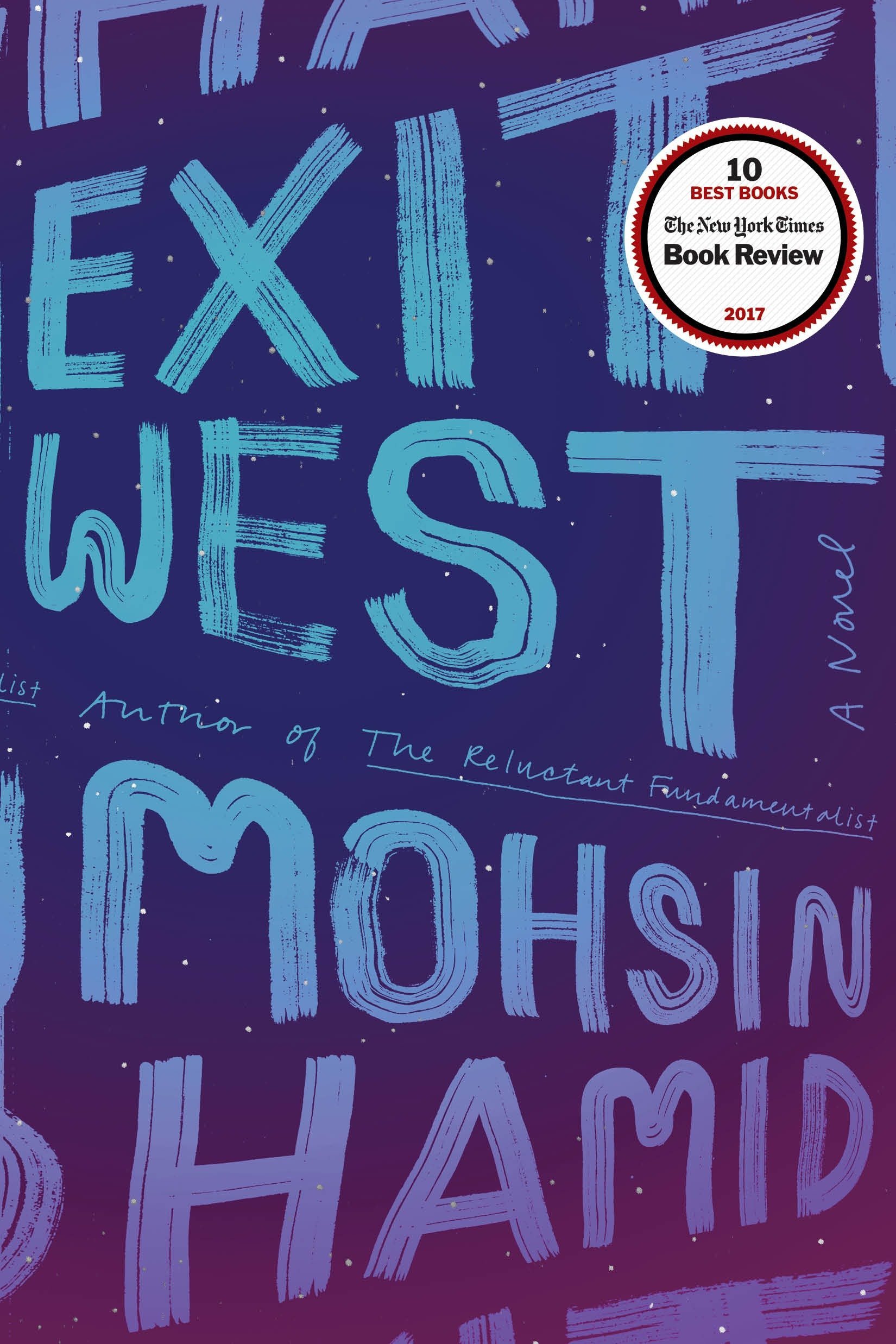
Exit West by Mohsin Hamid

It's rare that you find a book that you want to call enchanting, and probably much rarer that you'd want to apply that term to a book that is, in very real and difficult ways, about refugees and the feeling of crisis that has been developing around them. Yet, Mohsin Hamid has done that, written something that feels like a parable or myth for the modern day, with a sense of detachment that is nonetheless warm and kind. I really enjoyed Exit West, from beginning to end.

From what I remember from a few of the reviews, some people stubbed their toes on the one element of the book that is not strict realism, but since I'm a genre reader at heart, I didn't have a problem with it at all. More than that, I think it's necessary to show some aspects of this experience that Hamid would have had trouble accessing otherwise. I'll talk more about that in a minute, but I really do think that it is integral, not tacked-on or superfluous.

We start in an unnamed city, probably in the Middle East, given what we know of names and customs. Saeed and Nadia meet before the situation in their city gets too bad, at a computer class. Nadia always wears a full robe covering her, although she rides a motorcycle and is noticeably less religious than Saeed - she wears it because she lives by herself and feels it offers her protection as she travels the city. They fall for each other almost immediately.

Then the city starts to become more unsafe - militants take over parts of it, behaviour becomes more strictly policed, cell phones start not working. Without them, Saeed and Nadia have several nervewracking days when they don't know how to find each other. Bombs fall. They reunite, and Nadia ends up living with Saeed's family for a while.

Then enters the strangeness. There start to be rumours of doors that open to other places on the planet. Once they are discovered, they appear to be fixed. There is no particular rhyme or reason to where they appear, just that when you pass (with difficulty) through a door, you come out somewhere else. Because they are fixed, these can become ports of entry to other countries. In Saeed and Nadia's case, this holds the potential to take them away from the war that has taken their city. But because they are fixed, other countries can discover them too, and if you aren't one of the lucky few to get through before they are discovered, they will not necessarily lead you to an entirely new life.

In fact, when Saeed and Nadia make their way through one to their first port of call, they find themselves in a refugee camp, kept to one part of the island, the way back to their origins left open by a government who really wishes they would disappear. From there, they make two more jumps, discovering nativism and potential violence in England, and a ramshackle community being built in California, which is neither hostile nor particularly welcoming.

This all unfolds more or less gently, with Saeed and Nadia's relationship developing through it all. They are not married, the only ties those of love and the country they left behind. Saeed's father, before they left him, asked her only to help his son get to safety, not to stay with him forever. As they move through new experience after new experience, Nadia, still in her voluminous robes, paradoxically finds it easier to find herself a place in each new country, while Saeed turns more and more strongly to things that remind him of home.

This is all told sparely, but with a warm detachment rather than a cold clinicalness. Because it is all sketched so lightly and so distantly, it takes on the feel of a myth, of a legend, of a parable about our world, about where home is, what being a refugee means, how we close borders, and what might happen if we opened them.

Thursday, 10 January 2019

Swing Time by Zadie Smith

I generally really love Zadie Smith's books. They're delightful, interesting, they make me think and sometimes make me laugh. She's got such an eye for aspects of London, and how Englishness and race collide or intersect, and how the two might be negotiated. That said, though, I don't feel like I loved Swing Time quite as much as I have some of her others. It's not bad - I had fun reading it. But it's already starting to fade in my memory, which is not a great sign.  While I was reading it, I was sure I'd have lots to talk about in this review, and I've already forgotten what all those things were, which is a pity.

I don't know what I'm having trouble connecting with. I felt much more engaged in the early parts of the novel, when we were with the two leads, Tracey and the unnamed narrator, growing up in a relatively poor part of London. Both girls have one Black parent and one white one, but their living situations are starkly different - the narrator's mother is bent on learning all the theory she can, aiming at eventually going into politics (and doing so.) She is driven, and pushes her daughter hard, not necessarily seeing the spots where theory doesn't meet practice all that well. But still, it's a loving family situation, rounded out by the narrator's father, who is caring and unambitious.

Tracey's mother is more detached, more permissive, and Tracey's father is only rarely part of her life. Tracey tries to say that that's because he's one of Michael Jackson's backup dancers and on tour, but the truth is that he's often in jail. The two girls bond over a dance class, where Tracey shines, and the narrator does not. The narrator has a good singing voice, but there's no encouragement for her to pursue it.

Perhaps it's where the book veers into the narrator's adult life as an assistant to a pop star that failed to hold me. The world of pop music is not one I feel particularly close to, and this version of Madonna/Kylie Minogue/whatever is fine, but I didn't feel like it wormed its way inside me. In a lot of ways, this section feels very much like how the narrator describes this decade-long interlude in her life - detached from the rest of the world. But while the narrator is wrapped up in Aimee and Aimee's sense of self, I didn't connect with it, so when she returns from that land of the very rich and very famous, it didn't stick with me.

At any rate, much of book centers around the narrator's work as Aimee's first personal assistant, including a bunch of trips to West Africa to set up a girls' school. Aimee is heavily invested in this project, but impatient to cut through both red tape and the advice from those with experience in non-governmental organizations in the region. The narrator ends up spending quite a bit of time there in advance of each of Aimee's trips, meeting the villagers as well as the advisor to the project, a man who is frustrated by Aimee's intent to pretend that what is complex is actually simple.

Meanwhile, Tracey's life initially resulted in a few roles in musicals in the chorus, dancing, but later changes into motherhood and sending increasingly angry and unhinged emails to the narrator's mother, who is now an M.P., dating a woman, and also trying to bring her concerns to Aimee about the school, through her daughter. Everything for the narrator falls apart, as we're told in the first couple of pages it will, and she is back in London, back in a world that she's been out of for a decade, with her mother in hospice, and no friends.

It really does feel like there are a lot of good elements here, but somehow, still, I don't like it quite as well as Smith's other books. It's still immensely readable, but it's not sticking to me. I wish I hadn't forgotten those things I wanted to write about, but so it goes.

Friday, 4 January 2019

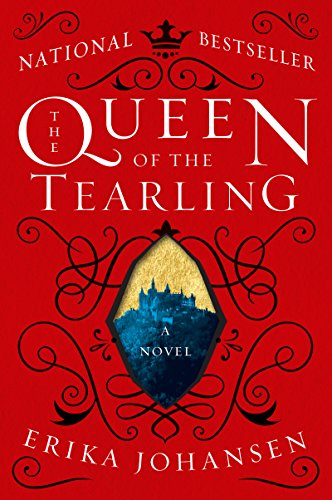
Queen of the Tearling by Erika Johansen

I try not to be hugely jaded when I start a new YA book about a young woman unprepared to find out she's royalty of a fantasy kingdom and has to assume the throne. And I guess in this case, the young woman in question (Kelsea) was raised knowing she was the heir, just far away from the centres of power. I don't mind this aspect of the Arthurian legend being applied to young women in our context, but I've so rarely seen it done well.

In this case, the book and I didn't get off on the best foot, as for approximately the first hundred pages or so, the narrative relied heavily on a trope everyone should know I hate. It's lazy, and it's infuriating. It is this: there's information the young person really should know, and the people around them know it and have the time to share, but refuse for no fucking good reason, just bullshit like "if you don't know, I can't tell you!" or "you'll find out soon enough, highness," or just plain "I'm not going to tell you." This narrative trick to slow down the story makes me stabby, and I wish writers would cut it the fuck out.

Particularly, in this case, when the young person in question is riding to take possession of her kingdom, surrounded by men loyal to her cause, and has every reason to not only want to know about the state of her kingdom, but a huge need to! You know, you can tell people things! Even difficult things! And in fact, their responses might be stronger and more nuanced if they had the time to think things through instead of being thrust into situations! Kneejerk reactions are not the be-all and fucking end-all!

Except when it comes to slavery, which is always, unequivocally bad, but there was nothing to be gained by not telling Kelsea that every year, hundreds of her citizens were being rounded up and sent to slavery in a more powerful neighboring country as the cost of keeping the peace. It doesn't help to withhold this information, and it wouldn't lessen the emotional impact of seeing it. If you really want to see her shock from a completely oblivious standpoint, then find an excuse why the question never comes up, rather than her asking half a dozen fucking times and having people not answer. Kelsea, these people may suck as your advisors, if they won't tell you this basic shit. Seriously.

Luckily, once she got to the capitol and freed the slave caravan and took over the throne, the book got quite a lot better. It then became a more interesting tale of her trying to consolidate power and do the right thing instead of Knowledge-Keep-Away.  She finds interesting allies, the betrayal from within their ranks is well done, as is her growing sense of self and what she must do (and the magical powers than come along with it, because of course the necklaces she has are magical).

But are they magical? Is this book a fantasy? People in the world call it magic, and the power of the Red Queen of the evil neighbouring country is also so deemed. We see the Red Queen summon something we're supposed to think is a demon to devour the life force of a child (just in case we weren't convinced she was Bad-with-a-capital-B). However, there are also what feels like strong hints that this might actually be science fiction instead, and either the next two books have some nifty reveals, or this is just a confused mishmash. I'm not sure which yet, but I'll give Johansen the benefit of the doubt.

The reasons it feels suspiciously like SF are the tales of how they came to this new country, with a leader trying to found a socialist utopia that failed (with a king? More explanation, please.) It's said quite clearly that they came in ships from Europe and North America to found these new kingdoms in new lands, losing most of their science on the way. Science that seems to have been very advanced. And they have no connection to the lands from which they originally came.

In other words, if these aren't generations-distorted tales of a caravan of space ships moving between planets, then I am going to be very highly disappointed. This idea works nicely where literal ships would not. Technology levels are all over the place, but there seems to be at least the potential for devices that are at least as powerful as we have now, so this strongly points to science fiction, in much the same way that Anne McCaffrey's Pern books are science fiction.

If this all pays off, and we keep exploring the difficulties in re-establishing a socialist kingdom (really? A kingdom?), then I'll be happy. If not, I'll be an old cynic once again. There's potential here. Will it pay off?

Thursday, 3 January 2019

Bring Up The Bodies by Hilary Mantel

Reviewing series is weird. Sometimes I've said almost all I have to say about the first book, and it isn't that the second book is bad, it's just that I don't have anything to add. Often, the later books are just as good, it's just not shiny and new! (Don't get me wrong, I love series, a lot. They're just hard to review.)  It's weirdly compounded when we're in Hilary Mantel territory, where this is all terribly literary, and it's not like a series where a new book is going to get pumped out every year or so. This is high brow, people, and yet.

And yet, while I enjoyed Bring Up the Bodies a whole hell of a lot, I feel like a lot of this review might be rehashing what I thought of Wolf Hall. For context, Wolf Hall made it into my Top Ten of the year in which I read it, so please, don't take this as a complaint. Bring Up the Bodies is really, really fucking good. The conceit where Thomas Cromwell is only referred to as "he" was barely noticeable by this time, and of course, this book covers the downfall of Anne Boleyn and her retinue, so you'd probably have to do a pretty crappy job to make that uninteresting.

It's more than that, though. Mantel paints her Tudor world with such skill, giving us people who are recognizable as fallible human beings without ever trying to make them 21st-century in their actions or speech. What's more impressive is that there is quite a cast of characters here, and yet I never felt at sea in their midst. That is a feat and a half. But Mantel introduces who she needs to, adds a few pertinent comments, and then links back on their next appearance so skillfully that I felt like I had a general handle on the players and situation.

She makes all these long-dead Tudors come to life. We can't know how accurate she is, but it's enough to say that it feels real, like it could have happened just like this. We see as Henry grows dissatisfied with his ten-year marriage to Anne, and grows attracted to Jane Seymour, her very reticence alluring him. Katherine grows ill, and the opportunity grows that some day soon, the dismissed Queen will die, leaving Anne's position (or, more pertinently, the position of Queen) open for a marriage that will be recognized by the Pope.

Anne can't believe that Henry's straying eyes will be permanent - she's won him back before. And likewise, her brother and those she has preferred have grown accustomed to the liberties they've enjoyed at the court. (Whether or not those liberties included the Queen's bed Mantel cleverly leaves up to reader to decide. We hear what the evidence was, both the parts that might support it, and those that might have been trumped up to free a king of a marriage he wanted to leave.)

All this comes through Cromwell, and his uneasy position in court, still disdained by those born to the nobility.  He has increasing power that could, with Anne's fall, be toppled. Or by Anne's success, threatened. There's a needle he has to thread to get himself and his household through, and he never stops scheming to do it, reading Henry as few others could, understanding all the venal and virtuous motives (mostly venal) of those around the court.

This is not a potboiler, but there's always something going on to hold the attention, and subtly, hints of something more. I enjoyed Bringing Up the Bodies a lot. If you haven't read Wolf Hall yet, you might want to, and then traipse happily along to this one.

Tuesday, 1 January 2019

The Big Over Easy by Jasper Fforde

There's a sense of contagious literary joy about Jasper Fforde's works, a gleeful irreverence that is not disdain, a mocking that still allows for enjoyment. It's not mean-spirited, and what amazes me most about this particular series is that it manages to poke fun at the tropes of the mystery novel and of nursery rhymes, while still being a damned good murder mystery. It's got the conventions down, using them even as they are subverted, and highlighting them through investigating nursery crimes is a great deal of fun.

(I read these books out of order, The Fourth Bear first, and only now, years later, The Big Over Easy.)  As the title suggests, Humpty Dumpty has had a great fall, aided by a single shot at close range. There are dames, of course, because apparently Humpty was quite a ladies man, and had a past of ex-wives and ex-lovers who all still love him as much as they hate him.  When he's found in pieces beside a wall, Detective Inspector (I'm not sure that's the right rank) Jack Spratt is called on to the case.

I particularly love the fun that Fforde is having with Jack, given that there are so many Jacks in nursery rhymes and fairy tales, and somehow this Jack encompasses them all, not only having had a first wife who could eat no lean, but also selling his mother's prized portrait of a cow for a handful of magic beans, and killing a few giants very tall men, enough that he's got a bit of a reputation, although he will insist only one was an actual giant, and all were in self-defense.

Jack heads up the Nursery Crimes division, which is on the verge of being shut down. This would be because nursery rhyme-related crimes are not a priority in the new, publicity-driven British police force, where it all comes down to how many inches you get in Amazing Crime Stories or one of its lesser brethren, and how those stories manage to thrill readers while not rely on butler-committed murder. It takes a lot of work to find those cases that are twisty and hinge on putting together clues miraculously at the eleventh hour, and if the case looks too straightforward, well, no one will really notice if you just shoehorn a better dramatic progression in, will they?

Jack would notice. While his former partner has gone on to be the most famous in the biz, Jack soon finds out that his recent case that traced a spectacular killing to a Russian mob hit instead of something much more mundane may depend on incredibly dicey forensic evidence. Jack, on the other hand, has just had a case fall apart in trial, as an all-pig jury decided that heating a giant pot of water in the fireplace for six hours so that it would be waiting for the Big Bad Wolf when he climbed down the chimney was not evidence of premeditation.

As Humpty's case grows more interesting, and starts to include two competing foot medicine companies, the ex-partner starts to sniff around, using Jack's new partner, Mary Mary (Quite Contrary) as an in, promising her a chance to be his new sidekick/chronicler. Jack is determined to keep the case, and his division, and quite frankly, it all just gets weirder and weirder from here.  I haven't even mentioned Prometheus yet.

And won't. Let it just be said that there is so much weird and wonderful going on, and I love all the allusions, and the cheekiness with which Fforde blends it all. You don't find much that's this playful and fun while also having a few literary things to say, and dammitall, a mystery to solve!