Pages

Friday, 30 November 2018

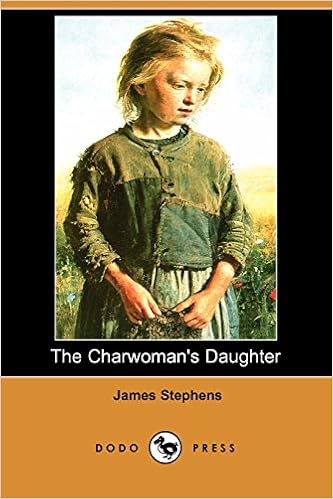
The Charwoman's Daughter by James Stephens

Sometimes, my lists just throw the strangest books in my lap. Mostly, if I'm pulling from one of the many editions of 1001 Books to Read Before You Die, I get why they're on the list, whether or not I like them. (I'm around 20% done with that one.)  This book, though, I am a little baffled by. It's not very long, and it feels like there's not a lot too it. As a look at poverty, it's no Ragged Trousered Philanthropists. As a slice of life in Dublin, it's no Ulysses. As a novel about the plight of women, it's...well, it's just a bit strange.

It does not help that the main character is named Mary Makebelieve.

I just did some research on the author, and it sounds like James Stephens is best known for retellings of Irish myths and legends, and frankly, I would far rather have read one of those. Unless this is supposed to also be one, but I'm not sure which myth or legend it would be. He also claimed to share a birthday with James Joyce, who was a friend of his, but he was likely wrong. In the end, I didn't mind reading this, but I didn't get it.

Mary is a sixteen year old girl. She does not seem overly prone to fabulizing, despite her name. She is not particularly educated, nor does she work. Her mother, as the title of the book indicates, is a charwoman, but frequently gets fired from her housecleaning jobs because she does not like employers who look down on her. She makes enough so that Mary doesn't have to work. While she is at work, Mary wanders the streets of Dublin, in a fairly innocent way.

That's pretty much her whole life - evenings with her mother, days looking in shop windows and at people as she promenades.

The first thing that changes is that she notices a burly policeman, which leads her to a fairly disturbing moment where she asks her mother if it is nice to be hit by a man. Which...kind of makes her a little dull - her mother is profoundly upset by the question, and I'm not sure what in Mary's life was supposed to give her the impression domestic violence was awesome.

She's innocent of sex, pretty much, but it doesn't seem due to religion, but more that her mother wants to keep her a little girl. She meets the policeman a few times in the park, but nothing much happens other than that he talks and she listens. He gets a bit more aggressive when she has to fill in for her mother cleaning and he sees her class, but that causes her to pull away, causing him to propose.

But that scene isn't that stressful either - Mary's mother leaves it up to her, she says she doesn't want to marry him, that's about it. The policeman does go and beat up the other young man he's seen her with, but that's about the end of it. Mary seems like she'll end up with the other young man, and that seems like it would be okay.

I have been saying "seems" a whole lot, and that's because we don't get much inside these characters, nor is the action particularly compelling. I'd guess it's supposed to be a slice of life in Dublin, but it's a pretty mundane one. And the writing isn't enough to propel me through - there's no engrossing prose to make this daily life mean something more.

In the end, I don't get it. I just don't.

Wednesday, 28 November 2018

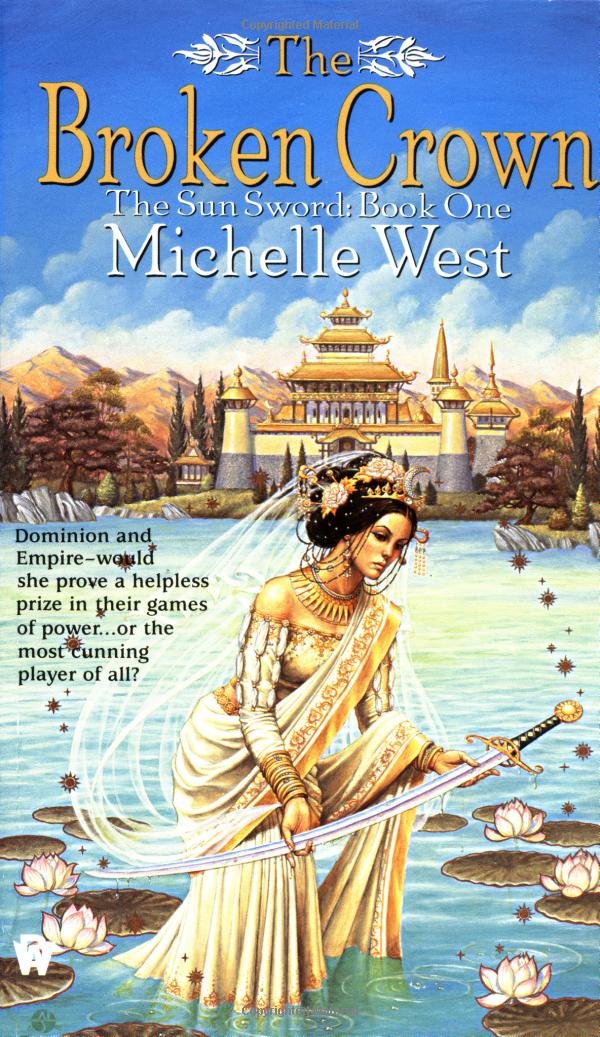
The Broken Crown by Michelle West

People recommend books to me a lot. It's hard to know when or how to fit them all in! And then there's the worry I won't like a book that is very dear to a dear friend's heart. For a long time, I just avoided reading books that had been recommended to me, unless someone pushed a physical copy into my hot little hands. (This is still the fastest way to get a book to the top of my list.) So I started a new list to read of books friends recommended. If you want to get in on this, you can recommend a book on this post.

This book was recommended to me by Shawn

There are a lot of things I liked about this book. I can be seduced by sprawling fantasies (more so if they're not a quest narrative), strange lands with political intrigues, magic that is secondary to politics but not irrelevant, and interesting gender politics. The Broken Crown has that, in abundance. And yet, at the same time, I don't know if I'm running right out to get the next one. I haven't quite been convinced to add Michelle West to my list of authors I need to follow fervently. That might happen eventually, and I'm certainly happy to read more in this world, or more of her books, but I have not yet hit the point where a switch is flipped and I become evangelical.

(Oh, oh, just wait for a review next week of a book that immediately did make me evangelical. I can't wait to tell you all about it.)

I think where I did struggle a bit was that this was one of those books with such a huge sprawling cast across countries and principalities, and a few names or ways of naming each character, that it took until I was a good 500 pages in that I really felt like I had a grasp on what the everloving hell was going on. I got there eventually! But it was a bit of a slog and a lot of "who the heck was this again?" The cast of characters included at the front of the book was very much less than useful - I think everyone I tried to look up I couldn't find there.

Now having a bit better grounding of the history and sort-of the geography of this world (as good as my not-visual-thinking self will ever have), I might do better with the next book, now I know the players and the fault lines. There were times near the beginning where being a bit more straightforward would have been good.

But let's go on to what I did like. I really liked the juxtaposition of the relative powers of men and women in this largely patriarchal society, but one in which there are kinds of power, oblique though they may be, to which women have recourse. And I particularly liked the nuance West threw on to the harem - that it is the primary wife's harem. Her husband may have access, and use his other wives for whatever he wants, and that is ugly. Despite this, they are her wives, first and foremost, and the women know what that means, but the men might go their entire lives unawares of the primary emotional and sexual attachments within the harem.

The world in the north, too, seems to be more egalitarian, which pisses off those in the south to no end. So much so that some are willing to ally with demons in an attempt to further enforce the rule of the solar Lord at the expense of the Lady. The women aren't too fond of that idea, obviously, and neither are some of the southern subjects, but those in power will trade much to get more authority. It's all heading to war.

In this, there are a couple of women around who the story revolves, although they are not always present. Primarily, it is the story of Diora, the most beautiful young woman in the South, married to what is more or less the high king's son. A coup leaves her alive, but she's meant to be a pawn in the struggles for control after the royal family is all but wiped out. She's not, but the weapons at her disposal are subtle ones.

Now that I get what's going on, I am willing to go further in this world. Just maybe not right away.

Monday, 26 November 2018

The Waking Land by Callie Bates

It is a very bad mistake to have two female characters in your YA fantasy novel who are far more interesting and less whiny than your main character. I know you might think you know the story you want to tell, but if there's one that looks way better in the background, all the flaws of the foreground are going to show up rather blatantly. And that, unfortunately, is the problem there.

The problem is not the world! The world is interesting, this form of magic is interesting, the world history we find out about is interesting, and many of the minor characters are interesting! It is mostly that the main character is irritating beyond belief, holding tenaciously to views long past when she should have at least started to question them, and worse than that, many of the conflicts in this novel are the kind where they could be solved by two people sitting the fuck down and talking to each other. Just...talking to each other and saying things honestly, and if that is all that is supplying your damned tension, then there is something very, very wrong here.

This is a story of a divided and conquered land. The king in the south brought together two previously united lands, but by claiming one as the home of civilication, and the other the home of barbarism, only in need of subdual. This is colonialism, at least in part, but that's not really ever grappled with. I suppose it has most resonance with the British and Ireland, not least because of all the standing stones and the place names that sound vaguely Irish.

Elanna is the daughter of the lord in the north who tried to raise a rebellion, taken as a hostage by the king in the south. The inside cover blurb talks about how intensely devoted she is to this substitute father, but on the page, it really comes down to a relatively tepid dinner. Her allegiances more circle around how she has been taught to feel shame at her heritage and hates her parents for letting her go, than that she really loves or does more than like the king. At any rate, it's not long until he's dead, and she's on the hook for his murder, framed by the king's daughter, the new Queen, and her minions.

One of the problems is that Elanna is supposed to be around twenty here, and acts like she's twelve. She believes everything she's ever been told by the king, and nothing she's ever heard otherwise. If we had some more exposition about why she's this sheltered, particularly when her best friend is a revolutionary firebrand, that might help. As it is, it seems impossible that she's been best friends with Victoire, who as soon as the king is dead, heads out on the road to start leafleting about how corrupt the king was, his daughter will be, and the ways in which the taxes on the subjects have been misused. With all the facts at her disposal. Not once in more than ten years of friendship did Elanna ever have a remotely political discussion with her entirely political friend? Not once?

(And that's a big part of the problem - Victoire is way more interesting and intelligent, and able to see what's in front of her face, and analyze what's going on. I wanted to be with her, as she struck out on her own to foment rebellion, leaving the story for a while. It sounded far, far more fun.)

Elanna escapes and is reunited with her parents, at whom she is mad for...I'm not sure? Having let her go to be a hostage, even though Elanna well remembers how the king (whom she's supposed to love like a father, remember) put a gun to her head to force her father to give up a hostage. I mean, if we were into Stockholm Syndrome, that would be one thing, but nothing happens to make that make sense. It seems like she's had a distant life without too many fetters, or too many freedoms. Nothing that wouldn't let her talk to others and make up her own mind about things.

She goes to the north, to Caeris, and harnesses the magic she has long hidden (and wouldn't that also give her some questions about where she's lived for half her life?) to become one with the land, bringing the very rocks and trees to bear in the ensuing battle. But not before a bunch of times she decides she hates her parents and whines. (Another young woman shows up, from the tribes to the very north of Caeris, and she's more interesting than Elanna too.) Oh, of course, there's a young male magician for Elanna to swoon over, and I just...I don't mind romance, but this was so rote, while somehow thinking it was inventive.

The publisher tries to compare this to Naomi Novik's wonderful Uprooted, and I picked it up because it was recommended as a "Read-Alike" for Catherynne Valente's masterpiece, Deathless. Those are poor books to compare this to, because next to those two very assured fairy-tale-like adventures, this looks even dingier. It is another in my series of reading Read-Alikes where I am reminded, yet again, of Ebert's Law. It's not what it is about, it's how it is about it.  What The Waking Land is about is interesting. How it is about it is not.

Thursday, 22 November 2018

All My Puny Sorrows by Miriam Toews

This book broke me apart, numerous times. Every time I read some of it, there was a turn of phrase that just flayed the skin off my bones. Once, I sat stuffing my fist into my mouth and silently screaming, because the feelings it provoked were so intense. This is probably not a book you want to read if you've recently lost someone or are dealing with the prospect of losing someone. Unless you need that process to be seen, to find your experience reflected. This book does that. I do not think I could have read it a year ago, but I'm very glad I read it now.

Look, if you'd asked me a month ago what my top book of the year was going to be, there would have been only one candidate: N.K. Jemisin's The Stone Sky. Now there are two candidates and I do not know which one I will pick.

Miriam Toews is always an amazing author, one who frequently brings me to tears, and so it is with that in mind that I say that this is the best book of hers I've read. It is so raw, so visceral, so mundane in its capturing of the strange twilight world of hospitals and of dread and of grief. There were things I recognized on a molecular level. There were aspects of it that were not part of my experience, but which she captured so clearly and so unsparingly that I ached.

I have grief in common with the narrator (and there are certain similarities to Toews' own experiences, but I am not going to psychoanalyze what is fictional and and what is not. I'm not sure it's a useful distinction here, and at any rate, it's a fool's game.)  I have had days that rotate around the hospital, around a hospital bed.

I do not have in common the experience of being with someone I love dearly when they are suicidal. I do not know what it is like to watch them try, again and again and beg you to help them by taking them to Switzerland where they could kill themselves legally and peacefully. I do not know what it is like to be so pulled between a desire for the person to stay and a desperate knowledge that they will never want to. (I mean, I know the desire for the person to stay, but every time it's been a process where nobody's wishes had anything to do with the outcome.)

Yoli, the main character, a novelist, is with her sister, Elfrieda, intermittently, through suicide attempts. So is their mother and her sister's partner. They all struggle with wanting her to live without being able to do anything to get her to want to live. And this is not a book where it's about volition or selfishness. It's not simple at all. It's desperately complex, and the knotting up of the main character over whether or not to help her sister is brutal. To be asked to do something that would remove someone you love most from the world, to be asked in the process to damage all the relationships you would be left with afterwards, if you helped a loved one die by suicide without their knowledge. I cannot see a good answer, and it is awful.

Elf's struggle to find a way to die is juxtaposed with other sudden health crises, as the world does not patiently wait for one catastrophe to resolve before another happens. And there is a similarity and yet a difference between Elf's experience in hospital and that of Yoli and Elf's aunt. The body betrays us. The mind betrays us. The world is inexorable, and what you want has so little to do with it. Except for Elf, who wants above all to die.

It is the medical professionals who treat Elfrieda like she's being selfish, who reproach her for not getting better, not her family. Yoli and Elf have already lived through the suicide of their father, they know the terrain. Yoli's mother weathers all these losses, and one of her daughters trying desperately to leave the world, and it hurts.

It is how clear and how direct Toews' prose is that makes this devastating. It isn't flowery, it isn't trying to make this more tragic by piling on poignant details. It relies on little observations, the ways in which real life continues, in which the world is what the world is, the way the times when you are not at the hospital coexist with the times that you are. And every one of those observations is a knife that cuts.

Near the end, Yoli talks about her mother moving to live with her in Toronto, and there's a line about three women circling the wagons and coping with their dead, and I lost it. I'd lost it before, but this line cut right through everything in the world, all the grief I'd been able to carry more lightly, and made me want my sisters, made me want the women of my family and our partners, and to have us all together. We've been together, online, but I wanted so strongly to have them here, right now.

And then, of course, there's watching the Blue Jays as a grieving technique, and I know that so intimately as well. So much of this resonated, despite the different circumstances. I have rarely read a book this powerful. I don't know that my heart could take reading a novel like this often, so that might be a good thing. It is so good, and so painful.

Tuesday, 20 November 2018

Nora Webster by Colm Toibin

When you lose someone central to your life, who you are changes. It's not on purpose, not precisely, and it's not to suggest that you deformed your life around that person, but there is a truth that the people you are around do have an influence on what you do, and where you go, and who you are. It's not necessarily negative, it's just life. It's part of being part of a family  When they are gone, it's not that you flower or blossom, it's that the way you grow is going to be fundamentally different from the way you would have were they still there.

That's where we are with Nora Webster, the eponymous character in Colm Toibin's novel. Living in Ireland in the late 1960s, right around the start of The Troubles, she is a mother of four, none of them very small children, who has recently lost her husband. We only meet him through her memories of him, and one encounter that was either a dream or a ghost.

This is not a book fully of overflowing emotion and grief. It is a smaller, quieter grief, a numbness that doesn't ever entirely go away, even though Nora gradually gets to a point where it is less on her mind. Her husband died in an illness that took a few weeks, but no more. She doesn't angst over it, but that doesn't mean it doesn't cause her pain. She doesn't want to go back to the cottage they spent happy summers in, so she sells it. She doesn't agonize over it, she just does it. More on her mind is the judgement she might face from family and neighbours over disposing of the property.

We quietly go with Nora as she faces her new life - getting a job, or rather, getting back an old job, with a supervisor who hates her, working for people she went to school with, who do not know how to approach her. We see as she gradually enlarges her social circle, as well as seeing her discomfort around her own sisters, and greater comfort around her in-laws, who were there as her husband was dying, and with whom she shares the knowledge that they all know all there is to be said about that.

Her older daughters are already away from home at school and college, and figuring out what their own lives look like, while her two sons are younger, although still old enough to be left on their own if necessary. There are no stereotypical struggles here. These relationships are not always easy, but they are not always hard, either.

Nora is invited out to help score a trivia night in a nearby town, and through that, is invited to both a music appreciation society that her husband would have scoffed at, and singing lessons. She finds both difficult and satisfying, and again, I like it about the book that everything is quietly complex. Not emotionally or disproportionately difficult, but just a little bit complicated.

We also get the ways in which women in this world navigate the people around them, and how that differs from men. Everyone seems to go through a local nun, for one, if they need something communicated that, for whatever reason, they can't say themselves. Then there are divisions of class power that govern relationships, and far away, are the start of the Troubles in Northern Ireland, protests in support of which Nora's younger daughter gets involved.

This is one of those slice of life books, but it's a very particular life, in a very particular moment. It made me think about my mother, and her experiences after my father died. I think there was more obvious emotion there, but there were all the small moments that were her figuring out what her life was going to look like without my father, and although my parents had complemented each other amazingly, there were things she could then do that were not what she would have done before, and were part of her figuring out her new day-to-day. It's not an easy process, but it goes on all the time, and it's not something we think about.

Friday, 16 November 2018

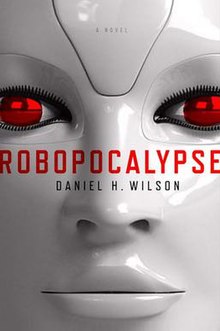
Robopocalypse by Daniel H. Wilson

If I really liked Charlie Jane Anders' take on the emergence of artificial intelligence, alas, the same cannot be said for Daniel H. Wilson's Robopocalypse. I wanted to like this, really I did. I was hoping to include it in a proposed theme for my SF/F book club of science fiction and fantasy written by Indigenous authors. And while there are a lot of interesting Native characters here, unfortunately, the book itself just wasn't that good, and had a few major problems that drove me bonkers.

I mean, this book and I got off on the wrong foot right away. (I almost wrote wrong foot right off the bat, but that was a little too mixed-metaphor.) I am not fond of AHHHH KILLER AI!!! books. I don't ask that all AIs be benevolent, but I do like a less extreme view than THE ROBOTS ARE COMING TO KILL US ALL.  It feels a little lazy. And a lot extreme.

But really, my main problem is that Wilson sets up a central conceit for the format of the novel, and then breaks it, repeatedly, in very distracting ways. It doesn't work, and if the format means you can't tell the story the way you thought you were going to without throwing in stuff that could not be known at the time by the people who knew it, then throw that format out the damn window and find something else. Experiments in form are great. When they hamstring and undercut your story? Not so much.

So what is the format? Well, we begin at the end - we know, from the first chapter, that humans have just defeated the master AI, known as Big Rob. This is also just a weirdly disconcerting name, but I'll let that one pass. It was a long and gruesome war, but we won. (Which does interesting things to the narrative, but it does undercut tension, which, given that this is more a thriller than anything else, is kind of a strange choice.)

Last out of the hole in Alaska that the humans just bombed the shit out of is a black box, with footage of most of the robot war. So the rest of the book is the narrator narrating what he sees on the black box, sometimes supplemented with his own recollections of these events. It's a neat conceit, but...it doesn't work.

It doesn't work because these characters often seem to have knowledge they cannot have had, and for no good reason. It doesn't work because while sometimes Caleb (I think that's his name, I'm not that sure), the narrator, just tells what he sees, more often as the book goes on, we're inside the heads of humans and robots, hearing things in the first person, in a way that is not possible given the central conceit of the book. If this had just been a collection of narrators, that would have been fine. Trying to shoehorn them into this structure caused more confusion and annoyance than it added sophistication.

Take, for instance, Paul. Paul is Lakota and a soldier of the United States in Afghanistan. He operates a mobile unit that interacts with the Afghani population, and so sees the moment when the robot is infected with the AI's virus and turns violently on the people among which it's supposed to live. We see Paul's congressional hearing into the incident, and that all works fine. Then he returns to Afghanistan, and is there when communication between humans is cut off, and survives by allying with Afghani hill fighters, taking out the robots from a distance and triangulating their sources. While he might hear the broadcast that comes from England that tells the world about Big Rob, it doesn't make sense for him to then have the level of knowledge about the AI, its location from what we see him able to do, and it doesn't make sense for us to be in his head.

Because he and his closest ally manage to triangulate where the strongest signal coming to the local robots is coming from, which is Alaska, and it would be fine if he just broadcast that - strong signal, going to all robots, don't know what it is. But for some reason, the author has decided to have him broadcast far more information that he has no way of knowing and is actually irrelevant. Let the people in Alaska put two or three pieces together themselves. There's no reason this guy who hasn't had contact with anyone but a few fighters for months to be the strategic commander when there is no back and forth.

And then later, we get sloppier. A robot who is not under control of Big Rob (god, I hate that as a name for the AI. The one it gives itself, Archos, is at least not irritating), joins a human contingent. He says, he says, when he joins that he found out where they were from the human girl named Maria who can interface with the robots. But then, one chapter later, someone introduces him to Maria and he and Maria both make nice, and there's no evidence he ever knew about her. I started to flip back and forth to make sure I wasn't losing my mind, but nope! It's a bad editing mistake.

There are a few good things in here - Maria's story is interesting, although the recounting of her mother's final hours is marred by the same issues, coming from a first-person perspective that a person watching satellite or video footage could not have known. The humans are remarkably willing to accept other humans who have been altered by the robots to include robot parts, and to accept the free robots who join them later. I like the sense that not everything would become xenophobic, but given the rest of the world that Wilson has posited, I'm not sure I buy it. I bought it in Charlie Jane Anders, because that was the world she'd created, and I loved it. I don't buy it here, because it feels incongruous, or at least in need of further explanation than it gets.

I'm disappointed. I wanted to really like this book, but I was far more frustrated by the inconsistencies and overall feel than anything else. I mean, this book drove me to italics. What else do you need to know?
Wednesday, 14 November 2018

All the Birds in the Sky by Charlie Jane Anders

I read two books around the same time that had, as part of the plot, the emergence of an AI. I have to say, I must prefer this one to the other - you'll see in a couple of days why. It's by no means as big a part of this book as it was the other, but this was a much more measured and hopeful book, and so it may be no surprise that I enjoyed that quite a lot. Honestly, this was just a great read, and I can't wait to read more of Charlie Jane Anders' stuff. I can see why this was on so many award short lists for SF/F last year, and why it won the Nebula. So I'm particularly grateful that Tor.com made it one of their book club picks, which meant I was able to move it to the top of my list!

First, let's talk about the writing style. It isn't ornate, and doesn't really draw attention to itself, but as soon as I started reading, Anders' authorial voice immediately made me feel comfortable, like I was entering a conversation with an old friend. I'm trying to think if there's another style it reminds me of, but I'm not sure. It just felt immediately familiar and cozy, and that feeling pulled me through the whole book.

The story is one of a war between science and magic, fought on in a world very like our own, although perhaps a step or two (or not!) closer to climate catastrophe. But before that happens, we spend quite a lot of time with Patricia and Lawrence as children, when they each first discover what will become their lifetimes of endeavour. Patricia, in trying to help animals get away from her psychopathic sister, finds a magic tree that speaks to her, and a Parliament of Birds, but has trouble recapturing it. Lawrence, with parents who want him to never make waves, makes a small time machine that can jump him forward five seconds, allowing him not to get too bored. He also creates the seed of an AI in his closet.

The two bond, becoming friends, although Patricia's magic weirds Lawrence out enough that he distances himself from her. She talks to the AI as well, and Lawrence and Patricia find that they're the only two who understand each other. (They're also being stalked by an assassin under strict orders not to assassinate children, but who is willing to try to break that in order to avert a coming war between science and magic with the potential to destroy the world.)

At a certain point, Patricia goes off to magic school, and Lawrence is able to get into a math-and-science school, and they lose track of each other, each developing their skills. As adults, they run into each other again, Lawrence working for a think tank that pretty much presumes the eventual demise of the planet, and is working to save at least a few people from the death throes. (But doesn't think about the animals.)  Patricia is doing small magicks and being constantly advised against aggrandizement by her fellow magicians. (And there are two schools of magic, which intertwine, which I found interesting.)

They become friends again, and various things happen. Patricia pulls Lawrence's fat out of the fire when one of his inventions yanks one of his coworkers and willing guinea pig out of our reality and into some other space. He's dating someone else, but it always feels like a trick that he's not quite pulling off. Patricia heals the sick and turns the wicked into various animals or other things, and goes to meetings where she always feels like people are ganging up on her for committing a crime she doesn't even understand.

Yet again, these two become the only two to understand each other, and what that means when they are suddenly at war I'll leave you to find out, except to say that I found it all immensely satisfying. There's a real sweetness and warmth to this book, a glowing humanity that permeates a world on the brink of collapse. When we presume the world is going to end, do we help to cause it? And how do we treat the people we see as their opposites? And how does the AI come back into it?

For me, this book was all about the journey and the characters and the prose that felt like home.