I've come back around to my "Read-Alike" project - this is the one where I take my top ten lists, and try books that are recommended by the NoveList database as read-alikes. This has been an interesting object lesson in how much books are how they are about things, not what they are about. (Thank you, Roger Ebert, for putting your finger on this so precisely!) I can almost always see why the algorithm has spat out the results it did, but the books are often vastly different in how they approach similar subject material. Some of these books have been downright terrible. Some are pretty good. One made it onto the next year's Top Ten list, so that time, at least, I found a gem.
I wasn't quite that lucky this time, but neither was this one of the read-alikes that I had to pull myself through bodily, to finish. This is quite good fantasy (with a couple of quibbles). It just doesn't in any way live up to the book that sparked the recommendation. Then again, The Lies of Locke Lamora is a pretty damned high bar to live up to.
In the end, Traitor's Blade was never a chore to read. I enjoyed it while I read it. However, and you can probably tell that there's a however, there wasn't much that made me eager to read any sequels, if there are any. Near the end, something interesting happens, and if the whole book had been about that storyline, I think I'd be much more interested. It is genuinely a bit innovative, but the rest is similar enough to things I've read before that I think I'm good having just read the one.
This is one of the problems with fantasy, sometimes. Some of the tropes have been worn so smooth that revisits to this territory are not my favourite thing. Something about those books would have to be deeply extraordinary to add an author to my list. That didn't happen here.
What we have is three men who seem like they're a reference to the Three Musketeers. In this fantasy kingdom (and magic itself is a little sparse on the ground, but not absent), there was a king. That king wanted to reform the kingdom, making it more just for the common folk, taking power away from the dukes and duchesses. In return, the dukes and duchesses had the king killed. The Greatcoats, the king's personal force, trained to be magistrates to enforce the new laws, did not prevent his death.
As the book opens, it's now been many years. Falcio Val Mond and two of his Greatcoat compatriots are reviled as traitors, both to the king and to the power of the duchies. They hire themselves out as mercenaries, but Falcio cannot let go of the dream of his king. When a wealthy trader they were paid to protect is assassinated, Falcio and his crew join a caravan taking a young woman to a faraway duchy, where political intrigue will ensue. Along the way, Falcio will keep getting distracted by injustice, but see no way to resurrect a dead ideal.
So, the quibble. The author makes a point that the Greatcoats were one-third women, and tries to make this a world without gender roles as strict as we might expect in something that seems roughly like Europe in the Renaissance. However, the main character still tries to use "fights like a girl" as an insult, and defends it even when called on it by other characters. Why would that even be an idiom in this particular world? What kind of sense does that make? It's a weird hill for a fictional character to die on, given that it in no way reflects the society that spawned him.
Oh yeah, and as soon as we get the main character's backstory, there's an immediate fridging for motivation.
Outside of that, the women characters are not bad. I don't feel like they're really really deep, but I don't really feel that the men are either. The characters are interesting enough, just not hugely complex. All in all, this is a swashbuckling fantasy that mostly doesn't have much magic, so it is like The Lies of Locke Lamora. Just nowhere near as much fun, or with as much to say.
Wednesday, 30 January 2019
Tuesday, 29 January 2019
The Death of Mrs. Westaway by Ruth Ware
A friend loaned me this book because it has a tarot reader as a main character, and I'd just recently started reading tarot cards professionally, after having spent 25 years learning them quite thoroughly. The tarot reading is not a huge part of this book, which is mostly a thriller, and not a bad one at that. As it pertained to tarot, I thought it was perhaps unfortunate the exact take Ware decided to take, but it's not an unreasonable one. It's all about expectations from tarot reading, really.
The main character, Hal, lost her mother recently, and in order to make ends meet, has taken up her mother's role as a tarot reader on the pier of an English seaside town. She's in debt with usurious interest, and it's coming due, and her legs and life have been threatened. So, when a letter arrives about a grandmother that can't possibly be hers leaving her a bequest, she decides to see if she can con her way into a small amount of money.
Of course, when she shows up at the funeral and reading of the will, it's not a small bequest at all. It's the entire house, quite a large country estate. So Hal is caught by her lies as family secrets swirl around her, and she has to keep her own secrets while others are definitely keeping theirs - and worse, she starts to like some of the people she's conning.
Hal's a good character, by far and large. It's just too bad that she views her job, and tarot as a whole, as a con. She doesn't believe she can tell the future, so she relies on cold reading. And sure, absolutely, you can read that way. I don't think it's ethical at all, and so yeah, if that's what she's doing, there are issues. (I am terrible at knowing exactly what people are feeling while I'm reading tarot cards. I realized long ago, as a tour guide, that I often mistake deep concentration for disbelief. But then, I also tell people that I'm not psychic before I start their reading, and that I'm not there to wow them with what I know, or to tell them what their futures hold. I'm there to help them reflect on their present)
It gets strange because what Hal seems to think about tarot cards is not that far off what I think. There's no reason for her to run this like a scam. Be up front, tell people you're providing a mirror for their lives, a way to recognize patterns and understand personal stories, but that they'll be doing most of the work fitting what they know to what you're saying. But she thinks she can't say that, and so she runs it like a scam, which is frustrating, upset with herself when she pretends she can tell the future. (Also, the author tries to have it go both ways by having tarot cards whenever they come up, be uncannily accurate about situations.)
But really, that's not the focus of the book. The focus is the family Hal finds herself sort-of part of, the interactions between the three brothers who are her theoretical uncles. Hal discovers a picture fairly quickly of them as young people, with her mother there - a cousin of the family with a similar name to a daughter who disappeared many years ago. So, she's related, but not necessarily the way the lawyer's letter and the will describe. There are concerns about the money, but also about justice, and all three brothers are understandably very interested in whatever happened to their long-lost sister.
And some people don't want the truth to come to light, about the sister, about Hal, about the cousin. Some of the twists seemed a little telegraphed, but all in all, this holds together as a competent thriller set in a spooky old house in England. I'll say mystery too, because it does have some good central mysteries to be uncovered.
The main character, Hal, lost her mother recently, and in order to make ends meet, has taken up her mother's role as a tarot reader on the pier of an English seaside town. She's in debt with usurious interest, and it's coming due, and her legs and life have been threatened. So, when a letter arrives about a grandmother that can't possibly be hers leaving her a bequest, she decides to see if she can con her way into a small amount of money.
Of course, when she shows up at the funeral and reading of the will, it's not a small bequest at all. It's the entire house, quite a large country estate. So Hal is caught by her lies as family secrets swirl around her, and she has to keep her own secrets while others are definitely keeping theirs - and worse, she starts to like some of the people she's conning.
Hal's a good character, by far and large. It's just too bad that she views her job, and tarot as a whole, as a con. She doesn't believe she can tell the future, so she relies on cold reading. And sure, absolutely, you can read that way. I don't think it's ethical at all, and so yeah, if that's what she's doing, there are issues. (I am terrible at knowing exactly what people are feeling while I'm reading tarot cards. I realized long ago, as a tour guide, that I often mistake deep concentration for disbelief. But then, I also tell people that I'm not psychic before I start their reading, and that I'm not there to wow them with what I know, or to tell them what their futures hold. I'm there to help them reflect on their present)
It gets strange because what Hal seems to think about tarot cards is not that far off what I think. There's no reason for her to run this like a scam. Be up front, tell people you're providing a mirror for their lives, a way to recognize patterns and understand personal stories, but that they'll be doing most of the work fitting what they know to what you're saying. But she thinks she can't say that, and so she runs it like a scam, which is frustrating, upset with herself when she pretends she can tell the future. (Also, the author tries to have it go both ways by having tarot cards whenever they come up, be uncannily accurate about situations.)
But really, that's not the focus of the book. The focus is the family Hal finds herself sort-of part of, the interactions between the three brothers who are her theoretical uncles. Hal discovers a picture fairly quickly of them as young people, with her mother there - a cousin of the family with a similar name to a daughter who disappeared many years ago. So, she's related, but not necessarily the way the lawyer's letter and the will describe. There are concerns about the money, but also about justice, and all three brothers are understandably very interested in whatever happened to their long-lost sister.
And some people don't want the truth to come to light, about the sister, about Hal, about the cousin. Some of the twists seemed a little telegraphed, but all in all, this holds together as a competent thriller set in a spooky old house in England. I'll say mystery too, because it does have some good central mysteries to be uncovered.
Wednesday, 23 January 2019
Something More Than Night by Ian Tregillis
*Spoilers Below*
I really wanted to like this book. I really, really did. It sounded so interesting! Unfortunately, the execution didn't quite live up to the premise, and I never sunk into what was going on. I frequently had moments where I wrinkled my brow because the narrative conceit the author was going on just didn't work for me, in the context in which it was done.
When you tell me this is a contemporary fantasy about angels vs. humans, and done with a noir flair? I was very interested. I love noir. I tend to enjoy noir tropes being applied to different circumstances, as long as it is done well. So I started this book expecting to thoroughly enjoy it. Alas, that was not where I ended. I didn't hate it either, it's just that this feels like it's two-thirds of a good book, and one-third...not. Premises aren't fully thought through. Narrative conventions don't hold up to the merest bit of scrutiny. It's just not fully baked.
There are two main characters here - one, Bayliss, is a low level angel who has been given an important task - when Raphael, one of the most important angels, is murdered, he needs to pick a human to take Raphael's place. Preferably one who won't kick up a fuss and will just keep their head down. That one ends up, accidentally, being Molly. Bayliss was out to get her brother killed in an accident and thus turn him into an angel, but Molly stepped in the way, and so, it's her.
Molly is not a pushover, and is pissed that she's dead, ready to push the limits of being an angel, despite what Bayliss says. And as she does, the full extent of the angelic murder plot are slowly revealed, involving people on earth with a penchant for having angel wings grafted on their backs, and a dodgy indulgence system. Also with Molly's own struggles to connect with people she's left behind, when she learns that pushing too hard can lead to brain aneurysms.
You know what? That's all fine. It's where we then try to push noir and noir tropes on top of this story that it starts to fall apart. And it's start at the beginning. Bayliss tells us that, through his centuries on earth, he dealt with the isolation by getting into Raymond Chandler. Which...doesn't account for all the time before that. If he's prone to fads, what were his other coping techniques? The noir is fun, but he constantly reminds us that it's not really like that, it's just the lens he's putting on top of his interactions with angels. It's strangely alienating.
If you get past that, the take on angels is interesting. Angels (and cherubim and all the rest) don't know what the greater power is out there, they just know the Metatron appeared at some point and bound them close to earth, where the consensual reality they create helped stabilize physical laws so that humans could come along. This means that the angels really hate humanity. They see them as part of the bars of their prison. Also, there's no afterlife. Just Molly, and that's a special case.
Here's the spoilery bit, though. It turns out that Bayliss has been lying the whole time, not just to Molly, but to the reader. The problem with trying to use an unreliable narrator technique here is that there's no one he's trying to fool or lie to in his sections of the book. It's not addressed to anyone in particular. It's not addressed to potential readers, a la Murder of Roger Ackroyd, still the gold standard in unreliable narrators. Yes, I get why he lies to Molly, but there seems to be absolutely no reason that the text we're reading should conform to those lies. It's not there to fool anyone, except on the meta level of the author trying to fool the reader.
And this drives me crazy! Give Bayliss someone to be writing this to, someone to whom he also needs to lie, or have it be a detective's report to Molly or whatever the fuck, and then his lying makes sense. It is the disjuncture between the fiction and the stated purpose of the fiction that is the problem. Unreliable narrators can work great, when they're narrating to someone. Take that out, and it's pointless. There was no reason to write it that way. It would have made no difference to the story unfolding if it was the truth of what happened instead, with that juxtaposed to what was told to Molly.
(It's also not great unreliable narrator. I can't think of a single thing that, once the gimmick is revealed, I suddenly see in a new light. It's not a new spin on old things, it's just that most of them seem to never have happened. There's nothing here that rewards the reader for having been interested.)
(Also, I have used too many italics, and have read Emily of New Moon and am now expecting Mr. Carpenter to appear in a puff of smoke and say something withering.)
If this had just undergone a little more thought, if it had jelled more, this might have been a really interesting book. As it was, I was always dissatisfied, even before the reveal. Nothing seemed to fit together right.
I really wanted to like this book. I really, really did. It sounded so interesting! Unfortunately, the execution didn't quite live up to the premise, and I never sunk into what was going on. I frequently had moments where I wrinkled my brow because the narrative conceit the author was going on just didn't work for me, in the context in which it was done.
When you tell me this is a contemporary fantasy about angels vs. humans, and done with a noir flair? I was very interested. I love noir. I tend to enjoy noir tropes being applied to different circumstances, as long as it is done well. So I started this book expecting to thoroughly enjoy it. Alas, that was not where I ended. I didn't hate it either, it's just that this feels like it's two-thirds of a good book, and one-third...not. Premises aren't fully thought through. Narrative conventions don't hold up to the merest bit of scrutiny. It's just not fully baked.
There are two main characters here - one, Bayliss, is a low level angel who has been given an important task - when Raphael, one of the most important angels, is murdered, he needs to pick a human to take Raphael's place. Preferably one who won't kick up a fuss and will just keep their head down. That one ends up, accidentally, being Molly. Bayliss was out to get her brother killed in an accident and thus turn him into an angel, but Molly stepped in the way, and so, it's her.
Molly is not a pushover, and is pissed that she's dead, ready to push the limits of being an angel, despite what Bayliss says. And as she does, the full extent of the angelic murder plot are slowly revealed, involving people on earth with a penchant for having angel wings grafted on their backs, and a dodgy indulgence system. Also with Molly's own struggles to connect with people she's left behind, when she learns that pushing too hard can lead to brain aneurysms.
You know what? That's all fine. It's where we then try to push noir and noir tropes on top of this story that it starts to fall apart. And it's start at the beginning. Bayliss tells us that, through his centuries on earth, he dealt with the isolation by getting into Raymond Chandler. Which...doesn't account for all the time before that. If he's prone to fads, what were his other coping techniques? The noir is fun, but he constantly reminds us that it's not really like that, it's just the lens he's putting on top of his interactions with angels. It's strangely alienating.
If you get past that, the take on angels is interesting. Angels (and cherubim and all the rest) don't know what the greater power is out there, they just know the Metatron appeared at some point and bound them close to earth, where the consensual reality they create helped stabilize physical laws so that humans could come along. This means that the angels really hate humanity. They see them as part of the bars of their prison. Also, there's no afterlife. Just Molly, and that's a special case.
Here's the spoilery bit, though. It turns out that Bayliss has been lying the whole time, not just to Molly, but to the reader. The problem with trying to use an unreliable narrator technique here is that there's no one he's trying to fool or lie to in his sections of the book. It's not addressed to anyone in particular. It's not addressed to potential readers, a la Murder of Roger Ackroyd, still the gold standard in unreliable narrators. Yes, I get why he lies to Molly, but there seems to be absolutely no reason that the text we're reading should conform to those lies. It's not there to fool anyone, except on the meta level of the author trying to fool the reader.
And this drives me crazy! Give Bayliss someone to be writing this to, someone to whom he also needs to lie, or have it be a detective's report to Molly or whatever the fuck, and then his lying makes sense. It is the disjuncture between the fiction and the stated purpose of the fiction that is the problem. Unreliable narrators can work great, when they're narrating to someone. Take that out, and it's pointless. There was no reason to write it that way. It would have made no difference to the story unfolding if it was the truth of what happened instead, with that juxtaposed to what was told to Molly.
(It's also not great unreliable narrator. I can't think of a single thing that, once the gimmick is revealed, I suddenly see in a new light. It's not a new spin on old things, it's just that most of them seem to never have happened. There's nothing here that rewards the reader for having been interested.)
(Also, I have used too many italics, and have read Emily of New Moon and am now expecting Mr. Carpenter to appear in a puff of smoke and say something withering.)
If this had just undergone a little more thought, if it had jelled more, this might have been a really interesting book. As it was, I was always dissatisfied, even before the reveal. Nothing seemed to fit together right.
Tuesday, 22 January 2019
The Ambassadors by Henry James
*Spoilers Below*
I just spent a review trying to figure out why I didn't like a book that was very similar to a "classic." It was kind of a relief to go from that to this book, which is undeniably by someone who is literary and wrote classics, and to be able to say that I really enjoyed The Ambassadors quite a lot. I think I enjoyed it more then A Portrait of a Lady, which had some aspects that grated on me. Phew! I'm not an entire Philistine, after all!
It's funny. This book spends quite a lot of time not saying things directly, even though they're fairly obvious, but it's so indirect that you're not even sure what's not obvious. And yet, it works. It feels like this should drive me crazy, that I should want someone to say what they mean, for once, and yet that is the point of the book. It's about a culture, a place, where things are said and not said in different ways, clashing with another culture in which the things not said are slightly different, but so are the ways in which you interpret things that are not done.
Look at me, I'm turning into Henry James. I'm very sorry if the previous paragraph was oblique. I could narrow it down by giving a spoiler that certainly isn't revealed in these terms in the novel: Yes. They're fucking.
Of course, you can say that, but what does it mean? This is really the great delight of The Ambassadors, that it takes a sexual and emotional relationship so seriously and with such tolerance of ambiguity. What does it mean emotionally, if it means anything at all? What does it mean materially? What does it mean physically? What, oh what, does it mean socially? Sex, after all, does not happen in isolation - it's as much a part of the culture as anything else, just one with heavily charged meanings and interpretations. Oh, Henry James, I sort of love you for this book!
So, we have as a main character Strether, a man in his fifties, editor of a minor literary journal in a small town in New England. He is provisionally engaged to a rich widow of that town, but before they get married, she dispatches him to France to find her wastrel son and convince him to come home and take up the family business.
Once he gets there, though, Strether finds that he rather likes Chad as he is now, that whatever he has been up to in France suits him rather more than not, and whereas he was quite a callow jerk before, now he's charming and altogether polished. Strether also enjoys his own time in Paris very much, but a lot of it is trying to figure out what exactly is going on between Chad and a married woman and/or her daughter.
It is here that no one will give a straight answer. Strether has to observe and become part of Chad's circle to discover who Chad might be romantically attached to, and what that means. Strether is more than willing to let that float as ambiguity, and in fact, seems to prefer it that way. If he doesn't know the exact details of what's going on, he can see the effects, and there is no need for moral judgement. He can simply enjoy Chad as he is now, and be delighted to get to know Marie de Vionnet and her daughter.
So, instead of urging Chad to return to the United States, he encourages him to stay longer, until his mother sends over her daughter and daughter's husband to check up on both Chad and Strether. At that point, Strether must face that the ambiguity he relishes will not be tolerated by New England society, or the daughter, or the mother, and he is being found wanting for not passing harsh moral judgement, immediately.
This isn't all in praise of ambiguity, though. The very looseness of what's been going on has also meant that Strether has been able to tell himself some romantic stories which, it turns out, may not be borne out by the evidence. Chad's attachment may not be quite as firm as it first appears, and he might revert to the New England-style more easily than Strether himself.
All in all, this is a fascination book on the role of cultural context, ambiguity, and judgement in differing societies, and I had a lot of fun reading it. I frequently didn't understand any more than Strether, but that meant I got to discover as he did. It's an interesting read decades on, when the issues that would pop to my mind are not those that would come to others.
I just spent a review trying to figure out why I didn't like a book that was very similar to a "classic." It was kind of a relief to go from that to this book, which is undeniably by someone who is literary and wrote classics, and to be able to say that I really enjoyed The Ambassadors quite a lot. I think I enjoyed it more then A Portrait of a Lady, which had some aspects that grated on me. Phew! I'm not an entire Philistine, after all!
It's funny. This book spends quite a lot of time not saying things directly, even though they're fairly obvious, but it's so indirect that you're not even sure what's not obvious. And yet, it works. It feels like this should drive me crazy, that I should want someone to say what they mean, for once, and yet that is the point of the book. It's about a culture, a place, where things are said and not said in different ways, clashing with another culture in which the things not said are slightly different, but so are the ways in which you interpret things that are not done.
Look at me, I'm turning into Henry James. I'm very sorry if the previous paragraph was oblique. I could narrow it down by giving a spoiler that certainly isn't revealed in these terms in the novel: Yes. They're fucking.
Of course, you can say that, but what does it mean? This is really the great delight of The Ambassadors, that it takes a sexual and emotional relationship so seriously and with such tolerance of ambiguity. What does it mean emotionally, if it means anything at all? What does it mean materially? What does it mean physically? What, oh what, does it mean socially? Sex, after all, does not happen in isolation - it's as much a part of the culture as anything else, just one with heavily charged meanings and interpretations. Oh, Henry James, I sort of love you for this book!
So, we have as a main character Strether, a man in his fifties, editor of a minor literary journal in a small town in New England. He is provisionally engaged to a rich widow of that town, but before they get married, she dispatches him to France to find her wastrel son and convince him to come home and take up the family business.
Once he gets there, though, Strether finds that he rather likes Chad as he is now, that whatever he has been up to in France suits him rather more than not, and whereas he was quite a callow jerk before, now he's charming and altogether polished. Strether also enjoys his own time in Paris very much, but a lot of it is trying to figure out what exactly is going on between Chad and a married woman and/or her daughter.
It is here that no one will give a straight answer. Strether has to observe and become part of Chad's circle to discover who Chad might be romantically attached to, and what that means. Strether is more than willing to let that float as ambiguity, and in fact, seems to prefer it that way. If he doesn't know the exact details of what's going on, he can see the effects, and there is no need for moral judgement. He can simply enjoy Chad as he is now, and be delighted to get to know Marie de Vionnet and her daughter.
So, instead of urging Chad to return to the United States, he encourages him to stay longer, until his mother sends over her daughter and daughter's husband to check up on both Chad and Strether. At that point, Strether must face that the ambiguity he relishes will not be tolerated by New England society, or the daughter, or the mother, and he is being found wanting for not passing harsh moral judgement, immediately.
This isn't all in praise of ambiguity, though. The very looseness of what's been going on has also meant that Strether has been able to tell himself some romantic stories which, it turns out, may not be borne out by the evidence. Chad's attachment may not be quite as firm as it first appears, and he might revert to the New England-style more easily than Strether himself.
All in all, this is a fascination book on the role of cultural context, ambiguity, and judgement in differing societies, and I had a lot of fun reading it. I frequently didn't understand any more than Strether, but that meant I got to discover as he did. It's an interesting read decades on, when the issues that would pop to my mind are not those that would come to others.
Thursday, 17 January 2019
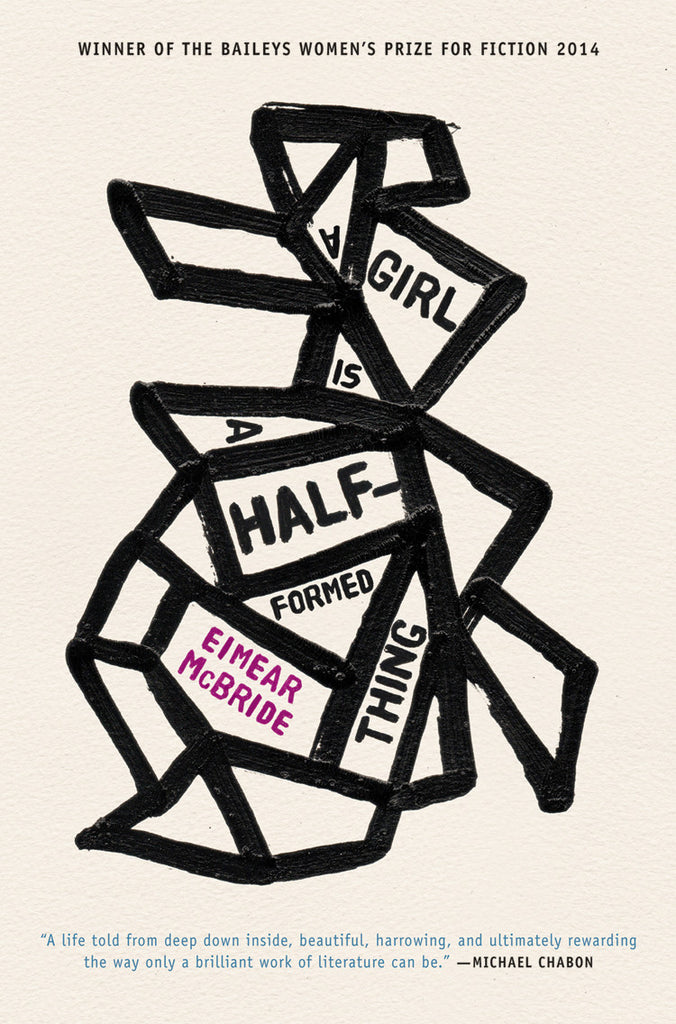
A Girl Is A Half-Formed Thing by Eimear McBride
*Some Spoilers Below**CW: Rape, Child Abuse*
I struggled with this book. Oh, how I struggled with this book. You see, this is one of those self-consciously "literary" books that, when you're just not enjoying reading, seem to carry with them a sneer of "well, you just didn't understand." It was a big book a few years ago. It's trying to be Joyce and Beckett, and the writing is stream-of-consciousness jagged and not coherent. It's also a slog, ugly, mean, and as one review I read put it, it felt like the book wanted to punish the reader for having the temerity to continue.
And yet, there are the accolades. People praising it to the sky as the next big thing, a stark look at reality, and I end up wondering if I'm just too squeamish for "realism." If I want a prettier world and push away the difficult. But then, that's bullshit. I like difficult books, even books where difficult things happen - but not when it's just there to be misery porn. If this were a genre book, I'd call it the grimiest of grimdark. Grimdark has been rightly called out for pretending that horrible = real, whereas anything with hope or love or friendship is somehow fluffy and unrealistic. That is not generally the way the world works. There are difficulties. There are kindnesses too.
Let's take this in two parts - what happens in this book, and how it is expressed. For the first part, there are some things that I can absolutely see happening - turning to physical vices to cope with the pain of the terminal illness of a family member. Yup, no problem. It gets dwelt on a lot, and we get a lot of detail, and for good measure, the ongoing sexual relationship between the main character and her uncle. I am not, oh I am not, denying that such things happen in real life, nor am I saying that they can't be written about. But I am very picky in how such things are written about, and this is just one more horrible brick in a load of horrible bricks that make a horrible wall, and there's nothing more to it. There's nothing I'm seeing McBride say here that goes beyond the litany of misery.
I mean, when you have the main character raped twice (once by a stranger, once by a family member) on the day of her brother's funeral, I think we can safely say we've gone beyond realism. And if it's not trying to be realism, what is it trying to be? It's not a faithful reconstruction of the world as it is. It's not a literary evocation of the universality of women's experiences. I'm just not sure what it is.
So let's talk about how it is expressed. Most of the writing about this books talks about how it's a new version of James Joyce. (One perplexing blurb said that this was Joyce with an Irish lilt, which would be...Joyce?) And yeah, maybe. I mean I haven't read Finnegan's Wake, but I have read Ulysses, and I suppose you could make some comparison to the stream of consciousness thing, but Joyce flows differently. This is so very choppy. Then I read an article that talked about McBride being blown away by Beckett, and it clicked. Yes, this is very, very much like the Beckett I read and didn't like: How It Is. They're similar both in writing style, and in content.
Writing that review was very much like writing this one - struggling with feeling incompetent because I didn't like the book (am I missing it entirely or is this legitimately an Emperor's New Clothes situation?) and feeling put off by the sheer cynicism and pessimism of what's going on. The writing style is similar, and Beckett is trying less to capture something about life than he is about misery and it's not realistic, and it all clicked. This is so close to Beckett it's less an homage and more borrowing a voice.
So, yeah. If you've read and loved some of Beckett's more obscure work, the stuff that's really out there, then yes, you might enjoy A Girl Is A Half-Formed Thing. But I didn't like either one, and this is definitely a style or its own little genre that is not for me.
Tuesday, 15 January 2019
Two Serpents Rise by Max Gladstone
Look, I really liked Three Parts Dead, the first Craft novel published. I liked it a lot. But I loved Two Serpents Rise. In this book, Max Gladstone takes world-building I enjoyed a hell of a lot in the first book, and applies it to a plot and a set of political and social conditions that I was just absolutely captivated by. It's a book that takes itself absolutely seriously, in the best possible ways. (This doesn't mean that there's no humour, but more that Gladstone has really thought through his society and his characters and done such interesting things with them, taking all these aspects, and moving forward with the ramifications.)
We're in a different city in Two Serpents Rise, and I don't believe any characters overlap between the two books - or at least, if they did, I read Three Parts Dead long enough ago that they didn't pop out at me. We're in a time period somewhat before Three Parts Dead, but the laws and bureaucracy concerning the Craft in the world seem more or less the same. We've got some new nuance added to it as well.
Two Serpents Rise takes place in the city of Dresediel Lex, which is at least partially inspired by Aztec mythology - imagine a huge urban metropolis with water utilities, corporations, risk management, and a strong protest movement, integrated into both the aftermath of the major event in this world, the God Wars, and an older tradition of sacrifice as a source of power and peace.
The main character here is Caleb, a risk analyst and sometimes gambler, who summons a literal version of Lady Luck for his card games, who collects and disburses fortunes. She's not on his side - this is luck at its most literal. He works for the Red King Corporation, run by the King in Red, a man who, in the God Wars, when he led humans against the Gods he perceived keeping them captive and helpless, became only his own skeleton, with rubies for eyes.
When someone releases tiny serpent-like demons into the city's reservoirs, Caleb is sent to assess the risks of it happening again, particularly with a new merger on the horizon. His father is the leader of a faction of those who want to return to the old ways, being himself the last sacrificer on the block, the only one who knows how it feels to rip a living heart from a chest. Caleb' father is the obvious suspect in the attack on the reservoirs, but he protests his innocence, and Caleb believes him. Mostly. While at the reservoir, though, he meets Mal, a woman about his own age, a parkour runner, and immediately he wants to protect her.
We mostly see Mal through Caleb's eyes, which is deliberate, as he falls for her hard, and then interprets her through various lenses, mostly of his own devising. Caleb believes that she might hold the answers to the questions he doesn't know to ask, and the needs of the city now that, instead of killing someone dramatically a few times a year, the sacrifice is parcelled out throughout the inhabitants, hitting some (the poor), harder than others. None of what he applies to her, though, is necessarily how Mal sees herself, and his visions of what she is butts heads, harder and harder, with how she sees herself.
These characters are great (I also loved Teo, Caleb's best friend, and Teo's artist girlfriend who fancies herself on the front lines, and the King in Red himself), but what really got me is the underlying examination of the difficulties of revolution, particularly when revolutionary ideals are founded on a mythic time that never really existed, that is as much a romantic tale as those that the present rulers are telling themselves. It's about how it's easy to talk lightly of sacrifice when you're talking about someone else, with or without (mostly without) their consent. About the difficulties of working within the system against the violence that come from pulling the system down entirely. The book embraced all the complexity of protest, revolution, rebellion and power, and I was in love what was on the page the whole time.
Oh, also, there are two giant serpents that could awake and destroy the world, and if they're awakened at all, they'll want blood. Lots and lots of blood. I almost forgot to mention that part.
We're in a different city in Two Serpents Rise, and I don't believe any characters overlap between the two books - or at least, if they did, I read Three Parts Dead long enough ago that they didn't pop out at me. We're in a time period somewhat before Three Parts Dead, but the laws and bureaucracy concerning the Craft in the world seem more or less the same. We've got some new nuance added to it as well.
Two Serpents Rise takes place in the city of Dresediel Lex, which is at least partially inspired by Aztec mythology - imagine a huge urban metropolis with water utilities, corporations, risk management, and a strong protest movement, integrated into both the aftermath of the major event in this world, the God Wars, and an older tradition of sacrifice as a source of power and peace.
The main character here is Caleb, a risk analyst and sometimes gambler, who summons a literal version of Lady Luck for his card games, who collects and disburses fortunes. She's not on his side - this is luck at its most literal. He works for the Red King Corporation, run by the King in Red, a man who, in the God Wars, when he led humans against the Gods he perceived keeping them captive and helpless, became only his own skeleton, with rubies for eyes.
When someone releases tiny serpent-like demons into the city's reservoirs, Caleb is sent to assess the risks of it happening again, particularly with a new merger on the horizon. His father is the leader of a faction of those who want to return to the old ways, being himself the last sacrificer on the block, the only one who knows how it feels to rip a living heart from a chest. Caleb' father is the obvious suspect in the attack on the reservoirs, but he protests his innocence, and Caleb believes him. Mostly. While at the reservoir, though, he meets Mal, a woman about his own age, a parkour runner, and immediately he wants to protect her.
We mostly see Mal through Caleb's eyes, which is deliberate, as he falls for her hard, and then interprets her through various lenses, mostly of his own devising. Caleb believes that she might hold the answers to the questions he doesn't know to ask, and the needs of the city now that, instead of killing someone dramatically a few times a year, the sacrifice is parcelled out throughout the inhabitants, hitting some (the poor), harder than others. None of what he applies to her, though, is necessarily how Mal sees herself, and his visions of what she is butts heads, harder and harder, with how she sees herself.
These characters are great (I also loved Teo, Caleb's best friend, and Teo's artist girlfriend who fancies herself on the front lines, and the King in Red himself), but what really got me is the underlying examination of the difficulties of revolution, particularly when revolutionary ideals are founded on a mythic time that never really existed, that is as much a romantic tale as those that the present rulers are telling themselves. It's about how it's easy to talk lightly of sacrifice when you're talking about someone else, with or without (mostly without) their consent. About the difficulties of working within the system against the violence that come from pulling the system down entirely. The book embraced all the complexity of protest, revolution, rebellion and power, and I was in love what was on the page the whole time.
Oh, also, there are two giant serpents that could awake and destroy the world, and if they're awakened at all, they'll want blood. Lots and lots of blood. I almost forgot to mention that part.
Friday, 11 January 2019
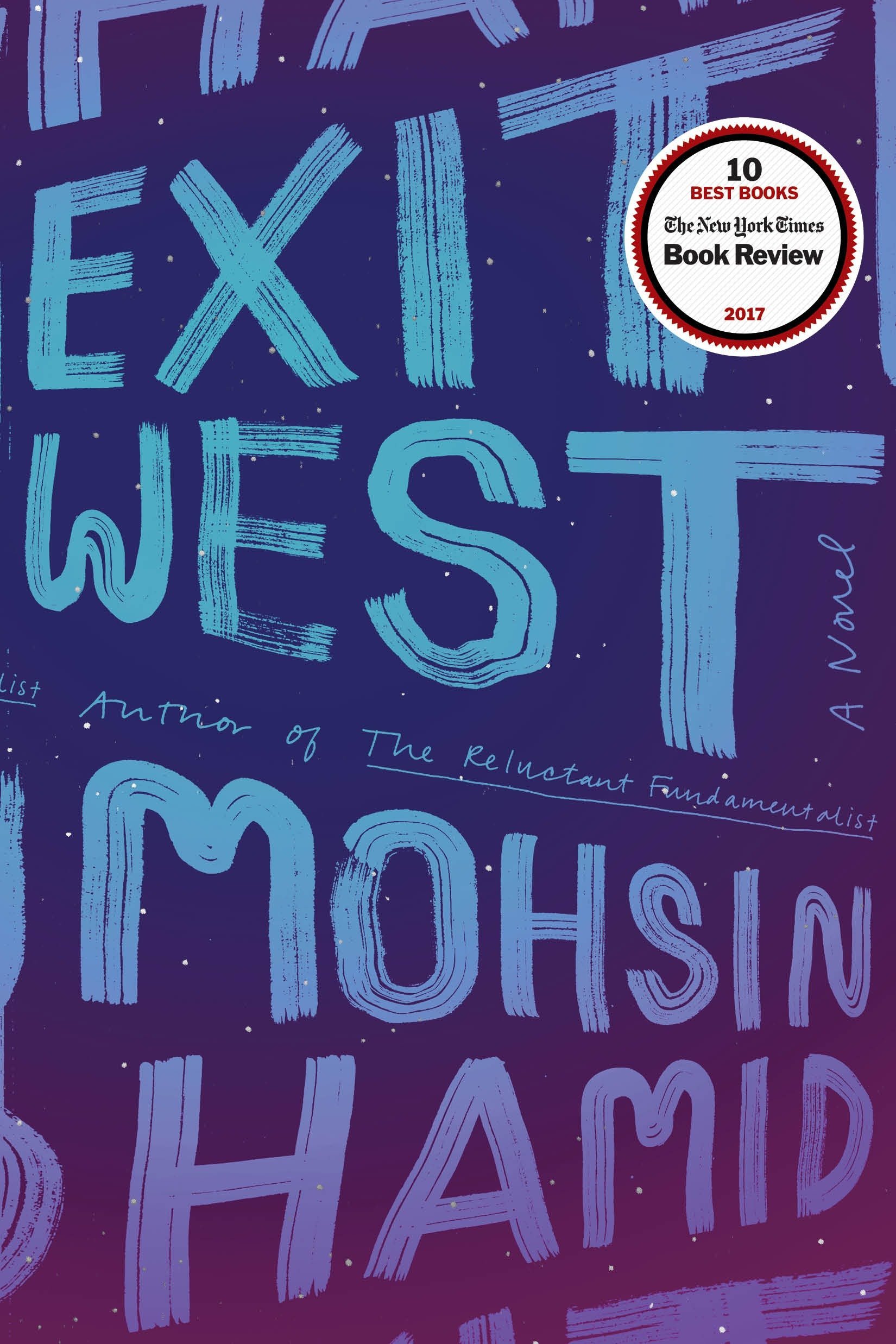
Exit West by Mohsin Hamid
It's rare that you find a book that you want to call enchanting, and probably much rarer that you'd want to apply that term to a book that is, in very real and difficult ways, about refugees and the feeling of crisis that has been developing around them. Yet, Mohsin Hamid has done that, written something that feels like a parable or myth for the modern day, with a sense of detachment that is nonetheless warm and kind. I really enjoyed Exit West, from beginning to end.
From what I remember from a few of the reviews, some people stubbed their toes on the one element of the book that is not strict realism, but since I'm a genre reader at heart, I didn't have a problem with it at all. More than that, I think it's necessary to show some aspects of this experience that Hamid would have had trouble accessing otherwise. I'll talk more about that in a minute, but I really do think that it is integral, not tacked-on or superfluous.
We start in an unnamed city, probably in the Middle East, given what we know of names and customs. Saeed and Nadia meet before the situation in their city gets too bad, at a computer class. Nadia always wears a full robe covering her, although she rides a motorcycle and is noticeably less religious than Saeed - she wears it because she lives by herself and feels it offers her protection as she travels the city. They fall for each other almost immediately.
Then the city starts to become more unsafe - militants take over parts of it, behaviour becomes more strictly policed, cell phones start not working. Without them, Saeed and Nadia have several nervewracking days when they don't know how to find each other. Bombs fall. They reunite, and Nadia ends up living with Saeed's family for a while.
Then enters the strangeness. There start to be rumours of doors that open to other places on the planet. Once they are discovered, they appear to be fixed. There is no particular rhyme or reason to where they appear, just that when you pass (with difficulty) through a door, you come out somewhere else. Because they are fixed, these can become ports of entry to other countries. In Saeed and Nadia's case, this holds the potential to take them away from the war that has taken their city. But because they are fixed, other countries can discover them too, and if you aren't one of the lucky few to get through before they are discovered, they will not necessarily lead you to an entirely new life.
In fact, when Saeed and Nadia make their way through one to their first port of call, they find themselves in a refugee camp, kept to one part of the island, the way back to their origins left open by a government who really wishes they would disappear. From there, they make two more jumps, discovering nativism and potential violence in England, and a ramshackle community being built in California, which is neither hostile nor particularly welcoming.
This all unfolds more or less gently, with Saeed and Nadia's relationship developing through it all. They are not married, the only ties those of love and the country they left behind. Saeed's father, before they left him, asked her only to help his son get to safety, not to stay with him forever. As they move through new experience after new experience, Nadia, still in her voluminous robes, paradoxically finds it easier to find herself a place in each new country, while Saeed turns more and more strongly to things that remind him of home.
This is all told sparely, but with a warm detachment rather than a cold clinicalness. Because it is all sketched so lightly and so distantly, it takes on the feel of a myth, of a legend, of a parable about our world, about where home is, what being a refugee means, how we close borders, and what might happen if we opened them.
From what I remember from a few of the reviews, some people stubbed their toes on the one element of the book that is not strict realism, but since I'm a genre reader at heart, I didn't have a problem with it at all. More than that, I think it's necessary to show some aspects of this experience that Hamid would have had trouble accessing otherwise. I'll talk more about that in a minute, but I really do think that it is integral, not tacked-on or superfluous.
We start in an unnamed city, probably in the Middle East, given what we know of names and customs. Saeed and Nadia meet before the situation in their city gets too bad, at a computer class. Nadia always wears a full robe covering her, although she rides a motorcycle and is noticeably less religious than Saeed - she wears it because she lives by herself and feels it offers her protection as she travels the city. They fall for each other almost immediately.
Then the city starts to become more unsafe - militants take over parts of it, behaviour becomes more strictly policed, cell phones start not working. Without them, Saeed and Nadia have several nervewracking days when they don't know how to find each other. Bombs fall. They reunite, and Nadia ends up living with Saeed's family for a while.
Then enters the strangeness. There start to be rumours of doors that open to other places on the planet. Once they are discovered, they appear to be fixed. There is no particular rhyme or reason to where they appear, just that when you pass (with difficulty) through a door, you come out somewhere else. Because they are fixed, these can become ports of entry to other countries. In Saeed and Nadia's case, this holds the potential to take them away from the war that has taken their city. But because they are fixed, other countries can discover them too, and if you aren't one of the lucky few to get through before they are discovered, they will not necessarily lead you to an entirely new life.
In fact, when Saeed and Nadia make their way through one to their first port of call, they find themselves in a refugee camp, kept to one part of the island, the way back to their origins left open by a government who really wishes they would disappear. From there, they make two more jumps, discovering nativism and potential violence in England, and a ramshackle community being built in California, which is neither hostile nor particularly welcoming.
This all unfolds more or less gently, with Saeed and Nadia's relationship developing through it all. They are not married, the only ties those of love and the country they left behind. Saeed's father, before they left him, asked her only to help his son get to safety, not to stay with him forever. As they move through new experience after new experience, Nadia, still in her voluminous robes, paradoxically finds it easier to find herself a place in each new country, while Saeed turns more and more strongly to things that remind him of home.
This is all told sparely, but with a warm detachment rather than a cold clinicalness. Because it is all sketched so lightly and so distantly, it takes on the feel of a myth, of a legend, of a parable about our world, about where home is, what being a refugee means, how we close borders, and what might happen if we opened them.
Subscribe to:
Comments (Atom)