Pages

Friday, 31 December 2021

Top Ten Books Read in 2021

It was a hell of a year, and my reading took a serious hit during the pandemic. I just couldn't focus as much as usual. I managed to drag myself over the 100 book mark, but that's normally not a hard thing to do. Luckily, there were some bright spots in all of this - so here are my Top Ten Books. Many of them were published in the last two years, but there are a few other books sneaking in, including one SF classic.

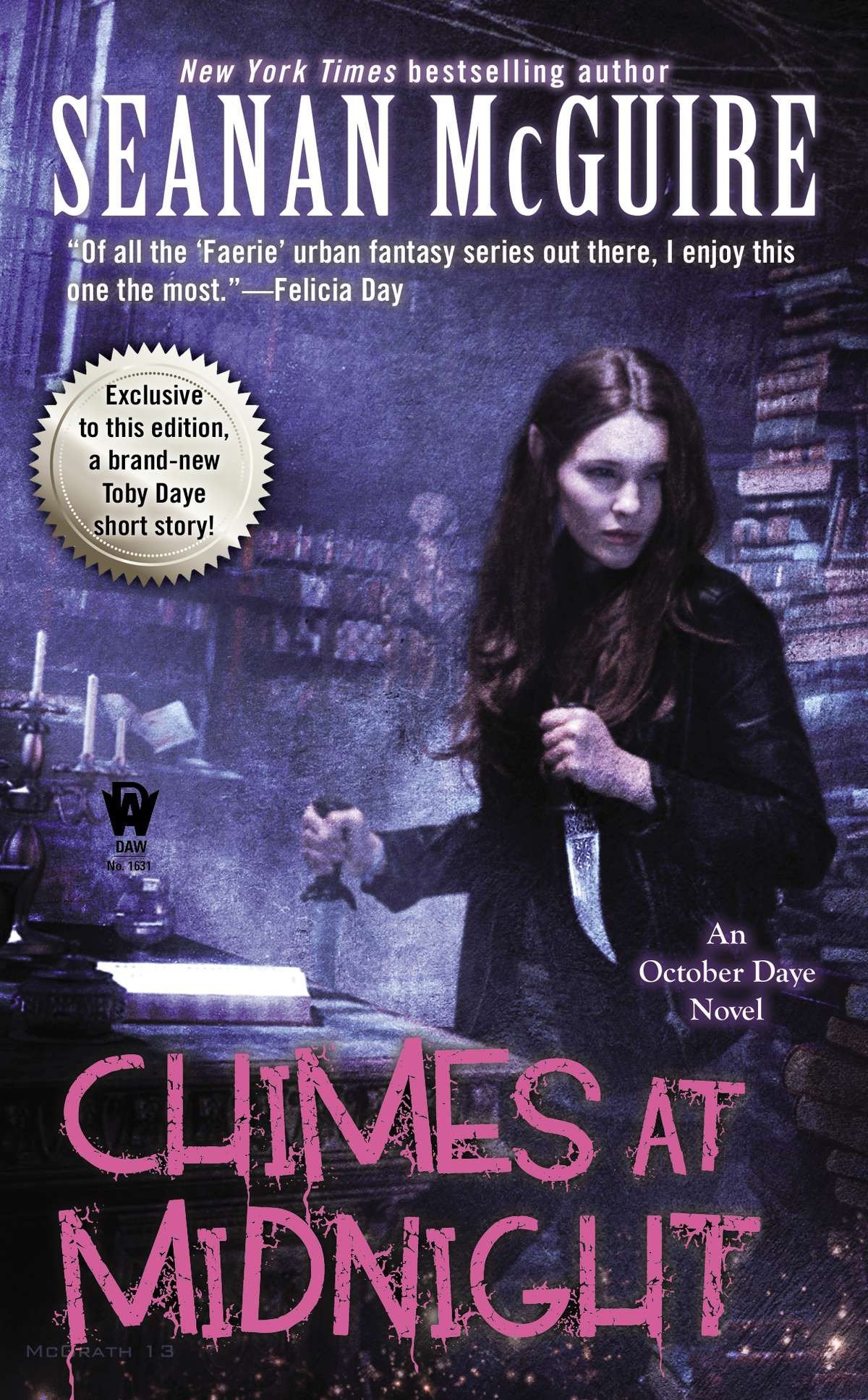
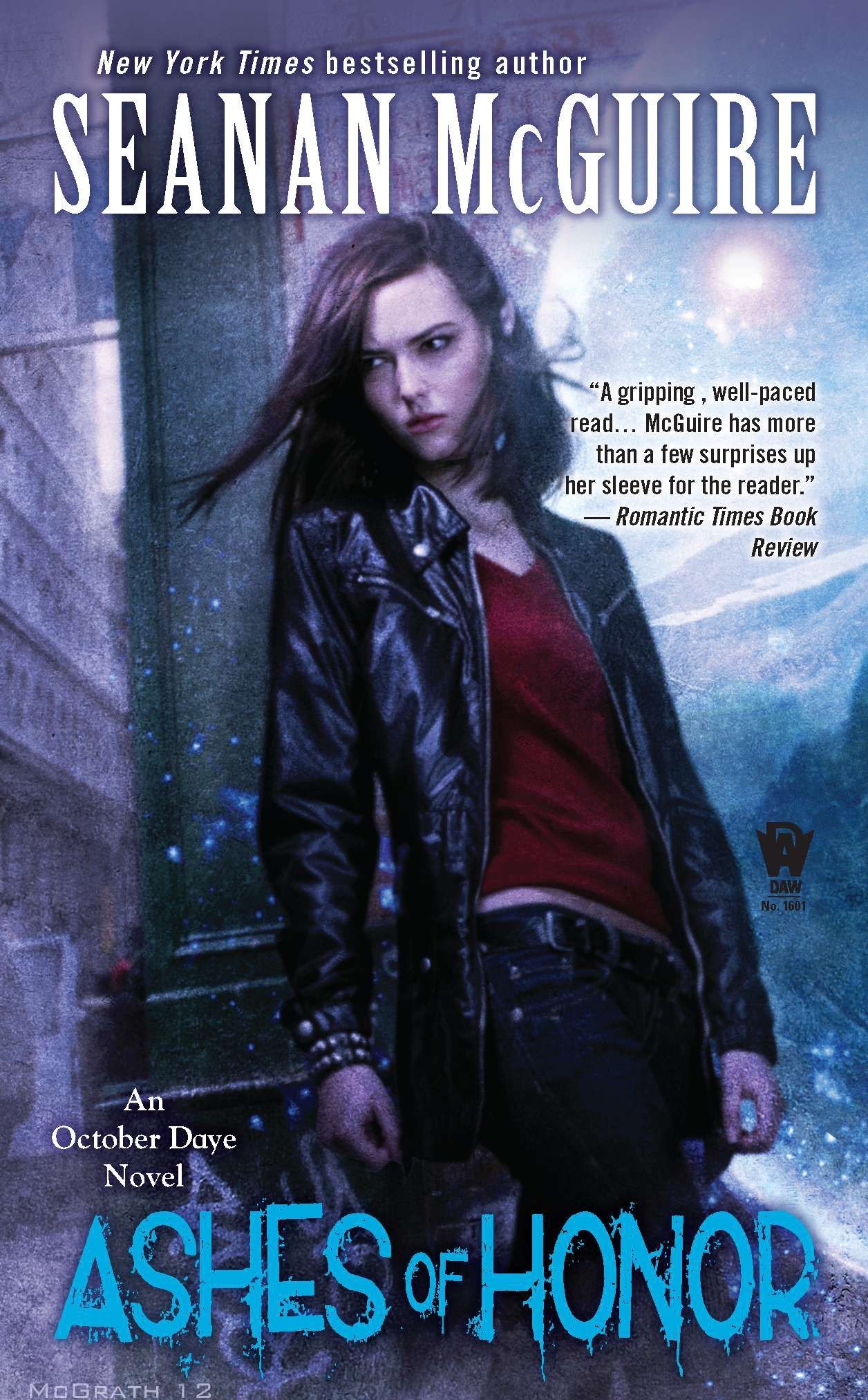
Honourable Mention (Series): The October Daye books by Seanan McGuire
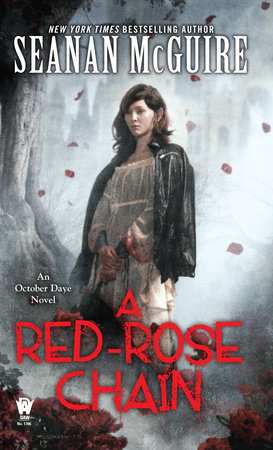

Toby Daye has been juggling human and faery worlds for a while and gathered a chosen family around her, but things start changing in a really fundamental way. I finally got to the first huge turning point in this series, and absolutely loved the shakeup, the way plot points had all been set up over a long period of time, and then executed in delightful and surprising ways. Three of the books in this series made it to the round of 16 when I was doing my tournament, and while none of them cracked the Top Ten individually, the accomplishment of this series gives it a much deserved honourable mention.

 10. Black Sun by Rebecca Roanhorse

Epic fantasy in a Mesoamerican world? A city riven by conflict between different factions and different priests, with doom coming on black wings?  Where one group is hellbent on destroying all of the present order of things, and perhaps the world itself in the process? This was not a hard sell for me, and lived up to the promise. The characters were compelling, and the world utterly engrossing. I'm looking forward to seeing where it goes from here.
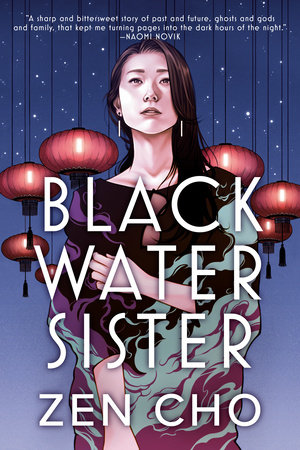
 
9. Black Water Sister by Zen Cho

I've read Zen Cho's Sorcerer to the Crown, and enjoyed it as a romp, but I think Black Water Sister is even better. Set in present-day Malaysia, main character Jess is trying to figure out who she is and what she should do next. The ghost of her grandmother has some very specific ideas, and they involve taking revenge on a gangster and saving a temple - but Black Water Sister, the goddess of that temple has plans for Jess as well that involve mediumship, death, and destruction. One of the last books I read this year, and one I enjoyed every second of.
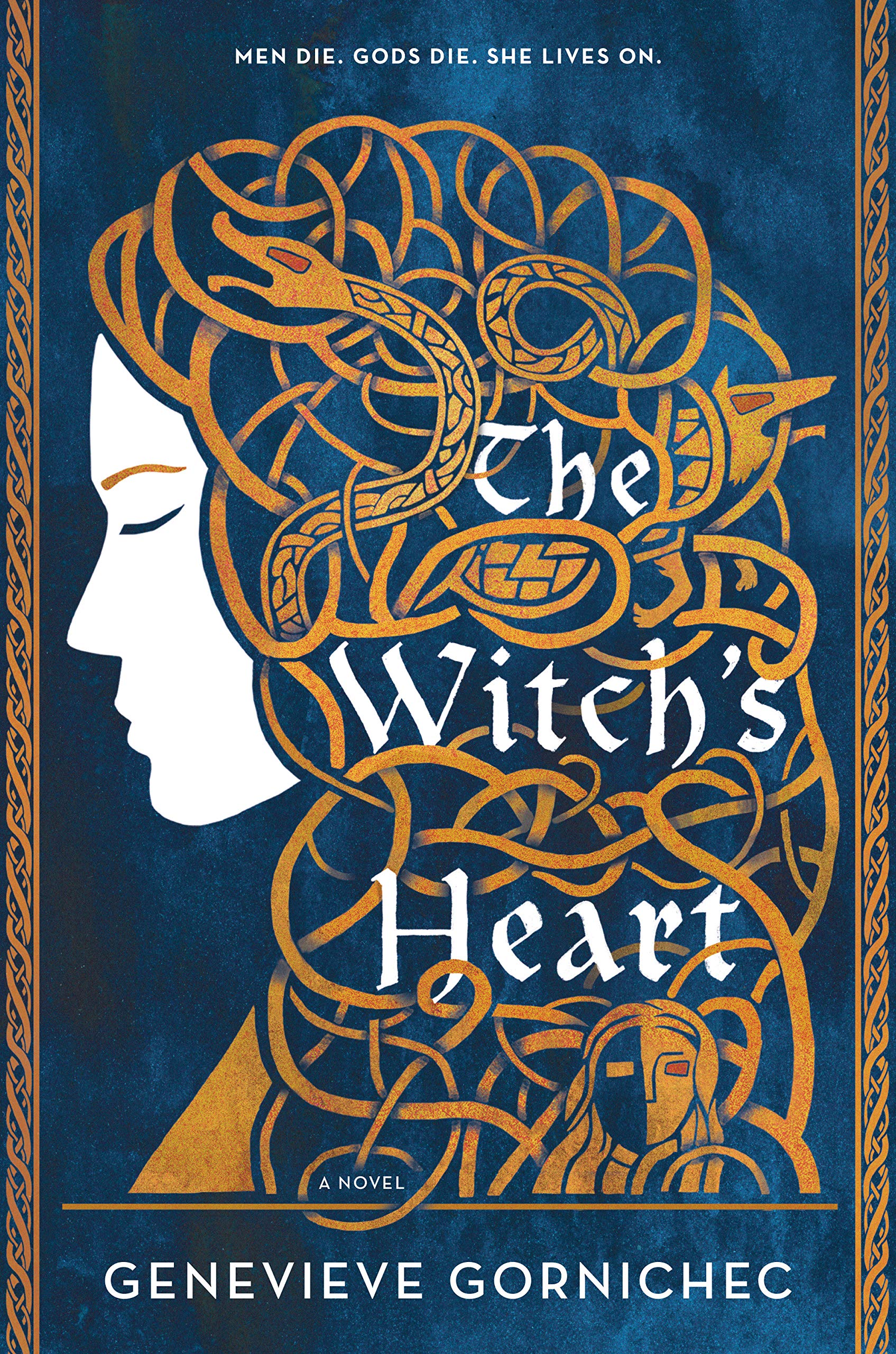
 
8. The Witch's Heart by Genevieve Gornichec


You may notice a trend this year that I was kind of a sucker for retellings, whether of Norse myth, Greek myth, or fairy tales. Done well, I love to see what new authors make of old stories. This version of Angrboda and her ill-fated relationship with Loki and her children who were destined to end the world didn't feel like it was bringing anything really revolutionary to the picture, but oh, it did what it was doing so beautifully. The writing sucked me in, and the story of how her marriage shaped her children and their fate was a much needed diversion when the pandemic was at its deepest.
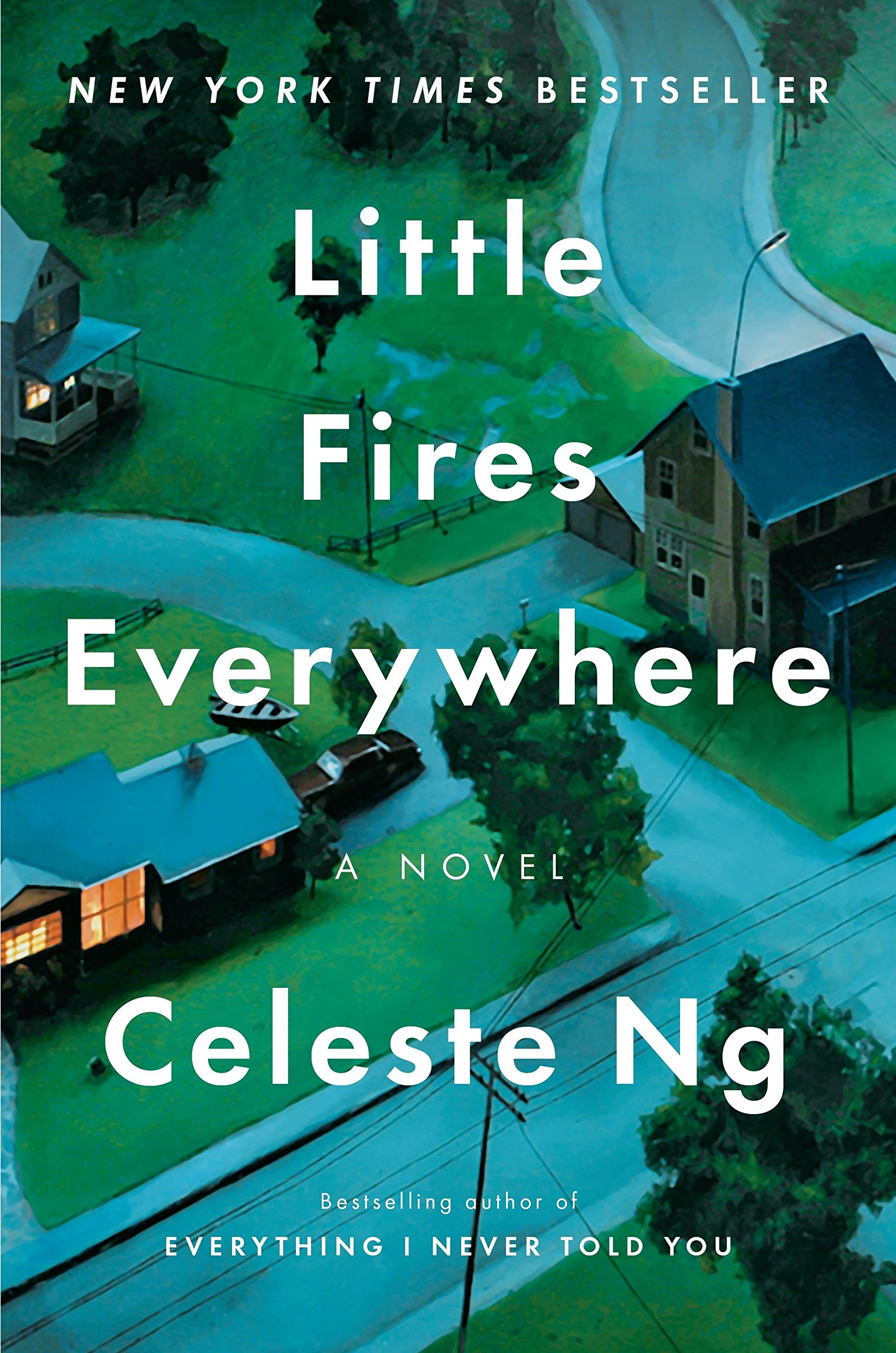
 
7. Little Fires Everywhere by Celeste Ng


Both of Ng's books have just blown me away, and while it took me a couple of years to get to this second one, it was just as good as the first. As a study of conformity vs. non-conformity, and how choices are justified, how actions are carried through, it was incisive. It's easy to make it sound like a popcorn book, if you reduce it to the  inevitable conflicts between a mom who has justified every choice that led to her comfortable, wealthy existence and her photographer tenant who never stays in one place or on one project for too long, but it's the attention to the characters, their children, and why everyone does what they do that makes this so strong. 
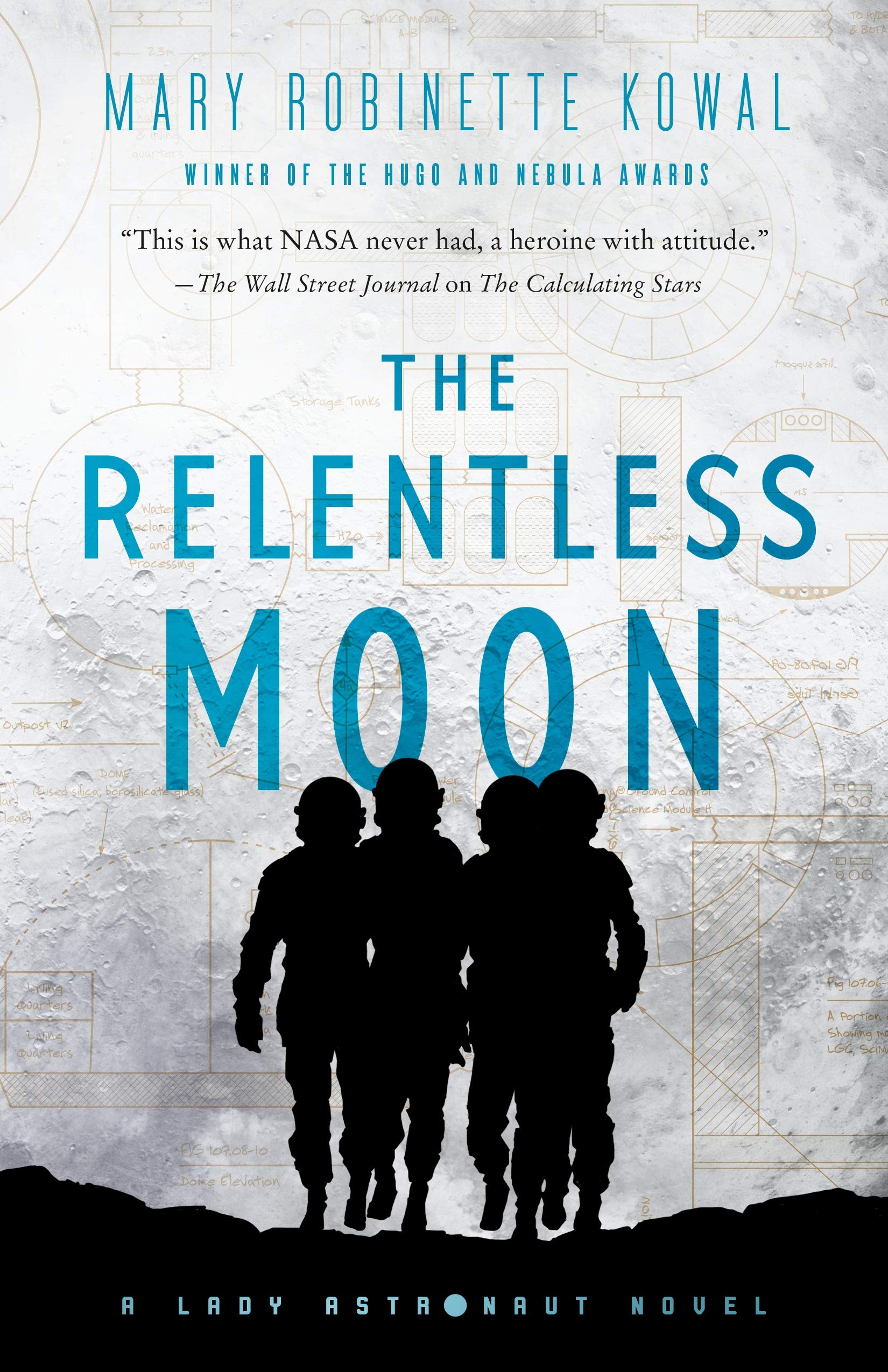
6. Relentless Moon by Mary Robinette Kowal


I absolutely loved the first Lady Astronaut book, and very much enjoyed the second, although I thought it wasn't quite as strong. The third book just blew me away. The focus changes to Nicole, astronaut, governor's wife, all-around badass who struggles with arthritis and an eating disorder, as well as a space agency who would love to call her too old to fly and ground her. We get the ongoing political struggles on Earth as well as an epidemic on the Moon. Love Nicole as a main character, love this world, and at times it feels all too reminiscent of the present-day, but in ways that ring true for this version of the 1950s.

5. Circe by Madeline Miller


I'm a little late to the party on this one, and for no good reason, since my deep love of Greek mythology is firmly on the record. It took a friend dropping a care package of books off on the doorstep to finally get me to sit down with this one, and so another retelling of mythology lands on my best-of list. Miller fleshes out the story of Circe in fascinating ways, giving her a real arc and motivation that completely sucked me in. If this sounds like something you'd like, it probably is. It deserves all the attention it got a few years ago.


4. The House in the Cerulean Sea by T.J. Klune

This was just a warm gay hug of a book, and when I read it, I needed that warmth and love more than just about anything in the world. It's about Linus, who lives a very normal grey life in the city, working for the Department in Charge of Magical Youth, who files reports on their living conditions and never much thinks about what might come of it. Until he gets sent to survey the house where the Antichrist lives, along with, among others, a were-Pomeranian, a gelatinous blob who aspires to be a bellhop, a surly girl gnome who threatens him regularly with her shovel, and falls in love with all of the children, as well as their guardian, Arthur. It's about family in a world that fears difference and I was just in love with everyone as Linus ends up being.


3. Sorrowland by Rivers Solomon

I just finished this, and holy crap. I've liked everything Solomon has written so far, but with Sorrowland, they've just absolutely knocked my socks off. There were times at the beginning that I wasn't sure how much I was going to like it. The main character, Vern, on the run from a religious Black power commune, was often unlikeable to the point of it being painful, but in the end she squirmed her way under my skin in the same way strange bone structures grow under hers. There is anger here, and love, and fierceness, and it was nothing like what I was expecting. 
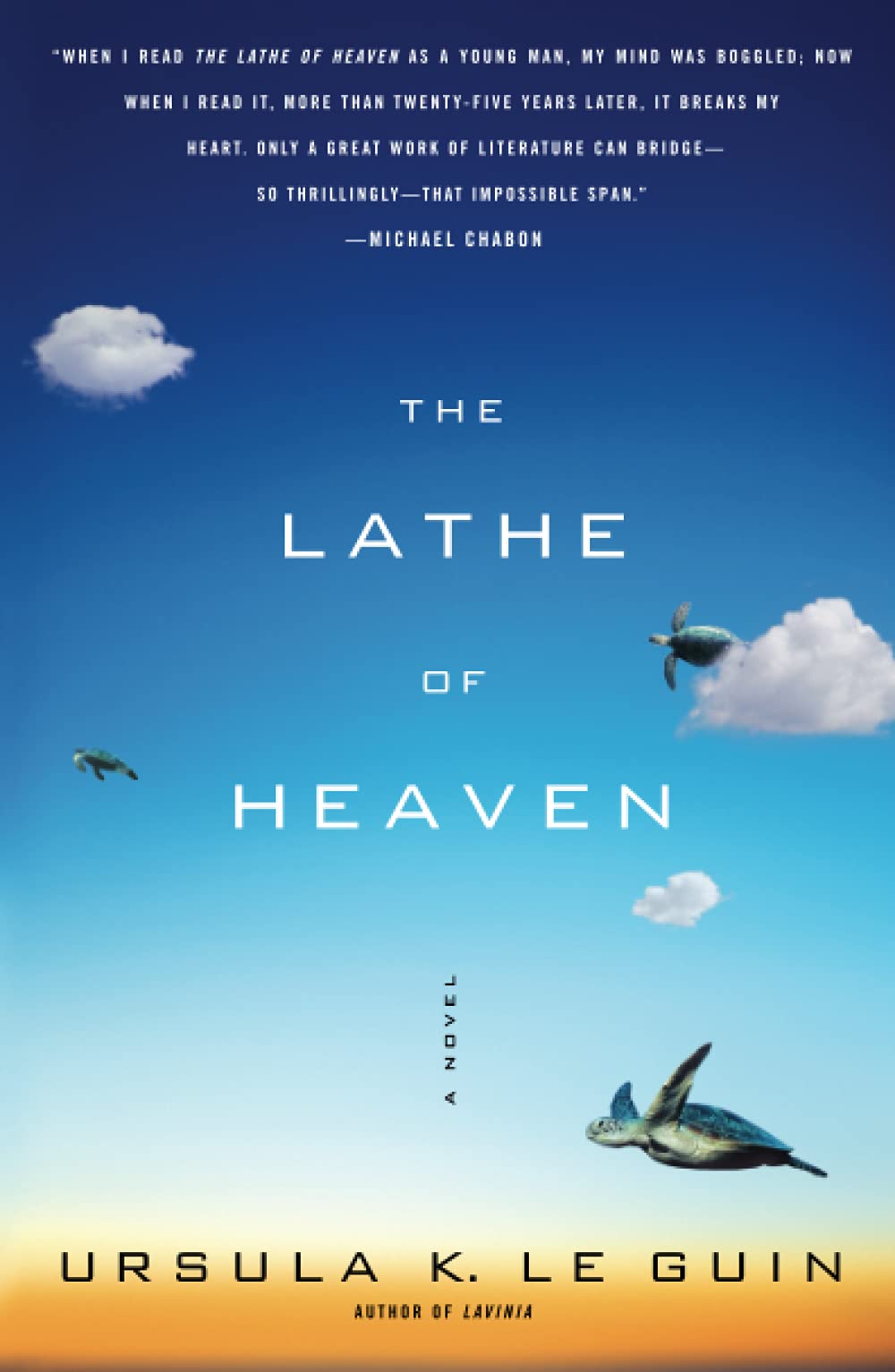

2. The Lathe of Heaven by Ursula K. Le Guin

There wasn't ever another SF writer quite like Ursula K. Le Guin, and even now, after her death, she is still blowing me away with how good, how interested, how incisive and smart her science fiction is. This one is just so good, about a man who discovers he can change reality through his dreams, and is terrified, and the shrink who is more than happy to exploit that power for his personal gain (although he tells himself it's for the good of society.) There's a little bit of Buddhism and mysticism in here, a lot of thought, and every page was a delight. 


1. The Once and Future Witches by Alix Harrow

I liked but didn't love Harrow's first book, but I loved this one. It's a brilliant scream of rage and love, aimed at early industrialism, but with strong emotional resonance today. It's about fairy tales, it's about three sisters who fight but under that love each other more than anyone in the world, it's about misogyny, the industrial state, and the power of solidarity. Every page made me love the book and my own two sisters more. With a new baby entering the mix, this book had particular resonance for me this year, reminding me of the lengths I'd go to to protect my sisters and my niece.

Thursday, 31 December 2020

Top Ten Books Read in 2020

Coming out of book reviewing retirement to post my Top Ten of 2020! Like many people, 2020 hit my reading numbers hard, as I lacked brain power much of the time. Still, I finished 108 books. I felt like there were few books that really set me on fire, but I'm very happy with the Top Ten.


10. A Memory Called Empire by Arkady Martine

 I wasn't entirely in line with Hugo voting this year, as this came about half-way down my ranking for best novel, but that's really a reflection of how strong the category was. This interstellar look at colonialism, peripheries, and belonging (and identity and a bunch of other things) was very intriguing and had great political tension. The main character is sent from her unannexed home to the seat of Empire and finds herself pulled into immediate jockeying for the future in a culture she loves and doesn't quite belong in. 


9. The Vanished Birds by Simon Jimenez

 In a corporate-controlled future that relies on colonized and segregated planets for essential crops, having ships move at light speed to collect the goods at the cost of the years of the lives the crew could have had with their loved ones, the creator of the system tries to remember why she's so dissatisfied with why it's the way it is, a young child has the ability to jump instantaneously between worlds, and a ship captain takes him in and wants to protect him like family. The Vanished Birds is beautifully written and engrossing.


8. Middlegame by Seanan McGuire

The alchemical tale of separated twins/principles Roger and Dodger and their attempts to find their way back to each other are thwarted by parents, friends, and the master alchemist who created them and wants to sacrifice them on the altar of his power. Seanan McGuire's writing is always entertaining, and this tale is satisfyingly twisty and emotional both. 


 7. Before Mars by Emma Newman

I read several books from this series this year, and there were almost two on this list. Before Mars was the one that made it through, an examination of memory, amnesia, dissatisfaction with being a parent, art, and corporations that are perfectly willing to sacrifice many to save the members of their boards. The main character is sent to Mars to paint landscapes (and do science), but finds eerie relics that suggest she has been here before. But it could be suspended animation psychosis. Or?


6. In An Absent Dream by Seanan McGuire 

Seanan McGuire was the one author who did manage to appear twice on this list. I've enjoyed all the Wayward Children books, but this is one of my favourites. We follow Lundy, who we met previously as an adult, through her childhood in and out of the Goblin Market, where everything is about giving fair value, and the Market takes any imbalance out of those who try to cheat the system, one way or another. Somehow, this made me feel like curling up in a cozy library and never coming out. 


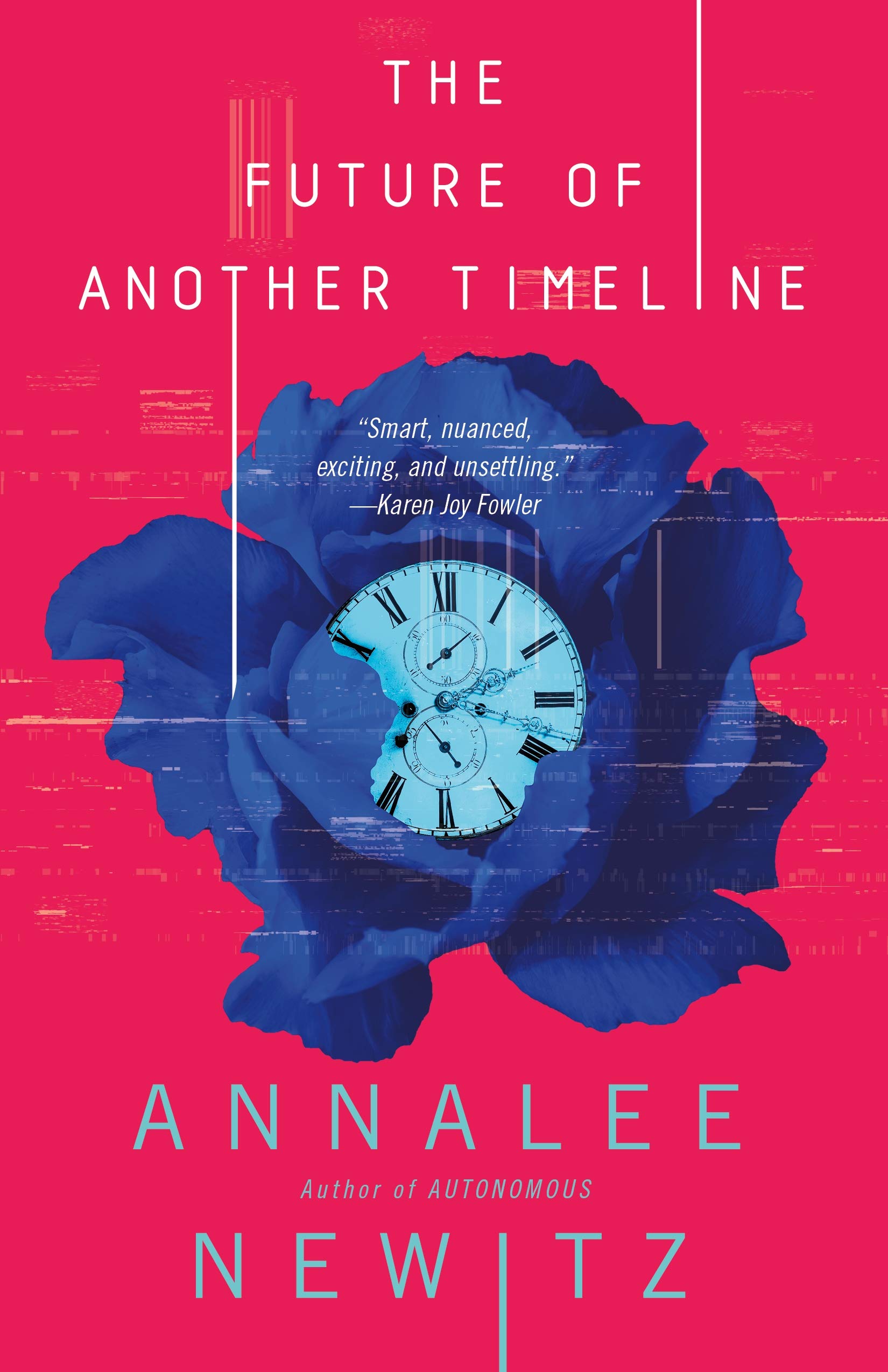
5. The Future of Another Timeline by Annalee Newitz

 Oh fuck, this was good, a glorious angry rampage through a timeline that is under attack, where women and non-binary people fight off time traveller excursions from the worst bros you could imagine, who want to twist the world to a point where women have been robbed of virtually everything you can imagine. (The details are truly terrifying.)  Centered around Comstockery and the Chicago World's Fair, as well as the riot grrls of the 1990s, it's also about the main character seeing how her life became what it is, in the midst of a war where everything is on the line.


4. Gideon the Ninth by Tamsyn Muir

What the hell even was this book? Lesbian necromancers in space, in the rotting remains of recognizable technology, holding themselves together by the skin of their...bones. Narrated by an opinionated, profanity-prone narrator. It shouldn't work. It's such a mishmash. And yet somehow it does, held together by sheer force of the author's will. Follow Gideon as she goes with the head of her house and arch-nemesis Harrow to answer the call of the Emperor and try to become one of his Lyctors. Oh yeah, it's part murder mystery as well. I mean, what genre isn't it?


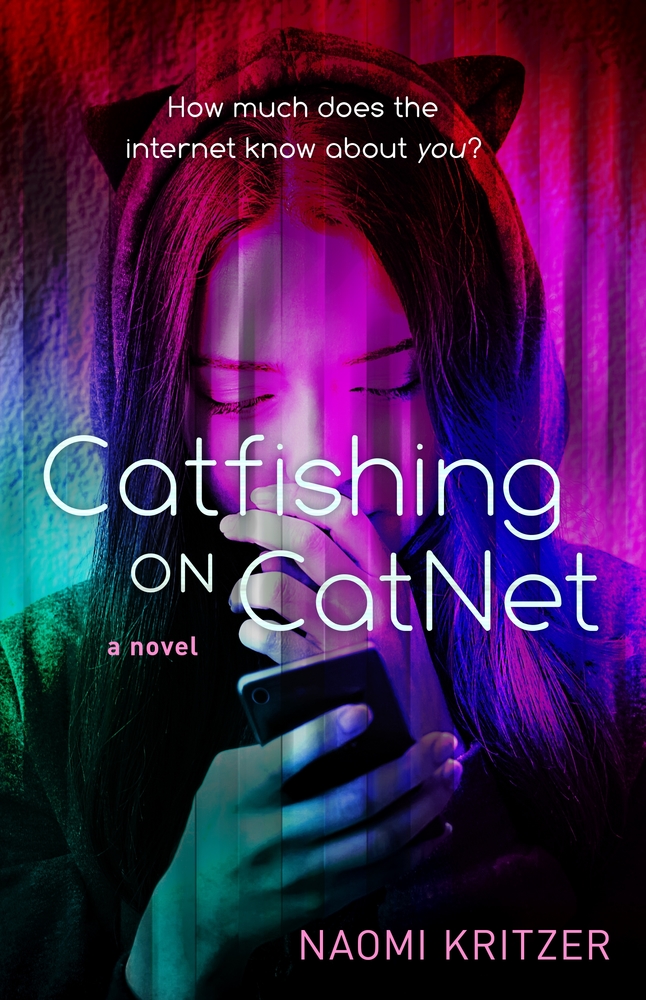
3. Catfishing on CatNet by Naomi Kritzer

It's no secret that I'm not that fond of a lot of YA fiction. Well, this year I found one that I wanted everyone to read, no matter their age. It's just plain good science fiction, the teenagers at the centre are believable and face real problems about sexuality, family, and being pursued by a non-custodial parent. Oh, and there's a cat-picture-loving AI who has been keeping tabs on the people who frequent their website. It's just delightful and satisfying, and one of the most interesting examinations of digital sentience I've read, full stop. 


2. Gods of Jade and Shadow by Silvia Moreno-Garcia

A young woman takes a road trip with the Lord of the Underworld through Jazz Age Mexico, in search of a way to save herself and him both. Look, if that description doesn't get you on board, I don't know what will. The characters are great, the mythology compelling, and Moreno-Garcia interweaves mythological concerns with real-world ones just beautifully. I want everyone to read this one.


1. This is How You Lose the Time War by Amal El-Mohtar and Max Gladstone

If you know me in real life, this should cause negative amounts of surprise. I loved this book, I fell in love with this book, I've read it twice this year and both times found the precise point past which I could not put the book down until it was done and could not stop crying. It's beautifully written, it's just everything I want a book to be. Two opponents in a time war, Red and Blue, correspond over multiple strands of the potential timeline, finding more in common than they expected. I want everyone to read it.


Saturday, 4 July 2020

Best of June

I finished eleven books in June, which means I'm keeping more or less on track for where I want to be at this time of year. I've read slightly more than half of my goal, and have been feeling mild itches to start writing book reviews again, although remembering how much time I devoted to it, and how bad I felt when I fell behind, I'm not sure I quite want to pick it up quite the same way.

However, I thought that perhaps a monthly post with my top three books finished in the previous month might be a nice way to dip my toes back in the book-blogging water, so to speak. Most of the books I finished in June were Hugo nominees of one stripe or another, as I pushed to get everything read by the voting deadline. (Except for trying to cram a couple more series books in, I'm pretty much done for the categories I want to vote in.)

These books were also all queer as heck, which was a wonderful synchronicity with Pride month. It's delightful to see this much diversity in sexuality and gender being portrayed pretty matter-of-factly in Hugo-nominated science fiction and fantasy.

Catfishing on Catnet by Naomi Kritzer


First up is a young adult book, which surprises the hell out of me. I am not that fond of young adult fiction - I find it too repetitive a lot of the time, with none of the challenge or surprise I'm really looking for in my science fiction and fantasy. So imagine my surprise when I found out that Catfishing on Catnet is really solid science fiction, as well as tense and all-around excellent. There's so much here - first and foremost, an examination of the emergence of AI (if the AI really liked cat pictures, but was also trying to grope its way towards ethics).

We've also got a young woman negotiating the umpteenth new place she and her mother have lived in in her life, and starting to suspect that the story her mother has been telling her about why they were constantly on the move might not hold up. (I was completely delighted by the reveal of the reasons behind, which tied in both emotional and science fiction elements beautifully.) We have a clowder on Catnet, a group of young adults who learn to be there for each other, and also figure out how to subvert a terrible high school Sex Education Robot.

It's one of those books where I'm almost reduced to making earnest hand gestures at the screen, which you cannot see, in hopes of expressing physically just exactly how much I think you should read this book. Catfishing on Catnet. Definitely my favourite book of the month.

To Be Taught, If Fortunate by Becky Chambers

This novella was just a delight. It has the warm humanism I've come to expect from Becky Chambers, including a crew of an intersteller ship who genuinely like each other. Which is not to say there is never conflict, but it isn't artificial, and mostly comes from interaction with the environment. In this book, we're with one of the first crews Earth has sent out to explore the stars, on a very long return trip using suspended animation, knowing no one they know will still be alive when they get back. They're kept up to date by broadcasts from Earth, but those start to slowly peter out, and the explorers do not know why.

This is a scientific expedition, focused on documenting and exploring, while disturbing new ecosystems as little as possible. It lets Chambers come up with some really interesting planets with fascinating life forms, and then examine some of the difficulties that might arise when you have no back-up, and no information.

This wasn't the most challenging book I read this month, although the way the book ends offers some food for thought. It was, however, one of the most purely delightful. I looked forward to spending time in this universe, and was sad when it was over in a scant hundred or so pages.

The Silver in the Wood by Emily Tesh

I don't love the title of this book, because I keep forgetting if it's the Silver Wood or the Silver of the Wood, or the Silver in the Wood. I do love the cover, and I ended up liking what was inside a lot. I'm a sucker for fairy stories, if they're well done, and not just humans wearing pointy ears.

The main character, Tobias, has been living in these woods for at least 400 years, guarding the dryads and making sure the more malevolent incursions do no harm to the humans who cluster on its edges. (The book feels like it happens in the late 19th century, but I can't remember if it actually ever says.)

Tobias rescues a young man who has just bought a near-by estate, and the young man will just not let him alone, looking into folklore that Tobias has been guarding for centuries. (The young man's mother makes a rather delightful appearance later, being rather more into the practical side of investigating folklore, rather than the academic inquiries of her son.)

It's not a long book, but Tesh does a great job of creating the atmosphere and the magic. This one sold me on the basis of the prose and the feel.

Thursday, 14 February 2019

A Case of Conscience by James Blish

I feel like I'm getting closer and closer to being able to do a theme on Catholicism and science fiction. I guess I'd have to recycle A Prayer for Leibowitz, which we read in my book club already, but then add Hyperion and The Sparrow, and now, to that list, I could add A Case of Conscience. One more book and I'd be all set!  (I come up with way more themes than we'll ever have time to do, but I enjoy thinking about them.)

Finishing this book also means I'm one book closer in my quest to read all the Hugo nominations for Best Novel. I'm over halfway there!

A Case of Conscience is an interesting book. In an afterword, Blish writes that he does not himself believe in Catholicism, but was trying to write a book that took that theology seriously, and I think, in the end, that he does a fairly good job of it. Near the beginning, I was irritated by some of the arguments, but then I figured out that they were actually more subtle than I was thinking, and, if taken at face value, did mean something was amiss.

The book starts out on another planet, Lithia, where, it seems, the first sentient alien race humans have ever discovered lives. A four-man team ("man" is chosen deliberately - there's a woman who is a scientist later, but not on the planet, and her role is mostly to be a nurturer, and to marry another character) is sent to assess the biology, geology, sociology, etc., etc., to decide how the planet should be categorized for further contact and/or exploitation. (They'd probably say the exploitation part under their breath, although if you read the book, you'll find that one character rapidly makes that subtext text.)

One of the members of the team, the biologist, I think, is also a Jesuit priest. As the book opens, the team is readying their report, and Father Ramon Ruiz-Sanchez has grown concerned. Lithia seems too perfect - everyone lives in perfect, Edenic harmony, and, what concerns him most, there never seems to have been a period of conflict in their past. They have no religion, and the biology of the dominant species is a literal representation of ontogeny recapitulating phylogeny (AKA embryos reenact the entirety of human evolution before they're born). The Lithians have offspring that grow up outside the body, but go through various phases before they are reborn as fully functional Lithians, complete with the harmony, etc.

As a result, Ruiz-Sanchez believes this is an entire planet created by the Devil to tempt humans into irreligion, by giving them an example of an idyllic life without Christianity. I had issues with this at first, even within the logic of the book. Then I realized it did make internal sense. I was initially thinking that Ruiz-Sanches was saying that a world without religion that was idyllic must be demonic, which is circular reasoning if I've ever seen it. Then I realized that this character was saying something different - it wasn't that the world was idyllic (although that would have shaken his worldview too), it was that the Lithians had always had harmony, that there had been no period of development before they arrived at this perfectly balanced, perfectly harmonious, endpoint.

This leads him to fall into Manichaeanism, the belief that evil can create instead of just distort, and that heresy is of concern as he returns to Earth with a Lithian in an egg and then hatched. Egtverchi, as the baby Lithian is called, has no knowledge of Lithian society, but looks at that of Earth as he grows, and finds it grotesque. (Or is always just there as an instigator of evil.) On Earth, people live mostly underground, in huge complexes that were built through fear of nuclear war. Now people live in dense tight urban-like spaces, and unrest is growing. Egtverchi helps egg it on.

This is a fascinating experiment, writing science fiction that takes Catholic theology as a given, and then writes around it to take the story in interesting directions. Once I got the nuances of the argument, I didn't have to buy the worldview to appreciate what Blish is doing here.

Monday, 11 February 2019

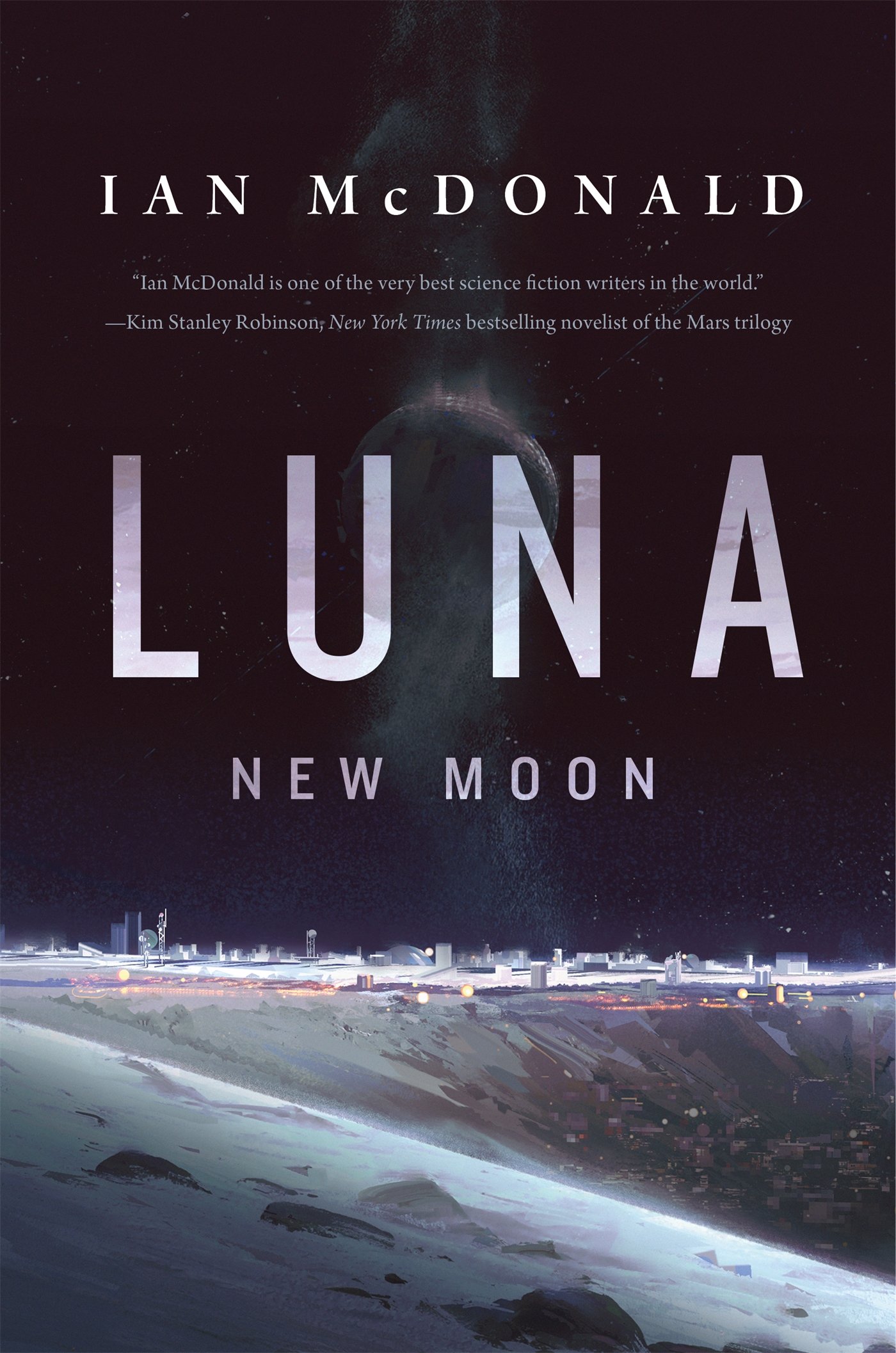
Luna: New Moon by Ian McDonald

I have not read any of Ian McDonald's works before, although he's certainly been writing for quite a while. It was a name I was vaguely aware of, but hadn't heard anything at all specific about. I'm always up to try new authors, though, and when Tor.com distributed free copies of Luna: New Moon for their book club, I snatched it up. What I found was solid science fiction. It doesn't feel like it's revolutionary (one intriguing plot thread aside), but it was character-based in a way I enjoy, and had a strong sense of the world, communicated well to readers.

That is to say, I don't think he's suddenly my favourite author, but I certainly won't mind reading more of his work. Specifically, I'd really like to see where this series goes from here, so I'll likely look for the next book. Your plan has succeeded, Tor.com!

I can't get it out in my head that this book feels like a nod to Heinlein's The Moon is a Harsh Mistress. Not so much in the overarching themes - as opposed to oppressed masses on the moon fighting for their independence from Earth, we have a moon that is already more or less politically independent, run by five families/companies. It's more in the fine details of the economy and social mores of the world that it felt like McDonald was, to some degree, building on Heinlein's ideas. Coming up with different answers, but asking many of the same questions of his universe to see what would make sense.

Specifically, on allocation of resources - atmosphere does not occur naturally, so if you don't pay, you don't breathe. In this world, that becomes very specific - there seems to exist technology to cut off breathable air right around someone's head who has run out of credit. Or who runs afoul of one of the powerful families who have some pull. And then again, on marriage. Where everything is contractual (also very Heinleinian), and laws are minimal, lifetime monogamous marriage does not make sense. We have shorter term marriages, worked out through long detailed contracts. It looks like you can have more than one marriage contract running simultaneously, each with different terms. Some turn into love. Some do not.

It feels weird to talk about this in terms of which authors the book reminds me, but the other that pops to mind is Kim Stanley Robinson. The machinations between factions and the politics felt like KSR, if not any of the details. (And McDonald is much, much better at writing women.) We move in and around one of the Five Dragon families, the Cortas. The matriarch of the Cortas came to the moon from Brazil, as an engineer, and saw an opportunity to become the dominant force in helium-3 extraction, moving from being a wage-slave dependent on the other Dragon families to founding her own dynasty.

As the matriarch tries to come to terms with her waning life, doing a life review with the help of a Brazilian priestess, her sons (and daughter) assert themselves, either within the company or outside it. Daughter is in parentheses, because she has separated herself most from the family, becoming a very prominent lawyer, and starting to involve herself in politics, unlike the rest of her family.  A birthday party of second son Lucas' son, Lucasinho, is marred by an assassination attempt. This precipitates rising tension between the Cortas and the Mackenzies, the oldest of the Five Dragon clans.

Trying to write a synopsis does not do this book any favours, because so much happens, and we have so many viewpoint characters. Let's just say that it's all interesting, and the ways in which people are entangled are intriguing, and the characters are really very good. Within the framework of a transition of power in a family company, a ton goes on, economically, politically, emotionally, and sexually.

Let's talk about the one idea that intrigued me right from the beginning instead of trying to sum things up. The youngest son of the Corta family is strongly affected by the presence of the moon in the sky. I kept circling these chapters, going "moon werewolves?"  Huh. (This does not seem to go over into actual turning-into-a-wolf physical transformation, but he feels different at different Earth phases, and he's not the only one. It has made him a bit feral, and there are others who feel the same way.)

Given that the next book is apparently called Luna: Wolf Moon, I'm guessing that plays a larger part than here, where it's a bit of an afterthought, but an intriguing one. I'll be interested to see what McDonald does with it.

All in all, this is solid science fiction. It feels very grounded in a kind of realism, but pays a lot of attention to people, too. The writing is nothing to write home about, but it's unobtrusive, and the tangled emotions that surround every decision drew me in.

Friday, 8 February 2019

Elizabeth and After by Matt Cohen

Back, many many years ago, when I worked at Indigo in Kingston, I remember this book coming in, and selling a butt-ton of them. I never got around to reading it at the time, even though it was a local author and all the things I heard about it were good. Now, in my early forties, I finally settled down to read Elizabeth and After, and I have to say that I enjoyed this just as much as I thought I might. It doesn't hurt that it's set in the near environs of Kingston - it's always nice to see your places reflected on the page.

In a weird coincidence, I was reading Elizabeth and After, in which one of the main characters ends up working at a local video store for a while, at the same time I was reading Universal Harvester, in which the main character works at a local video store. It meant I had to remind myself every once in a while that this was the book that was not horror, and probably added a strange frisson to my reading.

Instead of horror, we have straight Canadian literature, and it's just really, really well done. Elizabeth and After is set in West Gull, north of Kingston just far enough that the people who live there tend to only drive into the city on occasion. (And Kingston is not itself a big city, but it's the closest one to these people.)  It's a community where most have known each other for most of their lives, with occasional new arrivals, but just as many people leaving.

The book starts with a man in the old age home stealing a brand new Cadillac from the local Big Man's car lot, and joyriding it into the lake. It's a really wonderful introduction to the area, the people, and the eccentricities we're going to meet. He's not just a charming old man who likes joyriding, though. He's an alcoholic. He's a widower (Elizabeth's husband, and we get introduced to the car crash that killed her years ago.)  He's semi-estranged from his son. Nobody in this story is a flat characterization, and I think that's what I enjoyed most.

This book slips back and forward in time, bringing new aspects of the characters to light, and it's always done so well. The old man's son returns to town when his agreement with the police (probation?) finishes - he beat up the man his wife was cheating on him with. The wife asks him to come back to the small town where he is known far too well, to be in his daughter's life. He does. This has more levels though, than the trope about everyone in a small town knowing everyone's business. People are more likely to come to conclusions about their neighbours, perhaps, but it is not as simple as that.

There's a man in town, old now, who everyone quietly assumes is gay, as he's never had a relationship any of them have ever known about. As we go back and forth to the past, though, a quite different reason for never displaying a partner comes to light, as do more details about Elizabeth's accident, and the holes it left in many people's lives. We also learn about Elizabeth and how and why she came to live in this small eastern Ontario town, since she was definitely not born there.

We also get the childhood histories of Elizabeth, of her husband, of the other older man in the town. We do not get so close to the men who are the antagonists to various characters - those who want power in this small town, to be seen with power, and who react to losing it badly. There are some nice subtle things on the limits and abuses of power in this small town.

Most of the story comes back to Elizabeth as a touchstone - what she was, what she promised, what was lost, who is to blame. (Everyone thinks they are to blame.)  This isn't the story of people yearning to leave their small town. It's about people trying to be who they are where they are.

Monday, 4 February 2019

Downward to the Earth by Robert Silverberg

Elephants are interesting creatures. They're intelligent, inventive, and so, so much bigger than we are. I guess I'm not totally surprised that when science fiction writers go looking for ways to conceptualize alien species, they might come up with something that is remarkably elephant-like. I'm just surprised that I can point to several different examples of elephant-like aliens. Maybe my SF/F book club will do a theme on that at some point.

What does having an elephant-like alien species do? It puts humans in a physically fragile spot, and challenges our ability to empathize with them, I guess. In one of the books I've read, the elephant-like species is an invading and technologically superior force coming to earth, while Silverberg's take on this seems very much patterned on India immediately after the withdrawal of the British colonial forces, except without the division of India and Pakistan.

Silverberg also seems to be trying to do a Heart of Darkness thing here, as the main character travels deep into native territory to find a man named Kurtz, who is rumoured to have become a dark and terrible reflection of himself.  (It's been a long time since I've read Heart of Darkness, so I don't have a lot more to say than that. I wish I remembered more, so I could do a deeper dive.)

Using alien species as ways to examine race is, of course, not new in science fiction, but it is problematic. Who we call alien, and what features we project on to aliens has a logic all its own, and not a subtle one. The other is always the racialized other, and "humans" tend to speak from a white American or European standpoint. It flattens out races among humanity, making the default human characters almost universally white, and where they are not white, experience of race is rarely mentioned. It tends to get almost entirely projected outward. It's a nice fantasy to imagine a  universe where humans had utterly moved beyond internal racism and only retained external aspects...well, that's not really that pretty, and also pretty damned unlikely. As above, so below.

So, with all that being said, how does it work, in this particular book? The book is self-consciously hearkening back to certain aspects of British colonialism, although the humans are not necessarily British. There feel like strong parallels to India. (Interestingly, the only female human in the book has a name that suggests she might possibly be of Indian descent, but if there's a specific description that makes it clear, I missed it. The perils of not thinking visually.)

Wait, do the not-elephants have any women? Do they have any genders? There's a reference to two of the nildoror having sex, but when we meet individual nildoror, I feel like they're all given male pronouns, whether or not they would be applicable. Huh. I will have to check this.

The main character is a former colonial administrator returning to a planet, contrite that he was so racist before. Now he is seeing the nildoror as sentient beings for the first time, and not just beasts of burden, which is how he used to treat them. Most humans have left the planet as it is turned back over to the nildoror, but he has come, thinking to travel to the Valley of Mists to undertake the nildoror rebirthing ceremony. No human has reported on this ceremony, and while a few humans are rumoured to have undergone it, the stories say they come back as monsters. (Guess what might have happened to Kurtz!)

There is another intelligent race on the planet, the sulidoror, which are much like humans, and the main character now sees them everywhere, when they were mostly hidden before. He assumes the nildoror have subjugated the sulidoror in turn, but the answer is more interesting than that. And then the end of the book, oh what to make of the end? We get a turn to enlightenment in a Buddhist sense, or to incarnation in a Christian one.

If you like older science fiction, and this peaks your interest, it might be worth a read. It's not a perfect book, and some of the blind spots are rather glaring, but I found what Silverberg was trying to do here quite interesting.

Friday, 1 February 2019

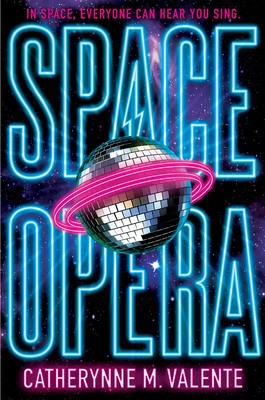
Space Opera by Catherynne Valente

"Life is beautiful, and life is stupid."

This is either the first or second of the universal laws that are laid down by a philosopher from one species in this book, and it certainly struck a chord. This is a book that argues for more joy, more sparkles, more glam, not in order to pretend that the universe doesn't suck sometimes, but because when things are awful, we can still create some magic. It can't necessarily fix everything, but it's not pointless, either.

I have never seen Eurovision live. Last year, encouraged by Catherynne Valente's enthusiastic tweeting of the proceedings, I did track down some performances on Youtube, and...oh my. That is crazy and fun, and not really about good, necessarily. I'd be interested in seeing more, although perhaps not to the extent that I've bothered to bestir myself to find out when it happens next. (Okay, I just googled, it's in May.)

This book is, of course, spawned by a tweeted question to Valente about what Eurovision would look like in space. Obviously, that bore fruit, and now we have a deliciously messy look at exactly that. The tone is very similar to Douglas Adams, but the subject matter is all Valente's own. We have alien races that look like roadrunners, or sort-of teddy bears, or zombies or just about anything at all you could possibly think of. What do they all have in common? An invincible belief that their own race is sentient and a suspicion of anyone making the same claim.

This led to galaxies-spanning Sentience Wars, and when that was all over, the surviving races sat down and tried to figure out how to make that never happen again. And they came up with their own version of Eurovision. Any newly discovered planet would compete in the next one, and as long as they didn't come in last, they wouldn't be utterly obliterated for being not even sentient enough to know a good tune when they heard one. Of course, the other planets had gotten pretty sophisticated by then, and a simple tune wasn't going to cut it. You needed some showmanship.

When first contact is made, though, the list the alien brought with theirself as suggestions for who Earth send, it turns out most of them are dead. Well, all of them, actually. Except for Decibel Jones, who is something like a failed version of David Bowie and Prince put together. Glam as hell, he and his band, the Absolute Zeroes, had a smash album before falling apart musically and emotionally.

(There's a very good and disturbing sidebar about how upset the British and American governments might get if the representative of the human race were frivolous, bisexual, multiracial, and glam as hell. They'd rather supply their own, thank you very much, someone they can control. The aliens know that's a fast track to disintegration city, so they opt for Decibel Jones and the one remaining Absolute Zero.)

On the trip to the competition, Decibel Jones has to deal with the ghosts that brought him here, and the resentment/fondness of Oort, his bandmate, as well as the loss of the other Absolute Zero that brought them all low. They also have to contend with other aliens when they arrive at the venue, since winning or even placing in the competition has come to include some kidnapping and assassination attempts. Will the human race survive, when Decibel and Oort don't even have a song ready?

How does it read? Well, I start giggling on the very first page, and very frequently thereafter. In this one, Valente has a totally different tone, light and amusing, while bringing up issues of surprising depth. There's a knack of observation mixed in that reminds me of some of the best British comedic science fiction and fantasy, although it is only the main character who is British, not Valente herself. She's got the knack down pat.

Wednesday, 30 January 2019

Traitor's Blade by Sebastien de Castell

I've come back around to my "Read-Alike" project - this is the one where I take my top ten lists, and try books that are recommended by the NoveList database as read-alikes. This has been an interesting object lesson in how much books are how they are about things, not what they are about. (Thank you, Roger Ebert, for putting your finger on this so precisely!)  I can almost always see why the algorithm has spat out the results it did, but the books are often vastly different in how they approach similar subject material.  Some of these books have been downright terrible. Some are pretty good. One made it onto the next year's Top Ten list, so that time, at least, I found a gem.

I wasn't quite that lucky this time, but neither was this one of the read-alikes that I had to pull myself through bodily, to finish. This is quite good fantasy (with a couple of quibbles). It just doesn't in any way live up to the book that sparked the recommendation. Then again, The Lies of Locke Lamora is a pretty damned high bar to live up to.

In the end, Traitor's Blade was never a chore to read. I enjoyed it while I read it. However, and you can probably tell that there's a however, there wasn't much that made me eager to read any sequels, if there are any. Near the end, something interesting happens, and if the whole book had been about that storyline, I think I'd be much more interested. It is genuinely a bit innovative, but the rest is similar enough to things I've read before that I think I'm good having just read the one.

This is one of the problems with fantasy, sometimes. Some of the tropes have been worn so smooth that revisits to this territory are not my favourite thing. Something about those books would have to be deeply extraordinary to add an author to my list. That didn't happen here.

What we have is three men who seem like they're a reference to the Three Musketeers. In this fantasy kingdom (and magic itself is a little sparse on the ground, but not absent), there was a king. That king wanted to reform the kingdom, making it more just for the common folk, taking power away from the dukes and duchesses. In return, the dukes and duchesses had the king killed. The Greatcoats, the king's personal force, trained to be magistrates to enforce the new laws, did not prevent his death.

As the book opens, it's now been many years. Falcio Val Mond and two of his Greatcoat compatriots are reviled as traitors, both to the king and to the power of the duchies. They hire themselves out as mercenaries, but Falcio cannot let go of the dream of his king. When a wealthy trader they were paid to protect is assassinated, Falcio and his crew join a caravan taking a young woman to a faraway duchy, where political intrigue will ensue. Along the way, Falcio will keep getting distracted by injustice, but see no way to resurrect a dead ideal.

So, the quibble. The author makes a point that the Greatcoats were one-third women, and tries to make this a world without gender roles as strict as we might expect in something that seems roughly like Europe in the Renaissance. However, the main character still tries to use "fights like a girl" as an insult, and defends it even when called on it by other characters. Why would that even be an idiom in this particular world? What kind of sense does that make? It's a weird hill for a fictional character to die on, given that it in no way reflects the society that spawned him.

Oh yeah, and as soon as we get the main character's backstory, there's an immediate fridging for motivation.

Outside of that, the women characters are not bad. I don't feel like they're really really deep, but I don't really feel that the men are either. The characters are interesting enough, just not hugely complex. All in all, this is a swashbuckling fantasy that mostly doesn't have much magic, so it is like The Lies of Locke Lamora. Just nowhere near as much fun, or with as much to say.

Tuesday, 29 January 2019

The Death of Mrs. Westaway by Ruth Ware

A friend loaned me this book because it has a tarot reader as a main character, and I'd just recently started reading tarot cards professionally, after having spent 25 years learning them quite thoroughly. The tarot reading is not a huge part of this book, which is mostly a thriller, and not a bad one at that. As it pertained to tarot, I thought it was perhaps unfortunate the exact take Ware decided to take, but it's not an unreasonable one. It's all about expectations from tarot reading, really.

The main character, Hal, lost her mother recently, and in order to make ends meet, has taken up her mother's role as a tarot reader on the pier of an English seaside town. She's in debt with usurious interest, and it's coming due, and her legs and life have been threatened. So, when a letter arrives about a grandmother that can't possibly be hers leaving her a bequest, she decides to see if she can con her way into a small amount of money.

Of course, when she shows up at the funeral and reading of the will, it's not a small bequest at all. It's the entire house, quite a large country estate. So Hal is caught by her lies as family secrets swirl around her, and she has to keep her own secrets while others are definitely keeping theirs - and worse, she starts to like some of the people she's conning.

Hal's a good character, by far and large. It's just too bad that she views her job, and tarot as a whole, as a con. She doesn't believe she can tell the future, so she relies on cold reading. And sure, absolutely, you can read that way. I don't think it's ethical at all, and so yeah, if that's what she's doing, there are issues. (I am terrible at knowing exactly what people are feeling while I'm reading tarot cards. I realized long ago, as a tour guide, that I often mistake deep concentration for disbelief. But then, I also tell people that I'm not psychic before I start their reading, and that I'm not there to wow them with what I know, or to tell them what their futures hold. I'm there to help them reflect on their present)

It gets strange because what Hal seems to think about tarot cards is not that far off what I think. There's no reason for her to run this like a scam. Be up front, tell people you're providing a mirror for their lives, a way to recognize patterns and understand personal stories, but that they'll be doing most of the work fitting what they know to what you're saying. But she thinks she can't say that, and so she runs it like a scam, which is frustrating, upset with herself when she pretends she can tell the future. (Also, the author tries to have it go both ways by having tarot cards whenever they come up, be uncannily accurate about situations.)

But really, that's not the focus of the book. The focus is the family Hal finds herself sort-of part of, the interactions between the three brothers who are her theoretical uncles. Hal discovers a picture fairly quickly of them as young people, with her mother there - a cousin of the family with a similar name to a daughter who disappeared many years ago. So, she's related, but not necessarily the way the lawyer's letter and the will describe. There are concerns about the money, but also about justice, and all three brothers are understandably very interested in whatever happened to their long-lost sister.

And some people don't want the truth to come to light, about the sister, about Hal, about the cousin. Some of the twists seemed a little telegraphed, but all in all, this holds together as a competent thriller set in a spooky old house in England. I'll say mystery too, because it does have some good central mysteries to be uncovered.

Wednesday, 23 January 2019

Something More Than Night by Ian Tregillis

*Spoilers Below*

I really wanted to like this book. I really, really did. It sounded so interesting! Unfortunately, the execution didn't quite live up to the premise, and I never sunk into what was going on. I frequently had moments where I wrinkled my brow because the narrative conceit the author was going on just didn't work for me, in the context in which it was done.

When you tell me this is a contemporary fantasy about angels vs. humans, and done with a noir flair? I was very interested. I love noir. I tend to enjoy noir tropes being applied to different circumstances, as long as it is done well. So I started this book expecting to thoroughly enjoy it.  Alas, that was not where I ended. I didn't hate it either, it's just that this feels like it's two-thirds of a good book, and one-third...not. Premises aren't fully thought through. Narrative conventions don't hold up to the merest bit of scrutiny. It's just not fully baked.

There are two main characters here - one, Bayliss, is a low level angel who has been given an important task - when Raphael, one of the most important angels, is murdered, he needs to pick a human to take Raphael's place. Preferably one who won't kick up a fuss and will just keep their head down. That one ends up, accidentally, being Molly. Bayliss was out to get her brother killed in an accident and thus turn him into an angel, but Molly stepped in the way, and so, it's her.

Molly is not a pushover, and is pissed that she's dead, ready to push the limits of being an angel, despite what Bayliss says. And as she does, the full extent of the angelic murder plot are slowly revealed, involving people on earth with a penchant for having angel wings grafted on their backs, and a dodgy indulgence system.  Also with Molly's own struggles to connect with people she's left behind, when she learns that pushing too hard can lead to brain aneurysms.

You know what? That's all fine. It's where we then try to push noir and noir tropes on top of this story that it starts to fall apart. And it's start at the beginning. Bayliss tells us that, through his centuries on earth, he dealt with the isolation by getting into Raymond Chandler. Which...doesn't account for all the time before that. If he's prone to fads, what were his other coping techniques? The noir is fun, but he constantly reminds us that it's not really like that, it's just the lens he's putting on top of his interactions with angels. It's strangely alienating.

If you get past that, the take on angels is interesting. Angels (and cherubim and all the rest) don't know what the greater power is out there, they just know the Metatron appeared at some point and bound them close to earth, where the consensual reality they create helped stabilize physical laws so that humans could come along. This means that the angels really hate humanity. They see them as part of the bars of their prison. Also, there's no afterlife. Just Molly, and that's a special case.

Here's the spoilery bit, though. It turns out that Bayliss has been lying the whole time, not just to Molly, but to the reader. The problem with trying to use an unreliable narrator technique here is that there's no one he's trying to fool or lie to in his sections of the book. It's not addressed to anyone in particular. It's not addressed to potential readers, a la Murder of Roger Ackroyd, still the gold standard in unreliable narrators. Yes, I get why he lies to Molly, but there seems to be absolutely no reason that the text we're reading should conform to those lies. It's not there to fool anyone, except on the meta level of the author trying to fool the reader.

And this drives me crazy! Give Bayliss someone to be writing this to, someone to whom he also needs to lie, or have it be a detective's report to Molly or whatever the fuck, and then his lying makes sense. It is the disjuncture between the fiction and the stated purpose of the fiction that is the problem. Unreliable narrators can work great, when they're narrating to someone. Take that out, and it's pointless. There was no reason to write it that way. It would have made no difference to the story unfolding if it was the truth of what happened instead, with that juxtaposed to what was told to Molly.

(It's also not great unreliable narrator. I can't think of a single thing that, once the gimmick is revealed, I suddenly see in a new light. It's not a new spin on old things, it's just that most of them seem to never have happened. There's nothing here that rewards the reader for having been interested.)

(Also, I have used too many italics, and have read Emily of New Moon and am now expecting Mr. Carpenter to appear in a puff of smoke and say something withering.)

If this had just undergone a little more thought, if it had jelled more, this might have been a really interesting book. As it was, I was always dissatisfied, even before the reveal. Nothing seemed to fit together right.

Tuesday, 22 January 2019

The Ambassadors by Henry James

*Spoilers Below*

I just spent a review trying to figure out why I didn't like a book that was very similar to a "classic." It was kind of a relief to go from that to this book, which is undeniably by someone who is literary and wrote classics, and to be able to say that I really enjoyed The Ambassadors quite a lot. I think I enjoyed it more then A Portrait of a Lady, which had some aspects that grated on me. Phew! I'm not an entire Philistine, after all!

It's funny. This book spends quite a lot of time not saying things directly, even though they're fairly obvious, but it's so indirect that you're not even sure what's not obvious. And yet, it works. It feels like this should drive me crazy, that I should want someone to say what they mean, for once, and yet that is the point of the book. It's about a culture, a place, where things are said and not said in different ways, clashing with another culture in which the things not said are slightly different, but so are the ways in which you interpret things that are not done.

Look at me, I'm turning into Henry James. I'm very sorry if the previous paragraph was oblique. I could narrow it down by giving a spoiler that certainly isn't revealed in these terms in the novel: Yes. They're fucking.

Of course, you can say that, but what does it mean? This is really the great delight of The Ambassadors, that it takes a sexual and emotional relationship so seriously and with such tolerance of ambiguity. What does it mean emotionally, if it means anything at all? What does it mean materially? What does it mean physically? What, oh what, does it mean socially? Sex, after all, does not happen in isolation - it's as much a part of the culture as anything else, just one with heavily charged meanings and interpretations. Oh, Henry James, I sort of love you for this book!

So, we have as a main character Strether, a man in his fifties, editor of a minor literary journal in a small town in New England. He is provisionally engaged to a rich widow of that town, but before they get married, she dispatches him to France to find her wastrel son and convince him to come home and take up the family business.

Once he gets there, though, Strether finds that he rather likes Chad as he is now, that whatever he has been up to in France suits him rather more than not, and whereas he was quite a callow jerk before, now he's charming and altogether polished. Strether also enjoys his own time in Paris very much, but a lot of it is trying to figure out what exactly is going on between Chad and a married woman and/or her daughter.

It is here that no one will give a straight answer. Strether has to observe and become part of Chad's circle to discover who Chad might be romantically attached to, and what that means. Strether is more than willing to let that float as ambiguity, and in fact, seems to prefer it that way. If he doesn't know the exact details of what's going on, he can see the effects, and there is no need for moral judgement. He can simply enjoy Chad as he is now, and be delighted to get to know Marie de Vionnet and her daughter.

So, instead of urging Chad to return to the United States, he encourages him to stay longer, until his mother sends over her daughter and daughter's husband to check up on both Chad and Strether. At that point, Strether must face that the ambiguity he relishes will not be tolerated by New England society, or the daughter, or the mother, and he is being found wanting for not passing harsh moral judgement, immediately.

This isn't all in praise of ambiguity, though. The very looseness of what's been going on has also meant that Strether has been able to tell himself some romantic stories which, it turns out, may not be borne out by the evidence. Chad's attachment may not be quite as firm as it first appears, and he might revert to the New England-style more easily than Strether himself.

All in all, this is a fascination book on the role of cultural context, ambiguity, and judgement in differing societies, and I had a lot of fun reading it. I frequently didn't understand any more than Strether, but that meant I got to discover as he did. It's an interesting read decades on, when the issues that would pop to my mind are not those that would come to others.

Thursday, 17 January 2019

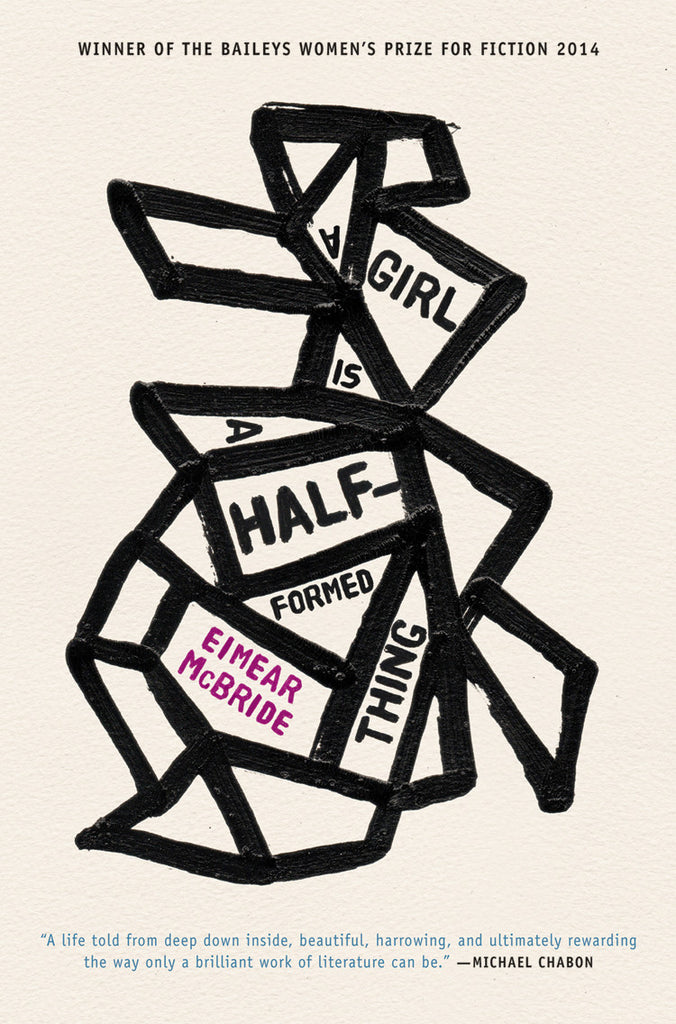
A Girl Is A Half-Formed Thing by Eimear McBride

*Some Spoilers Below*
*CW: Rape, Child Abuse* 

I struggled with this book. Oh, how I struggled with this book. You see, this is one of those self-consciously "literary" books that, when you're just not enjoying reading, seem to carry with them a sneer of "well, you just didn't understand." It was a big book a few years ago. It's trying to be Joyce and Beckett, and the writing is stream-of-consciousness jagged and not coherent. It's also a slog, ugly, mean, and as one review I read put it, it felt like the book wanted to punish the reader for having the temerity to continue.

And yet, there are the accolades. People praising it to the sky as the next big thing, a stark look at reality, and I end up wondering if I'm just too squeamish for "realism." If I want a prettier world and push away the difficult. But then, that's bullshit. I like difficult books, even books where difficult things happen - but not when it's just there to be misery porn. If this were a genre book, I'd call it the grimiest of grimdark. Grimdark has been rightly called out for pretending that horrible = real, whereas anything with hope or love or friendship is somehow fluffy and unrealistic. That is not generally the way the world works. There are difficulties. There are kindnesses too.

Let's take this in two parts - what happens in this book, and how it is expressed. For the first part, there are some things that I can absolutely see happening - turning to physical vices to cope with the pain of the terminal illness of a family member. Yup, no problem. It gets dwelt on a lot, and we get a lot of detail, and for good measure, the ongoing sexual relationship between the main character and her uncle. I am not, oh I am not, denying that such things happen in real life, nor am I saying that they can't be written about. But I am very picky in how such things are written about, and this is just one more horrible brick in a load of horrible bricks that make a horrible wall, and there's nothing more to it. There's nothing I'm seeing McBride say here that goes beyond the litany of misery.

I mean, when you have the main character raped twice (once by a stranger, once by a family member) on the day of her brother's funeral, I think we can safely say we've gone beyond realism. And if it's not trying to be realism, what is it trying to be? It's not a faithful reconstruction of the world as it is. It's not a literary evocation of the universality of women's experiences. I'm just not sure what it is.

So let's talk about how it is expressed. Most of the writing about this books talks about how it's a new version of James Joyce. (One perplexing blurb said that this was Joyce with an Irish lilt, which would be...Joyce?) And yeah, maybe. I mean I haven't read Finnegan's Wake, but I have read Ulysses, and I suppose you could make some comparison to the stream of consciousness thing, but Joyce flows differently. This is so very choppy. Then I read an article that talked about McBride being blown away by Beckett, and it clicked. Yes, this is very, very much like the Beckett I read and didn't like: How It Is. They're similar both in writing style, and in content.

Writing that review was very much like writing this one - struggling with feeling incompetent because I didn't like the book (am I missing it entirely or is this legitimately an Emperor's New Clothes situation?) and feeling put off by the sheer cynicism and pessimism of what's going on. The writing style is similar, and Beckett is trying less to capture something about life than he is about misery and it's not realistic, and it all clicked. This is so close to Beckett it's less an homage and more borrowing a voice.

So, yeah. If you've read and loved some of Beckett's more obscure work, the stuff that's really out there, then yes, you might enjoy A Girl Is A Half-Formed Thing. But I didn't like either one, and this is definitely a style or its own little genre that is not for me.

Tuesday, 15 January 2019

Two Serpents Rise by Max Gladstone

Look, I really liked Three Parts Dead, the first Craft novel published. I liked it a lot. But I loved Two Serpents Rise. In this book, Max Gladstone takes world-building I enjoyed a hell of a lot in the first book, and applies it to a plot and a set of political and social conditions that I was just absolutely captivated by. It's a book that takes itself absolutely seriously, in the best possible ways. (This doesn't mean that there's no humour, but more that Gladstone has really thought through his society and his characters and done such interesting things with them, taking all these aspects, and moving forward with the ramifications.)

We're in a different city in Two Serpents Rise, and I don't believe any characters overlap between the two books - or at least, if they did, I read Three Parts Dead long enough ago that they didn't pop out at me. We're in a time period somewhat before Three Parts Dead, but the laws and bureaucracy concerning the Craft in the world seem more or less the same. We've got some new nuance added to it as well.

Two Serpents Rise takes place in the city of Dresediel Lex, which is at least partially inspired by Aztec mythology - imagine a huge urban metropolis with water utilities, corporations, risk management, and a strong protest movement, integrated into both the aftermath of the major event in this world, the God Wars, and an older tradition of sacrifice as a source of power and peace.

The main character here is Caleb, a risk analyst and sometimes gambler, who summons a literal version of Lady Luck for his card games, who collects and disburses fortunes. She's not on his side - this is luck at its most literal. He works for the Red King Corporation, run by the King in Red, a man who, in the God Wars, when he led humans against the Gods he perceived keeping them captive and helpless, became only his own skeleton, with rubies for eyes.

When someone releases tiny serpent-like demons into the city's reservoirs, Caleb is sent to assess the risks of it happening again, particularly with a new merger on the horizon. His father is the leader of a faction of those who want to return to the old ways, being himself the last sacrificer on the block, the only one who knows how it feels to rip a living heart from a chest. Caleb' father is the obvious suspect in the attack on the reservoirs, but he protests his innocence, and Caleb believes him. Mostly. While at the reservoir, though, he meets Mal, a woman about his own age, a parkour runner, and immediately he wants to protect her.

We mostly see Mal through Caleb's eyes, which is deliberate, as he falls for her hard, and then interprets her through various lenses, mostly of his own devising. Caleb believes that she might hold the answers to the questions he doesn't know to ask, and the needs of the city now that, instead of killing someone dramatically a few times a year, the sacrifice is parcelled out throughout the inhabitants, hitting some (the poor), harder than others. None of what he applies to her, though, is necessarily how Mal sees herself, and his visions of what she is butts heads, harder and harder, with how she sees herself.

These characters are great (I also loved Teo, Caleb's best friend, and Teo's artist girlfriend who fancies herself on the front lines, and the King in Red himself), but what really got me is the underlying examination of the difficulties of revolution, particularly when revolutionary ideals are founded on a mythic time that never really existed, that is as much a romantic tale as those that the present rulers are telling themselves. It's about how it's easy to talk lightly of sacrifice when you're talking about someone else, with or without (mostly without) their consent. About the difficulties of working within the system against the violence that come from pulling the system down entirely. The book embraced all the complexity of protest, revolution, rebellion and power, and I was in love what was on the page the whole time.

Oh, also, there are two giant serpents that could awake and destroy the world, and if they're awakened at all, they'll want blood. Lots and lots of blood. I almost forgot to mention that part.

Friday, 11 January 2019

Exit West by Mohsin Hamid

It's rare that you find a book that you want to call enchanting, and probably much rarer that you'd want to apply that term to a book that is, in very real and difficult ways, about refugees and the feeling of crisis that has been developing around them. Yet, Mohsin Hamid has done that, written something that feels like a parable or myth for the modern day, with a sense of detachment that is nonetheless warm and kind. I really enjoyed Exit West, from beginning to end.

From what I remember from a few of the reviews, some people stubbed their toes on the one element of the book that is not strict realism, but since I'm a genre reader at heart, I didn't have a problem with it at all. More than that, I think it's necessary to show some aspects of this experience that Hamid would have had trouble accessing otherwise. I'll talk more about that in a minute, but I really do think that it is integral, not tacked-on or superfluous.

We start in an unnamed city, probably in the Middle East, given what we know of names and customs. Saeed and Nadia meet before the situation in their city gets too bad, at a computer class. Nadia always wears a full robe covering her, although she rides a motorcycle and is noticeably less religious than Saeed - she wears it because she lives by herself and feels it offers her protection as she travels the city. They fall for each other almost immediately.

Then the city starts to become more unsafe - militants take over parts of it, behaviour becomes more strictly policed, cell phones start not working. Without them, Saeed and Nadia have several nervewracking days when they don't know how to find each other. Bombs fall. They reunite, and Nadia ends up living with Saeed's family for a while.

Then enters the strangeness. There start to be rumours of doors that open to other places on the planet. Once they are discovered, they appear to be fixed. There is no particular rhyme or reason to where they appear, just that when you pass (with difficulty) through a door, you come out somewhere else. Because they are fixed, these can become ports of entry to other countries. In Saeed and Nadia's case, this holds the potential to take them away from the war that has taken their city. But because they are fixed, other countries can discover them too, and if you aren't one of the lucky few to get through before they are discovered, they will not necessarily lead you to an entirely new life.

In fact, when Saeed and Nadia make their way through one to their first port of call, they find themselves in a refugee camp, kept to one part of the island, the way back to their origins left open by a government who really wishes they would disappear. From there, they make two more jumps, discovering nativism and potential violence in England, and a ramshackle community being built in California, which is neither hostile nor particularly welcoming.

This all unfolds more or less gently, with Saeed and Nadia's relationship developing through it all. They are not married, the only ties those of love and the country they left behind. Saeed's father, before they left him, asked her only to help his son get to safety, not to stay with him forever. As they move through new experience after new experience, Nadia, still in her voluminous robes, paradoxically finds it easier to find herself a place in each new country, while Saeed turns more and more strongly to things that remind him of home.

This is all told sparely, but with a warm detachment rather than a cold clinicalness. Because it is all sketched so lightly and so distantly, it takes on the feel of a myth, of a legend, of a parable about our world, about where home is, what being a refugee means, how we close borders, and what might happen if we opened them.

Thursday, 10 January 2019

Swing Time by Zadie Smith

I generally really love Zadie Smith's books. They're delightful, interesting, they make me think and sometimes make me laugh. She's got such an eye for aspects of London, and how Englishness and race collide or intersect, and how the two might be negotiated. That said, though, I don't feel like I loved Swing Time quite as much as I have some of her others. It's not bad - I had fun reading it. But it's already starting to fade in my memory, which is not a great sign.  While I was reading it, I was sure I'd have lots to talk about in this review, and I've already forgotten what all those things were, which is a pity.

I don't know what I'm having trouble connecting with. I felt much more engaged in the early parts of the novel, when we were with the two leads, Tracey and the unnamed narrator, growing up in a relatively poor part of London. Both girls have one Black parent and one white one, but their living situations are starkly different - the narrator's mother is bent on learning all the theory she can, aiming at eventually going into politics (and doing so.) She is driven, and pushes her daughter hard, not necessarily seeing the spots where theory doesn't meet practice all that well. But still, it's a loving family situation, rounded out by the narrator's father, who is caring and unambitious.

Tracey's mother is more detached, more permissive, and Tracey's father is only rarely part of her life. Tracey tries to say that that's because he's one of Michael Jackson's backup dancers and on tour, but the truth is that he's often in jail. The two girls bond over a dance class, where Tracey shines, and the narrator does not. The narrator has a good singing voice, but there's no encouragement for her to pursue it.

Perhaps it's where the book veers into the narrator's adult life as an assistant to a pop star that failed to hold me. The world of pop music is not one I feel particularly close to, and this version of Madonna/Kylie Minogue/whatever is fine, but I didn't feel like it wormed its way inside me. In a lot of ways, this section feels very much like how the narrator describes this decade-long interlude in her life - detached from the rest of the world. But while the narrator is wrapped up in Aimee and Aimee's sense of self, I didn't connect with it, so when she returns from that land of the very rich and very famous, it didn't stick with me.

At any rate, much of book centers around the narrator's work as Aimee's first personal assistant, including a bunch of trips to West Africa to set up a girls' school. Aimee is heavily invested in this project, but impatient to cut through both red tape and the advice from those with experience in non-governmental organizations in the region. The narrator ends up spending quite a bit of time there in advance of each of Aimee's trips, meeting the villagers as well as the advisor to the project, a man who is frustrated by Aimee's intent to pretend that what is complex is actually simple.

Meanwhile, Tracey's life initially resulted in a few roles in musicals in the chorus, dancing, but later changes into motherhood and sending increasingly angry and unhinged emails to the narrator's mother, who is now an M.P., dating a woman, and also trying to bring her concerns to Aimee about the school, through her daughter. Everything for the narrator falls apart, as we're told in the first couple of pages it will, and she is back in London, back in a world that she's been out of for a decade, with her mother in hospice, and no friends.

It really does feel like there are a lot of good elements here, but somehow, still, I don't like it quite as well as Smith's other books. It's still immensely readable, but it's not sticking to me. I wish I hadn't forgotten those things I wanted to write about, but so it goes.

Friday, 4 January 2019

Queen of the Tearling by Erika Johansen

I try not to be hugely jaded when I start a new YA book about a young woman unprepared to find out she's royalty of a fantasy kingdom and has to assume the throne. And I guess in this case, the young woman in question (Kelsea) was raised knowing she was the heir, just far away from the centres of power. I don't mind this aspect of the Arthurian legend being applied to young women in our context, but I've so rarely seen it done well.

In this case, the book and I didn't get off on the best foot, as for approximately the first hundred pages or so, the narrative relied heavily on a trope everyone should know I hate. It's lazy, and it's infuriating. It is this: there's information the young person really should know, and the people around them know it and have the time to share, but refuse for no fucking good reason, just bullshit like "if you don't know, I can't tell you!" or "you'll find out soon enough, highness," or just plain "I'm not going to tell you." This narrative trick to slow down the story makes me stabby, and I wish writers would cut it the fuck out.

Particularly, in this case, when the young person in question is riding to take possession of her kingdom, surrounded by men loyal to her cause, and has every reason to not only want to know about the state of her kingdom, but a huge need to! You know, you can tell people things! Even difficult things! And in fact, their responses might be stronger and more nuanced if they had the time to think things through instead of being thrust into situations! Kneejerk reactions are not the be-all and fucking end-all!

Except when it comes to slavery, which is always, unequivocally bad, but there was nothing to be gained by not telling Kelsea that every year, hundreds of her citizens were being rounded up and sent to slavery in a more powerful neighboring country as the cost of keeping the peace. It doesn't help to withhold this information, and it wouldn't lessen the emotional impact of seeing it. If you really want to see her shock from a completely oblivious standpoint, then find an excuse why the question never comes up, rather than her asking half a dozen fucking times and having people not answer. Kelsea, these people may suck as your advisors, if they won't tell you this basic shit. Seriously.

Luckily, once she got to the capitol and freed the slave caravan and took over the throne, the book got quite a lot better. It then became a more interesting tale of her trying to consolidate power and do the right thing instead of Knowledge-Keep-Away.  She finds interesting allies, the betrayal from within their ranks is well done, as is her growing sense of self and what she must do (and the magical powers than come along with it, because of course the necklaces she has are magical).

But are they magical? Is this book a fantasy? People in the world call it magic, and the power of the Red Queen of the evil neighbouring country is also so deemed. We see the Red Queen summon something we're supposed to think is a demon to devour the life force of a child (just in case we weren't convinced she was Bad-with-a-capital-B). However, there are also what feels like strong hints that this might actually be science fiction instead, and either the next two books have some nifty reveals, or this is just a confused mishmash. I'm not sure which yet, but I'll give Johansen the benefit of the doubt.

The reasons it feels suspiciously like SF are the tales of how they came to this new country, with a leader trying to found a socialist utopia that failed (with a king? More explanation, please.) It's said quite clearly that they came in ships from Europe and North America to found these new kingdoms in new lands, losing most of their science on the way. Science that seems to have been very advanced. And they have no connection to the lands from which they originally came.

In other words, if these aren't generations-distorted tales of a caravan of space ships moving between planets, then I am going to be very highly disappointed. This idea works nicely where literal ships would not. Technology levels are all over the place, but there seems to be at least the potential for devices that are at least as powerful as we have now, so this strongly points to science fiction, in much the same way that Anne McCaffrey's Pern books are science fiction.

If this all pays off, and we keep exploring the difficulties in re-establishing a socialist kingdom (really? A kingdom?), then I'll be happy. If not, I'll be an old cynic once again. There's potential here. Will it pay off?

Thursday, 3 January 2019

Bring Up The Bodies by Hilary Mantel

Reviewing series is weird. Sometimes I've said almost all I have to say about the first book, and it isn't that the second book is bad, it's just that I don't have anything to add. Often, the later books are just as good, it's just not shiny and new! (Don't get me wrong, I love series, a lot. They're just hard to review.)  It's weirdly compounded when we're in Hilary Mantel territory, where this is all terribly literary, and it's not like a series where a new book is going to get pumped out every year or so. This is high brow, people, and yet.

And yet, while I enjoyed Bring Up the Bodies a whole hell of a lot, I feel like a lot of this review might be rehashing what I thought of Wolf Hall. For context, Wolf Hall made it into my Top Ten of the year in which I read it, so please, don't take this as a complaint. Bring Up the Bodies is really, really fucking good. The conceit where Thomas Cromwell is only referred to as "he" was barely noticeable by this time, and of course, this book covers the downfall of Anne Boleyn and her retinue, so you'd probably have to do a pretty crappy job to make that uninteresting.

It's more than that, though. Mantel paints her Tudor world with such skill, giving us people who are recognizable as fallible human beings without ever trying to make them 21st-century in their actions or speech. What's more impressive is that there is quite a cast of characters here, and yet I never felt at sea in their midst. That is a feat and a half. But Mantel introduces who she needs to, adds a few pertinent comments, and then links back on their next appearance so skillfully that I felt like I had a general handle on the players and situation.

She makes all these long-dead Tudors come to life. We can't know how accurate she is, but it's enough to say that it feels real, like it could have happened just like this. We see as Henry grows dissatisfied with his ten-year marriage to Anne, and grows attracted to Jane Seymour, her very reticence alluring him. Katherine grows ill, and the opportunity grows that some day soon, the dismissed Queen will die, leaving Anne's position (or, more pertinently, the position of Queen) open for a marriage that will be recognized by the Pope.

Anne can't believe that Henry's straying eyes will be permanent - she's won him back before. And likewise, her brother and those she has preferred have grown accustomed to the liberties they've enjoyed at the court. (Whether or not those liberties included the Queen's bed Mantel cleverly leaves up to reader to decide. We hear what the evidence was, both the parts that might support it, and those that might have been trumped up to free a king of a marriage he wanted to leave.)

All this comes through Cromwell, and his uneasy position in court, still disdained by those born to the nobility.  He has increasing power that could, with Anne's fall, be toppled. Or by Anne's success, threatened. There's a needle he has to thread to get himself and his household through, and he never stops scheming to do it, reading Henry as few others could, understanding all the venal and virtuous motives (mostly venal) of those around the court.

This is not a potboiler, but there's always something going on to hold the attention, and subtly, hints of something more. I enjoyed Bringing Up the Bodies a lot. If you haven't read Wolf Hall yet, you might want to, and then traipse happily along to this one.