Pages

Thursday, 10 December 2015

Dust Cover Dust-Up 2015: Round One, Part Eight


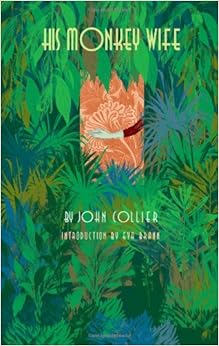
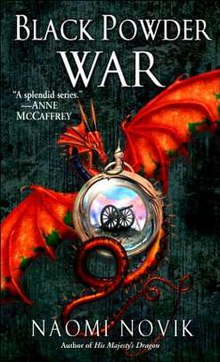
His Monkey Wife by John Collier vs. Black Powder War by Naomi Novik

This one was depressingly evil. As soon as I saw the first title, I knew whatever the second in the book of the match-up was, it was going to win. His Monkey Wife was one of my least favourite books of the year, so even though I didn't love Black Powder War, it gets through this round. Napoleonic Dragon Wars may be wearing on me, but their better than His Monkey Wife, which is pretty much about what it sounds like.

Winner: Black Powder War
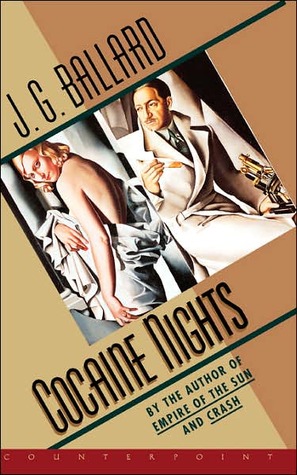


Cocaine Nights by J.G. Ballard vs. The Man Who Was Thursday by G.K. Chesterton

That's kind of a trippy combo. Both very strange books, where morality is up-ended and things are confusing, even to those in the middle of them. (And also to the reader, but not in a bad way in either case.) The choice is easy, though. I was not engaged by the deep pessimism in Ballard's writing, and at times, intensely amused by G.K. Chesterton's story. Instead of morally bankrupt rich people, I'm more amused by a policeman's infiltration of an anarchist ring, particularly the decidedly bizarre ending. It may not make sense, but of the two, it's definitely my favourite.

Winner: The Man Who Was Thursday
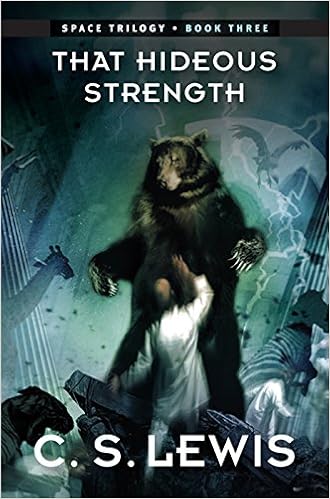


That Hideous Strength by C.S. Lewis vs. The Immorality Engine by George Mann

Both books set in England, although slightly distant in time - one in the 1950s, the other in Victorian steampunk England, with an immortal (and partly mechanized) Queen Victoria. Although I find Mann's books diverting, there's not a lot there. And while I didn't love That Hideous Strength, the ideas are intriguing enough to get it through this round.

Also maybe I have a secret desire to pit G.K. Chesterton against C.S. Lewis.

Winner: That Hideous Strength


The Long Way Home by Louise Penny vs. Dry by Augusten Burroughs
Sorry, Augusten Burroughs. I don't want to downplay your struggles with alcoholism, and I did enjoy reading your memoir. But this is Louise Penny we're talking about. Although the first book after the wrap-up of her overarching plot was bound to be a bit of a disappointment after the culmination of so many books, this is still an excellent mystery. And, as always, she has such a keen sense of human pain. I toss that off like it's nothing, because I've said it so many times about Penny before. It's not, though. It's quite extraordinary, and make these books that would stand up against any others. 

Winner: The Long Way Home


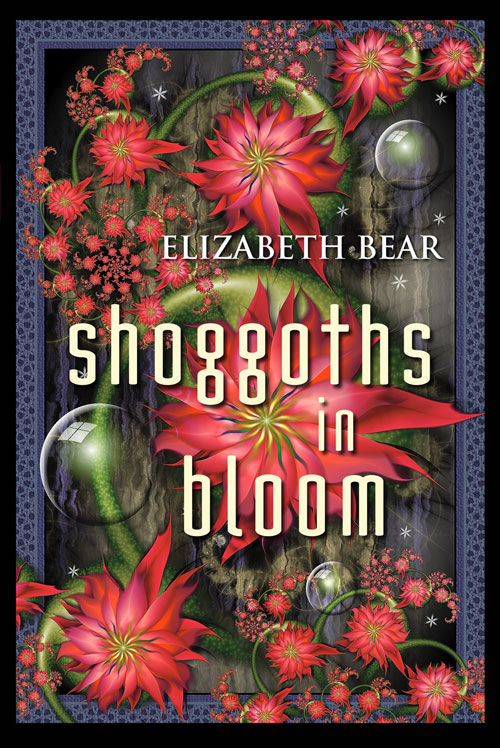
Shoggoths in Bloom by Elizabeth Bear vs. Katherine by Anya Seton

I was not a big fan of Anya Seton's historical romance, which took as its premise that Katherine couldn't possibly have been interested in anything that was going around her other than her children and lover. Yawn. In the other corner, we have a really excellent book of short stories by Elizabeth Bear, stories that often build on her existing worlds, and are as frequently like jagged pieces of glass. She puts her characters through the wringer, and I always love it. 

Winner: Shoggoths in Bloom

Wednesday, 9 December 2015

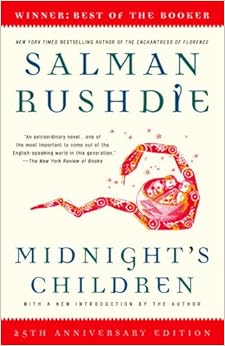
Midnight's Children by Salman Rushdie


With this book, I finish all the books on the BBC Big Read that I can get through my local library system, or had already read. There are two remaining, one of which I'm getting from a friend, and one I may have to go to the inter-library loan system for. Still, this feels like the end. I'm just wrapping up loose ends.

And what a book to go out on! I am a huge Salman Rushdie fan. His prose is delicious, messy, far-ranging, and his ideas just so much fun to spend some time with. Even when it's on a fairly heavy topic, as here, where we cover the history of India from the departure of the British, through the Emergency.

It is not that Midnight's Children is opaque about its subject material, but it is not always direct in explaining, so I was grateful that I'd read Rohinton Mistry's A Fine Balance, which, while also fictional, covers some of the same events, so that I felt that I at least had the bare bones of what had gone on to clothe with this new version. The forced sterilizations, for instance. 

But here I am not talking about the book itself as much as I am talking around it. I am not sure I like this book as much as The Satanic Verses, but on a scale of amazing to mind-blowing, that's not really a criticism.

Saleem Sinai is born during the midnight hour on the day of India's creation as a nation after the departure of the British. With one other, he is born closest to the stroke of midnight exactly. He thus becomes one of the leaders of Midnight's Children, the hundreds born in the new country in that hour, who have powers  that are more or less powerful depending on their proximity to actual midnight. In his case, it is a form of telepathy, as well as a prodigious nose. 

In the book, Saleem writes down his trip to maturity, to 31 years old, when he thinks he will die. Through that medium, it also becomes a novel of narration and how stories are told and intertwined, how personal histories intersect with national ones, and the resonances one might find, particularly if one sees oneself as the embodiment of India. Or has to fight others with the same identification.

Because of that, because of Saleem's insistence that his life echoes or causes the twists and turns of fortune in India itself, there is a sense that the narrator might not be entirely trustworthy. Or rather, that while he believes what he is writing is the truth, the conclusions he draws from the purposes of grand events might be an overreaching, a desire to have one's life have meaning when it might not.

In the middle of the book, it seems to meander. Not in such a way that made it unpleasant, but my sharp enjoyment was muted. It comes back together at the end though, through the sharpest parts of the narrative, where what happened to India happens to Saleem with brutal force.

The prose is just so good, though. It's one of the few books I've picked up in the recent past that made me want to run out and grab people and read sentences to them. (My husband suffered through that a few times.) When you find authors who can write things just so apt, so perfect, it's one of the best feelings, and Rushdie always has that in abundance.

To sum up, this is perhaps not my absolute favourite of Rushdie's books (the three others I've read), but it's really, really excellent. And I'm almost done the BBC Big Read! 

Tuesday, 8 December 2015

Dust Cover Dust-Up 2015: Round One, Part Seven


Barrow's Boys by Fergus Fleming vs. A Fire in the Sun by George Effinger

An easy one to start this entry in the Dust Cover Dust-Up. Barrow's Boys was fine non-fiction, but not really anything that grabbed me. On the other hand, Effinger's book was immensely appealing and interesing. Which is funny, because the first book in the series left me a little cold. Or maybe I just wasn't in the right mood for it. Whatever the reason, A Fire in the Sun hit me a lot harder than When Gravity Fails, and the morass of ethical grey areas (and outright evil ones) the main character finds himself in were compelling.

Winner: A Fire in the Sun


Let's Explore Diabetes with Owls by David Sedaris vs. Hammered by Kevin Hearne

Goddammit. I just got finished writing a paragraph about how it made NO SENSE that Elizabeth Bear's first entry in her Jenny Casey section would come after the second book when I KNOW that I read them in order this time, and then the penny dropped. Apparently I read two books named Hammered in the last year, and the Bear book was in last year's DCD. So, yeah. This is one about that druid, with the snark, and the dog, and things I generally like. In this one, they're trying to take down Thor, hence the hammer. Despite the fact that the title had utterly gone out of my head, it wins this battle, because I still remember more of it than I do of Sedaris' book. Which wasn't bad, but hasn't stayed with me at all. 

Winner: Hammered


Kiss of the Fur Queen by Tomson Highway vs. Irma Voth by Miriam Toews

Strangely, both these authors were here for a writer's festival a few months ago. I wanted to see both of them, but having just started a new job, hit that particular weekend too tired to go out and do anything. Here we have two books I liked quite a lot, by exciting Canadian authors. One, lamentably, has to fall by the wayside. Oh, which to pick? This is one of the few painful battles in this round. On the one hand, Kiss of the Fur Queen had such beautiful prose wrapped around such a painful story. On the other, in Irma Voth, there's an engaging story that moved me quite a lot. I think maybe the prose puts it over the edge - Highway has the rhythms of oral storytelling in this work, and that gets it to the next round.

Winner: Kiss of the Fur Queen


At the Mountains of Madness by H.P. Lovecraft vs. Mason & Dixon by Thomas Pynchon

Wow. Now that's a weird match-up. Weirdness abounds, or abides, or does something strange and unexpected. Now that I think back on reading both these books at the same time...I wonder if it was a smart idea?  Regardless, let's see, which would I read again if I had the chance. The Pynchon is long and dense, and difficult. The Lovecraft is short and creepy, although it lost some of the punch it might have if I were a visual thinker. Still, despite its length, there's just so much good weird stuff in the Pynchon, and I feel like a reread might actually help me come to grips with this vast expanse of strange Americana. (And Europeana.)

Winner: Mason & Dixon


Unpossible by Daryl Gregory vs. A Dirty Job by Christopher Moore

I find Christopher Moore a little hit or miss, but this was one that definitely hit. It's got an emotional core that some of his books seem to lack, and is very entertaining. However, Daryl Gregory is fast becoming one of my must-read authors. While I like his long-form novels better, as they give him more room to explore amazing and crazy ideas, these short stories still pack quite the punch, and many of them linger at the crossroads of science and faith, in intriguing and often troubling ways. No question, easy choice. Daryl Gregory all the way.

Winner: Unpossible

Friday, 4 December 2015

The Wasp Factory by Iain Banks


*Spoilers Below*

The copy of this I got from the library had a foreword by Banks, probably to commemorate an anniversary of its publication. I skimmed it before I read the book - I've been wary of reading too deeply in forewords since John le Carre spoiled Tinker, Tailor, Soldier, Spy for me a few years ago. Still, in this case, it put an interesting bug in my ear. It was right near the end, where Banks said he was trying to write a book about a troubled young man that would be both pro-feminist and anti-militarism.

Then I started to read, and much of the book seemed cast in the "violence is the answer" Chuck Palahniuk-style, except that I knew that that wasn't what Banks was going for. It's probably good, because it takes Banks a while to tip his hand, and I'm not a big reader of books on serial killers. Even if they're serial killers whose killings happened long ago when he was a child. He says he thinks he's done with that, but of course there's uncertainty. The foreword kept me reading to find out what he meant.

The anti-militarism is easy to spot. It's there in Frank's heavy reliance in the symbols of violence and death, his fetishization of the tools and results of killing. It's in his overreaction to being foiled in his attempts to hurt other creatures, like the effort to fight back is, in an of itself, unfair when he's supposed to be winning. It brings the ideology of war down very close to that of an outraged two-year old determined to make others hurt for startling him. 

The story of Frank is told in the first-person, and weaves back and forth between his relatively quiet present and troubled past. Raised by a father who has kept him off the books and taught him to hate women, who builds bombs in the basement and lies regularly to keep Frank on his toes, Frank spends his days protecting his small island for incursions mostly imaginary. His older brother suffered a psychotic break, and has just broken out from a psychiatric hospital. 

The pro-feminist angle took me longer to get. I mean, we get that Frank hates women, and a feel for why, mostly coming from his father. The way that women have come to symbolize all that is weak and unworthy to Frank, who knows about them purely from media, and assumes that media images closely approximate real life. 

But it was close enough to the books that really do seem to hold women in complete disdain that that enough didn't feel particularly pro-feminist.

Then we get to the end, and the revelation at the core of this story, and I realized what Banks was trying to do and how. Not only was this a story of toxic masculinity, it also took the approach of taking as the starting point the social construction of gender, completely apart from biological sex, and how this brand of toxic masculinity infects those it touches. That loathing is not tied to biology, or reality, or knowledge. It breeds in ignorance and the othering of women, without ever seeing women as fellow human beings.

So in the end, despite this being a book that is predominantly about men, I see what he was trying to do, and although you have to hold on till the very last five pages to get what he's trying to do, it's interesting, and made me glad I'd read the book. 

Thursday, 3 December 2015

Dust Cover Dust-Up 2015: Round One, Part Six


The Sunken Cathedral by Kate Walbert vs. Farthing by Jo Walton

This is an easy pick. While I liked The Sunken Cathedral, I was shaken to the bone by Farthing. In a good way. Reading an alt-history where England made peace with Nazi Germany was terrifying in its examination of how the horrors could be extended, and what happens when good people are faced with impossible decisions, and not-so-good ones with power lingering just out of their reach. Kate Walbert's book was interesting, but can't hold a candle to Jo Walton's. 

Winner: Farthing


The Clan of the Cave Bear by Jean M. Auel vs. The City and the Stars by Arthur C. Clarke

I can't say I loved either of these. Neither really struck me in that way that makes me evangelical about a book. So it comes down to which of the two I liked more, and that's easy enough. I may not have connected emotionally with The City and the Stars, but it was stronger than my connection to Jean M. Auel's Neanderthals. There was just a little too much of a Mary Sue about Ayla, and after having been primed by others for Neanderthal sex, having it only be present in an ugly nonconsensual way...let's just stay with the science fiction, okay?

Winner: The City and the Stars


The Martian by Andy Weir vs. Hawksbill Station by Robert Silverberg

I actually quite enjoyed Hawksbill Station, with Silverberg's examination of isolation and political exile of the most extreme kind. But for sheer enjoyment, it's hard to match Andy Weir's The Martian. It's not great literature. There's not a ton of depth. However, for what it is, it is great - a fun thrill-ride of whether or not this astronaut can survive on Mars, with plenty of humour thrown in, it's hard to beat "Rich Purnell is a steely-eyed missile man,"   NASA and astronauts and people coming together to try to work a problem? Sign me up. 

Winner: The Martian


Ready Player One by Ernest Cline vs. Blameless by Gail Carriger

Both of these are fairly light reads, but I have to admit that I've never connected with Carriger's series. I spend half my time enjoying it, half my time irritated. Cline's book is certainly not perfect, but there's a certain joy about it that appealed to me, a celebration of 80s culture, some of which I recognized, some of which I didn't. (I was alive at the right time, but we didn't have a TV.Of the two, this round definitely goes to Cline.

Winner: Ready Player One


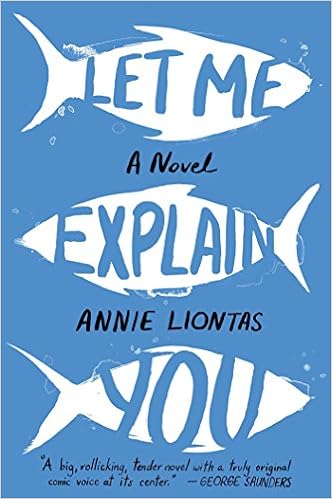
Let Me Explain You by Annie Liontas vs. Alias Grace by Margaret Atwood

This seems like it should be an easy pick, right? A first novel, with a few classic first-novel-problems, up against one of the deities of Canadian literature. In a book readily acclaimed, no less. You know what, though? I'm in the mood for an upset, and despite its problems, Let Me Explain You had so much energy and heart that it's actually not even that close. Alias Grace was nowhere near my favourite Atwood, and while the flattened tone work for the main character, the ending was frankly disappointing and frustrating. I just enjoyed Annie Liontas' book more. 

Winner: Let Me Explain You

Wednesday, 2 December 2015

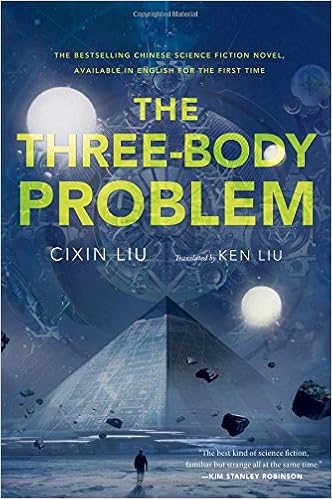
The Three Body Problem by Cixin Liu


I went looking for this book to buy it to read for my book club, since the library had too many holds to get it to me in time. I got to our big local box-bookstore, and was dismayed to find that they didn't appear to have it. I checked the store computer, which said there were four copies. I eventually found it shelved in the fantasy sections, which...no. Just no. This is not one of those genre-straddling books. It's pretty firmly in the SF camp. 

Finally having it in my hot little hands, I settled in to read, but missed finishing it by the time my book club rolled around. That's the first time that's ever happened. Despite my failure to finish it, I plowed through the rest a few days after, having quite enjoyed this book.

It's dark, and pessimistic, although doesn't necessarily end on that note. Perhaps the strongest section is the beginning, which roots what will come firmly in the legacy of the Cultural Revolution in China. We see as academics are forced to dismiss scientific evidence in favour of ideology, on the penalty of death, and one who cannot pretend. His daughter watches as he is killed, and that will stay with her for the rest of her life, motivating all her future actions. 

This display of fanaticism inspires a deep pessimism about human nature and the inevitability of a world that will continue to chew up its inhabitants in the name of dogma. 

Two things struck me about the book - the theme of ideas overriding evidence, and what that does to people who distort their lives to prove that some scientific principles are wrong because they're counter-revolutionary. The other was how people's experiences influenced what they expected of the aliens.

And aliens there are, from a far-away star (actually, the closest possible one, which is still very far away.) Early Chinese radio broadcasts into space reach them and they respond. In various ways, and partly through a computer game that is there to teach slowly about their civilization. But what do the Trisolarans want? And if they come to Earth, what would the results be?

Some presume that they would usher in an era of fairness, very unlike what they've suffered through. Others that they would scourge the planet, ending humanity's plague on the universe. Nihilists and those willing to give up power to a greater force they know nothing about. Each willing to work unilaterally, without input from the rest of the human race. 

There is also the unsettling revelation that science has started not to work, in ways that are driving scientists to deep unease, fear, and in some cases, suicide. Faced with the idea that the rules they'd spent their lives investigating were perhaps local exceptions, the entire world-wide scientific community is in disarray. 

This isn't a perfect book, but I thought it did a good job of integrating scientific exposition with genuinely disturbing moments of humanity. The willingness of people to sacrifice everyone else was all too believable, and all too troubling.  As a North American reading my first Chinese science fiction, the translation was excellent, and the world both strange and familiar.

Booklinks:

I read this book as part of an attempt to read all the Hugo Nominees

Tuesday, 1 December 2015

Dust Cover Dust-Up 2015: Round One, Part 5


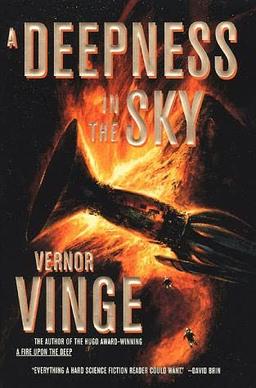
Boy, Snow, Bird by Helen Oyeyemi vs. A Deepness in the Sky by Vernor Vinge

These are very different books - from a very literary book about the interactions of race in a family over three generations, to a straight-up science fiction novel about a new race that evolved in strange circumstances. Strangely, there are similarities to The Three-Body Problem by Cixin Liu, which I just read, but in this book, their star creates a regular pattern, allowing adaptation. So which wins? In this case, the SF. Not just because I'm a nerd at heart, but also because, while there were interesting aspect of Boy, Snow, Bird, there were also something that seemed curiously absent. And Vinge did a really great job of creating an alien race that straddled nicely the border between familiar and alien.

Winner: A Deepness in the Sky


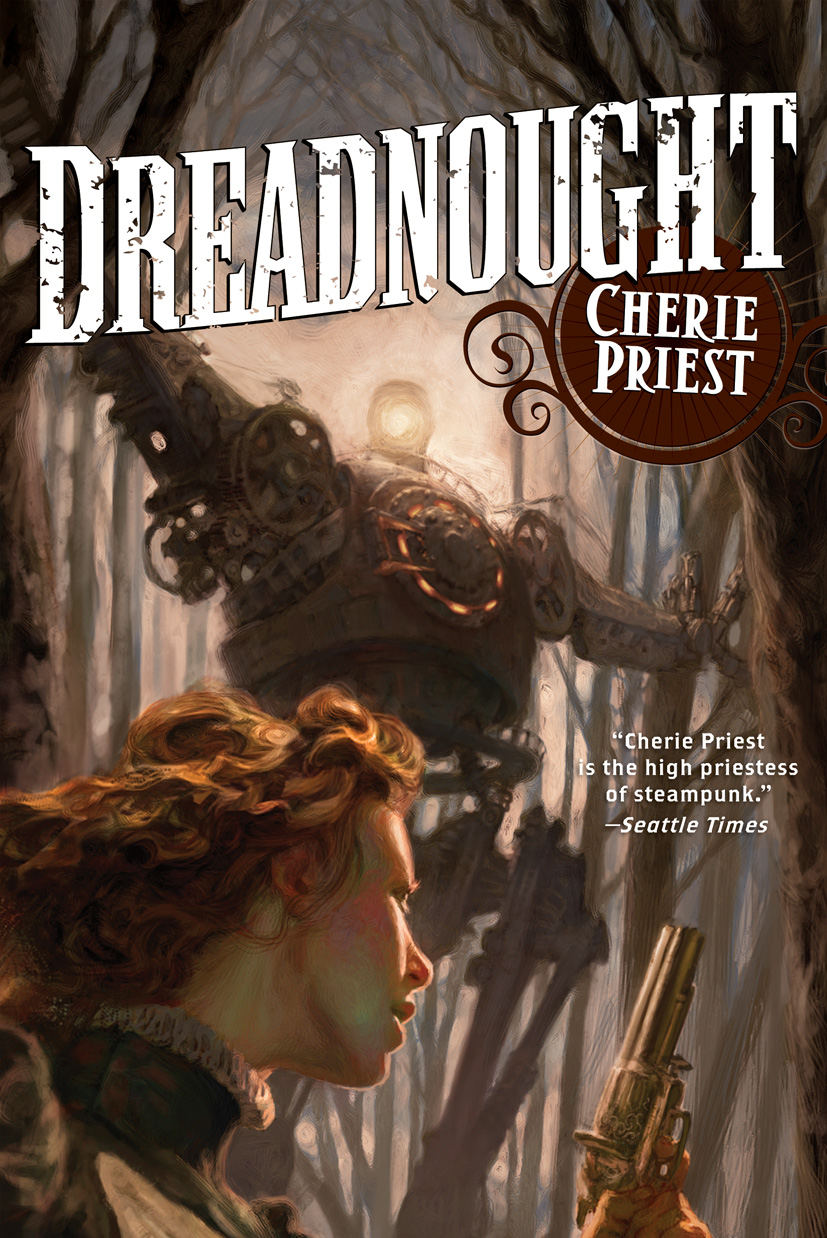
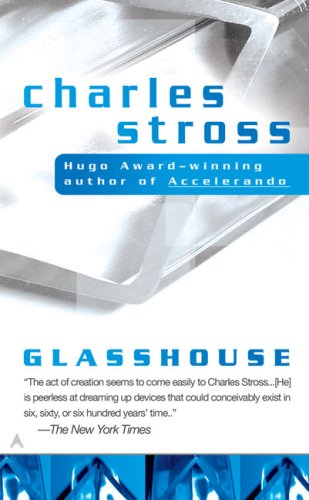
Dreadnought by Cherie Priest vs. Glasshouse by Charles Stross

Both of these books made me wince at least once. But while I was wincing at Priest's frustrating insistence on creating a alt-Civil War in which race isn't an issue, I was wincing with Stross at his examination of gender roles and mob behaviour. Glasshouse was difficult to read, but in a good, squirmy, slightly queasy way. It's hard to read because it rings true, or potentially true, which is really quite something to say about a science fiction book where people who can change anything they want about their bodies at will. A few sign up for an experiment in living circumstances that harkens back to the latter half of 20th century gender relations. Not an easy read, but an easy win in this round for Stross.

Winner: Glasshouse


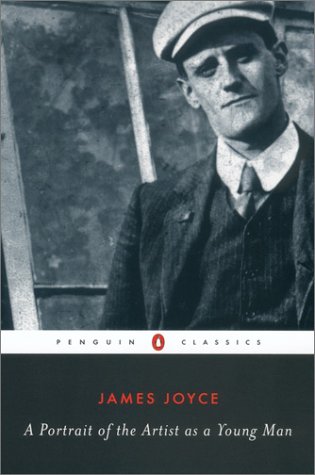
I realize this is an odd choice. I love the Harry Potter books quite fervently, and although this was a re-read, it was a thoroughly enjoyed one. However, as much as I love these books, I can't deny the brilliance of The Portrait of the Artist as a Young Man. It was easier than Ulysses to read, and much more enjoyable than I had expected. There's something about this one that is very special, and I would be happy to read it again. (I will, of course, re-read the Harry Potter books again and again.)

Winner: A Portrait of the Artist as a Young Man


The Escapists by Brian K. Vaughn vs. Dark Jenny by Alex Bledsoe

I always enjoy Alex Bledsoe's detective noir crossed with fantasy. And this one had Arthurian legend mixed in, making it even more appealing! Despite that, this particular battle goes to Brian K. Vaughn. I loved The Amazing Adventures of Kavalier and Clay when I read it a few years ago, and love this riff on that world, and reinventing that comic book characters, and what it would mean to modern comic readers. It's a fascinating riff on a fiction I was already deeply in love with.

Winner: The Escapists


Spring Flowers, Spring Frost by Ismail Kadare 
vs. The Door Into Summer by Robert A. Heinlein

My first foray into Albanian fiction was a good one, with this story that melds folk tales with modern-day politics and the disappearance of dissidents in a theoretically-liberalizing society. I liked this one quite a lot. But even more to the point, The Door Into Summer is not my favourite Heinlein. It's readable, but his stuff always is. There's just not a lot of there, there. So I read it, enjoyed it, but Spring Flowers, Spring Frost has stayed with me longer.

Winner: Spring Flowers, Spring Frost